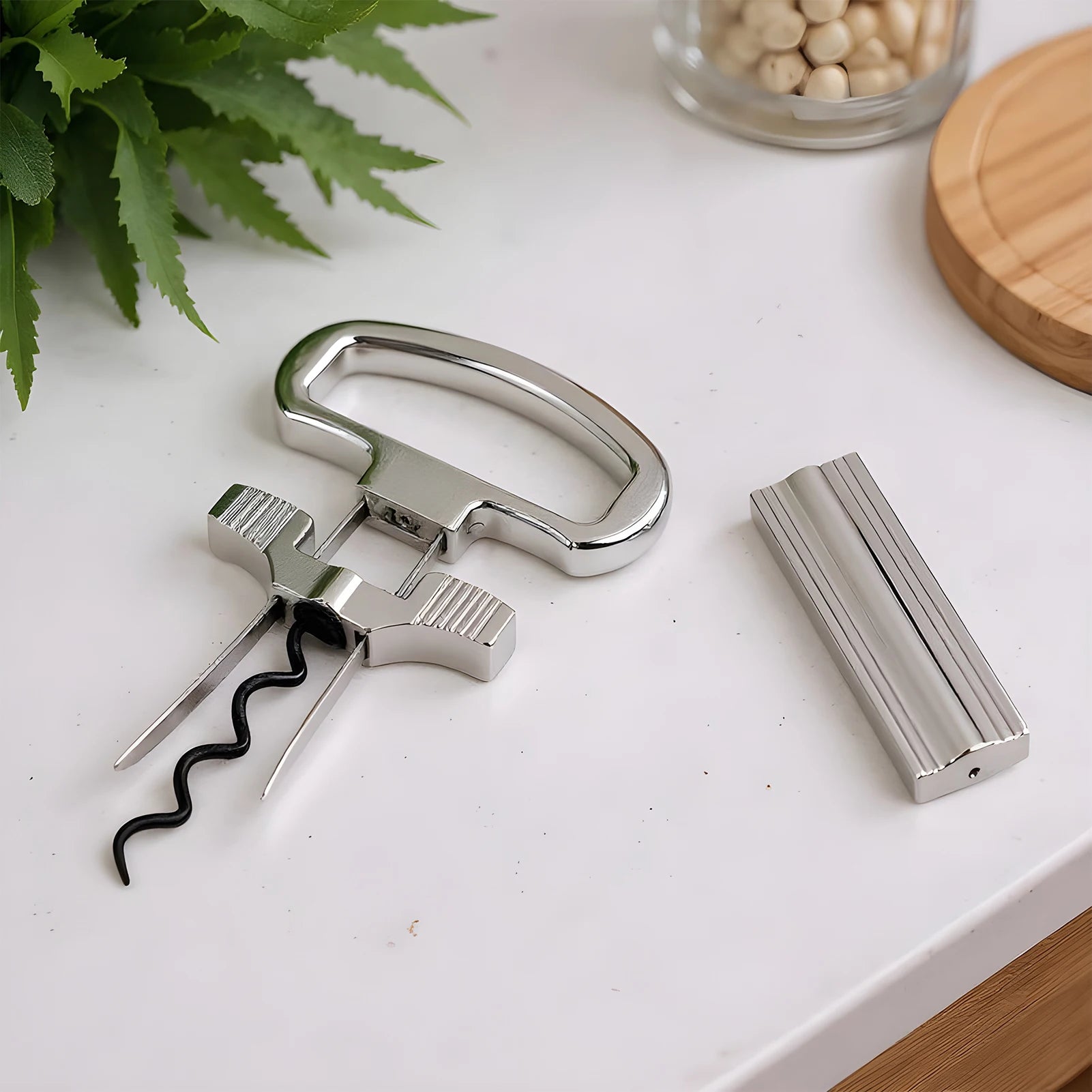
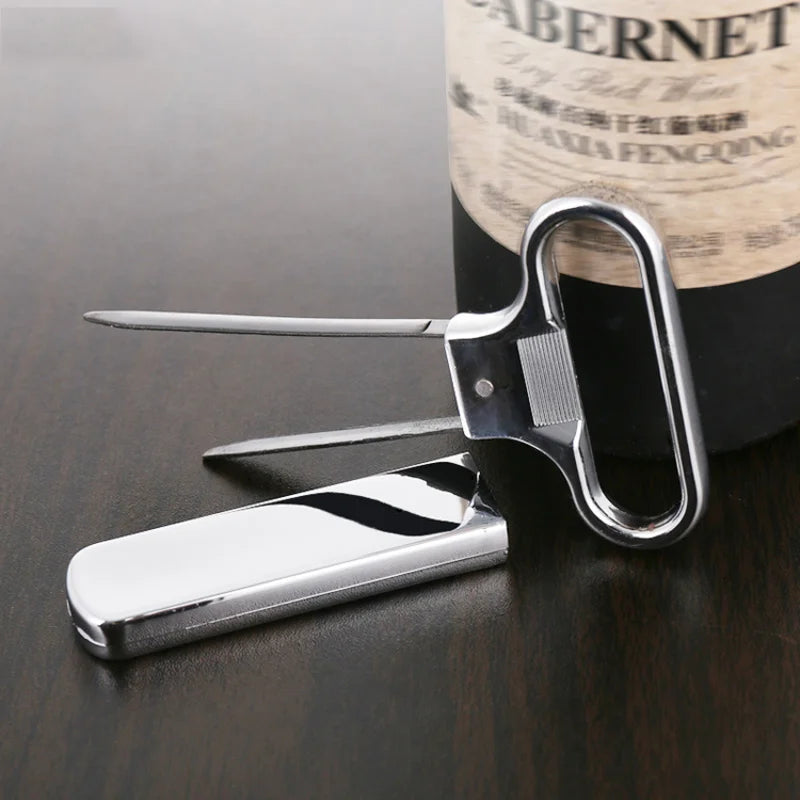
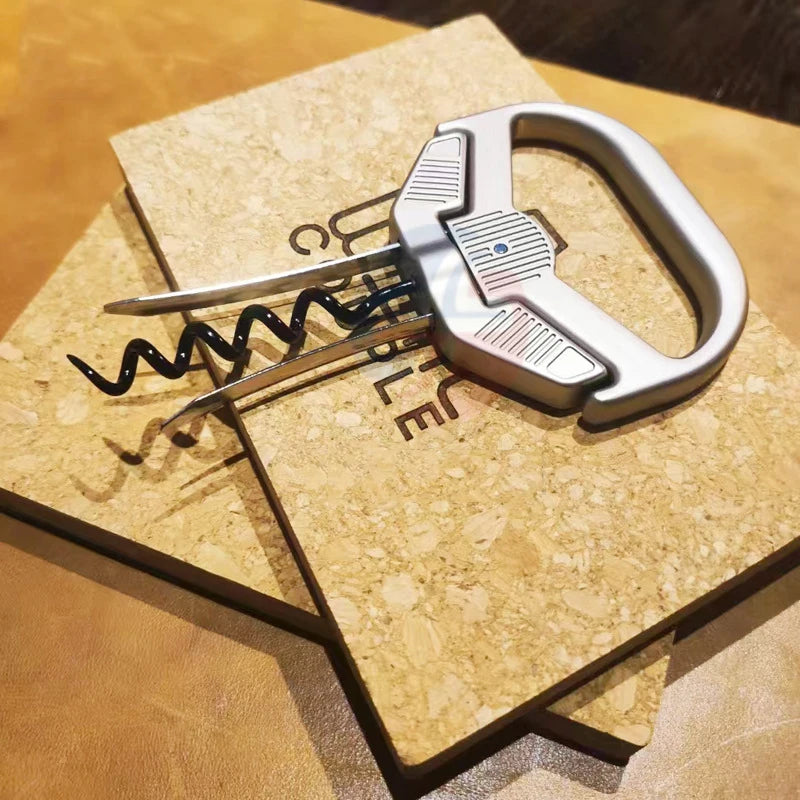
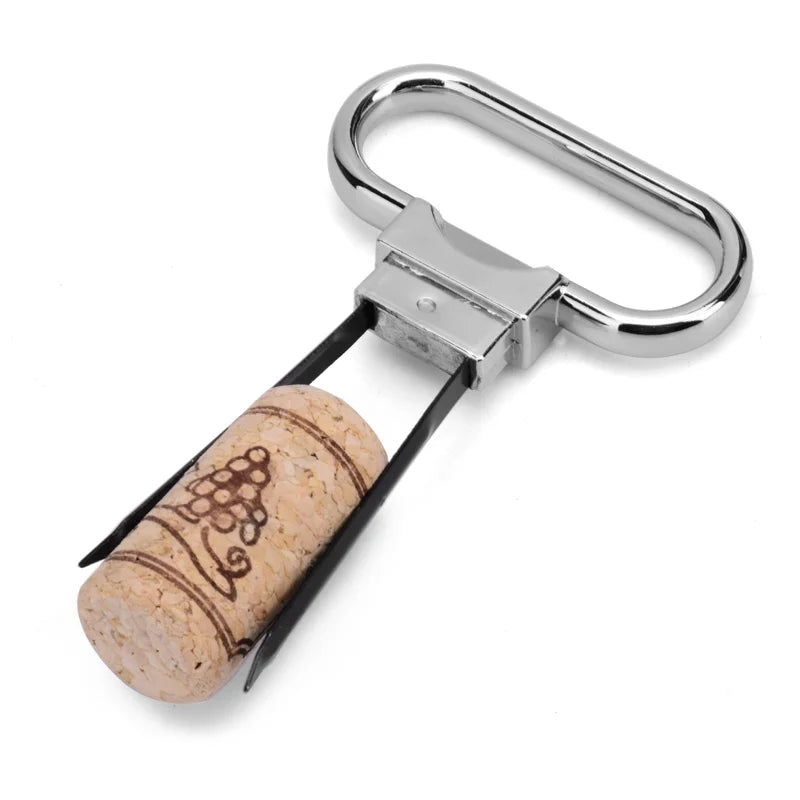
The double-bladed corkscrew extracts corks without piercing them. Its two blades slide between the cork and the neck of the bottle, and then a twisting motion is all it takes to remove the cork intact. Sommeliers and connoisseurs of fine wines use it to open old bottles whose corks are at risk of crumbling. This way, there's no risk of your tulip-shaped wine glass containing cork that could spoil the tasting experience.
Why choose a double-bladed corkscrew?
A corkscrew pierces the cork through its center. On a recent bottle, this works. But on a 15- or 20-year-old wine, the cork has dried out and become brittle. The screw goes through it, the cork breaks, and pieces fall into the glass. We've all experienced this when opening an old vintage.
The double-bladed corkscrew avoids this problem. Its two thin blades grip the cork on either side without ever penetrating it. It comes out whole, and you can even reseal the bottle if you don't finish it.
That's precisely why waiters loved it. Legend has it they used it to surreptitiously pour themselves a drink, then close the bottle without leaving a trace. The double-bladed cutter has retained its nickname, "the butler's friend."
Compared to a lever corkscrew or a professional corkscrew , the double-bladed corkscrew requires no force. Just a delicate touch. It's the only tool capable of both extracting a cork and reinserting it into the neck of the bottle.
How to use a double-bladed corkscrew?
No need for complex techniques. A little practice is enough.
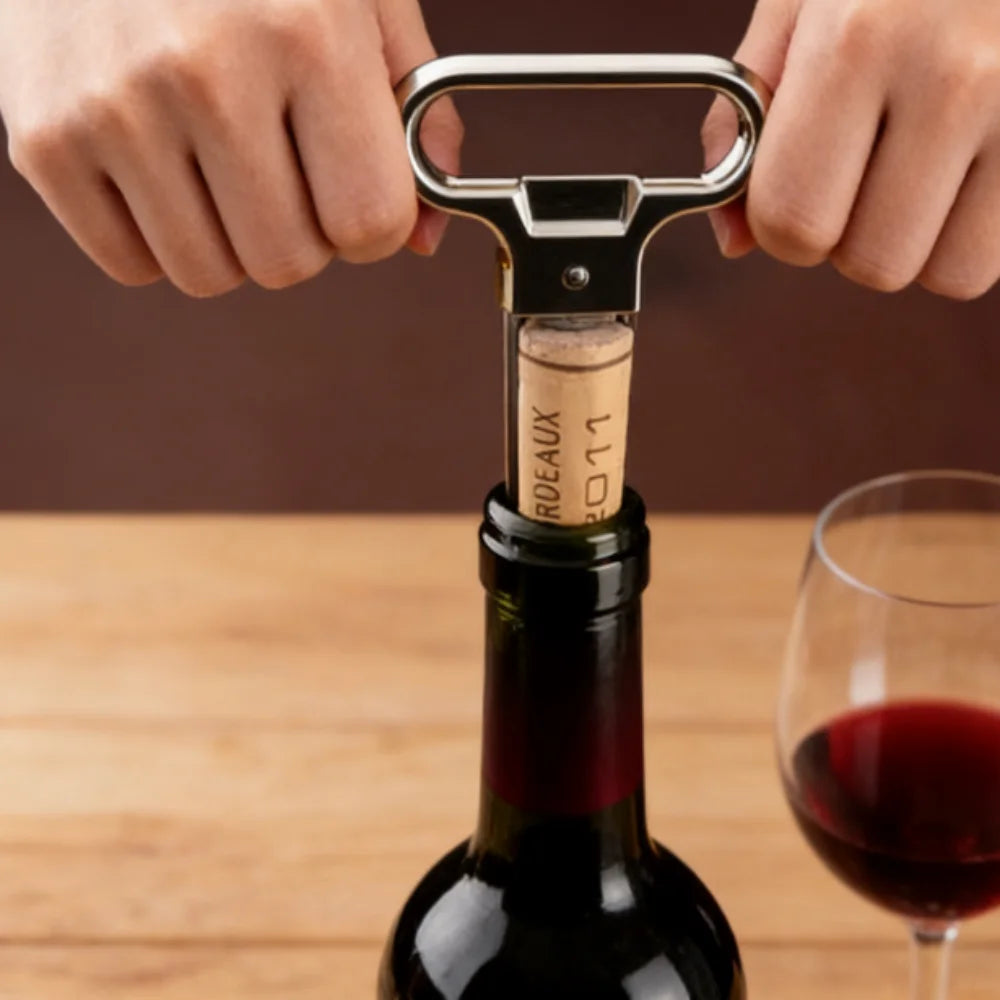
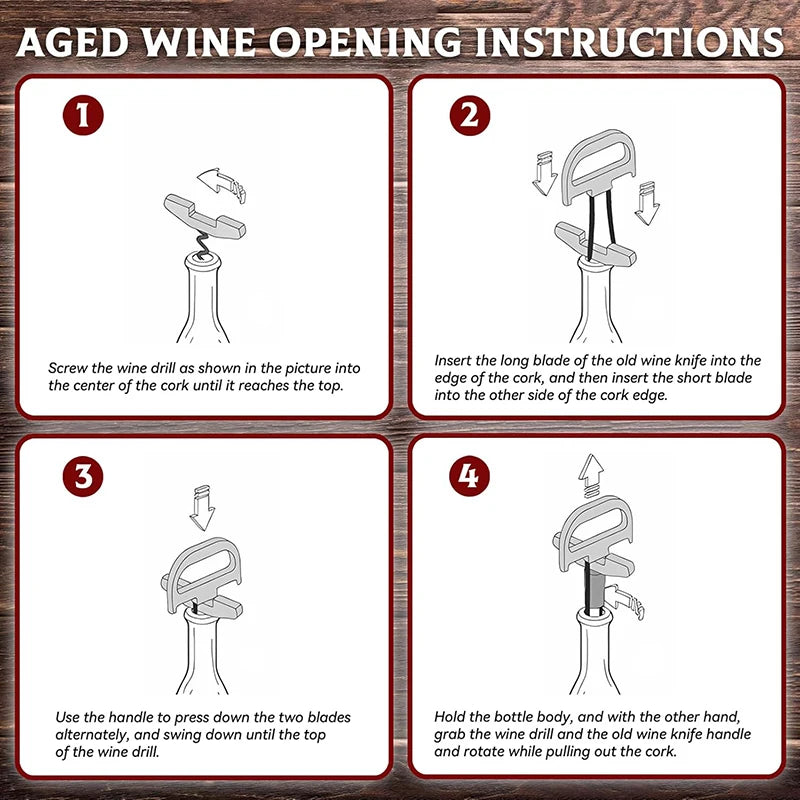
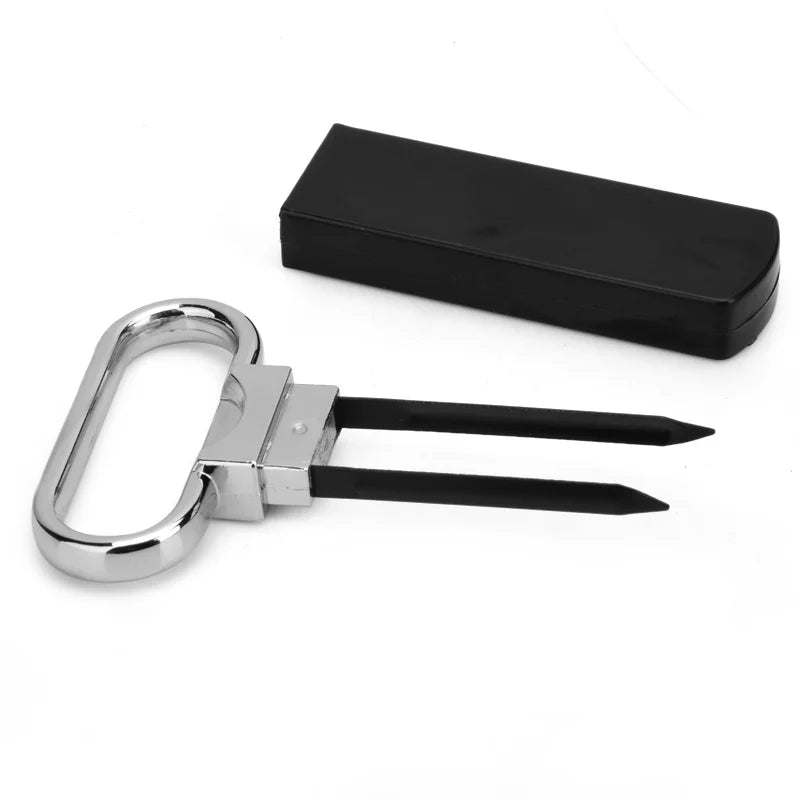
Remove the cap from the bottle. Insert the longer blade between the cap and the neck of the bottle. Slide the shorter blade in from the other side. Push both blades in gradually with a rocking motion, alternating pressure. Once the handle makes contact with the cap, pull upwards while gently twisting.
The cap pops up without tearing. Clean.
To reseal, reverse the process: place the cork back into the neck and push it in with the same twisting motion. The bottle is now sealed, and the wine remains protected until the next time it is opened.
Tip: practice on everyday bottles before taking a grand cru out of your cellar.
Which double-bladed corkscrew should I choose?
The quality of the blades makes all the difference. Flexible yet durable stainless steel adapts to all bottle necks and glides smoothly between the glass and the cork. Blades that are too rigid risk pushing the cork down instead of gripping it.
The grip is also important. The handle should be comfortable for pushing the blades down and then pulling upwards with a rotating motion. Good ergonomics make removing stubborn corks smoother.
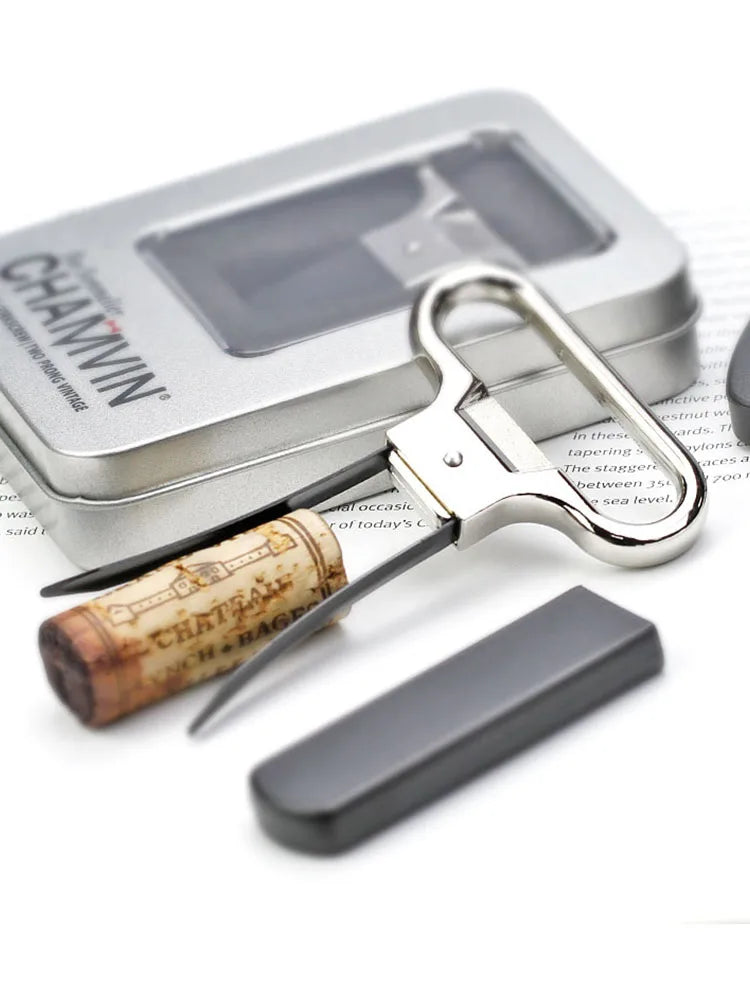
Some models include a foil cutter on top of the handle. Others come with a leather sheath to protect the blades — practical for transport or storage in a cellar.
If you collect the corks from your best bottles, the bimetallic strip preserves them completely: no holes, no marks.
For which wines should a bimetallic strip be used?
The double-bladed corkscrew was designed for older, aged wines. Any vintage wine over 10 years old whose cork condition you don't know warrants this precaution when opening.
But many enthusiasts use it daily, especially on younger bottles. The gesture is pleasant, and the ability to neatly reseal an opened bottle appeals to those who don't like to finish a bottle in one evening.
The only limitation: synthetic stoppers. Their smooth surface offers less grip for the blades. For these bottles, a classic waiter's corkscrew will do the job better.