Sort by
Filters


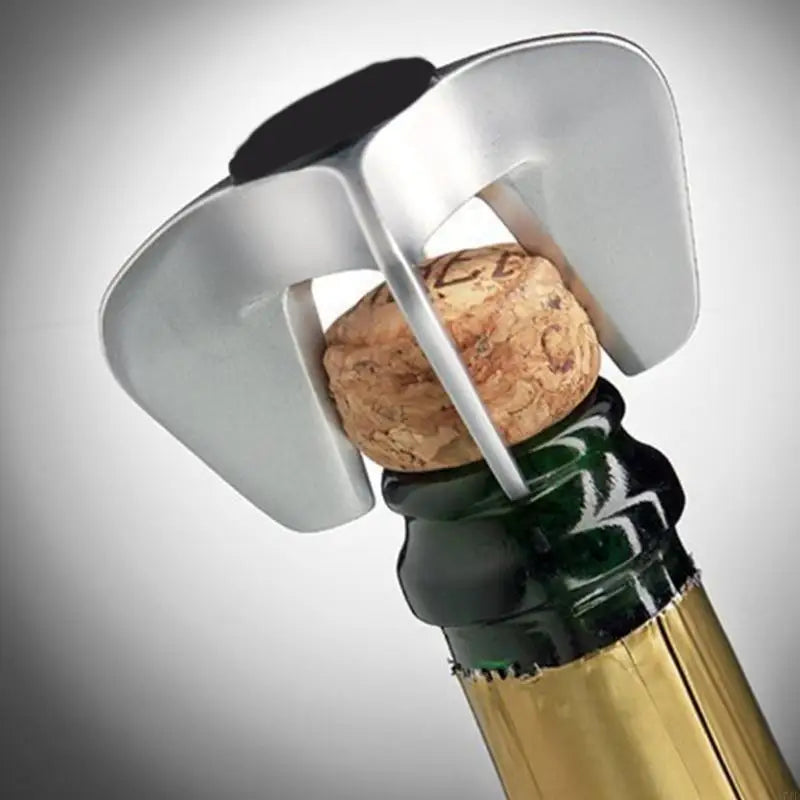


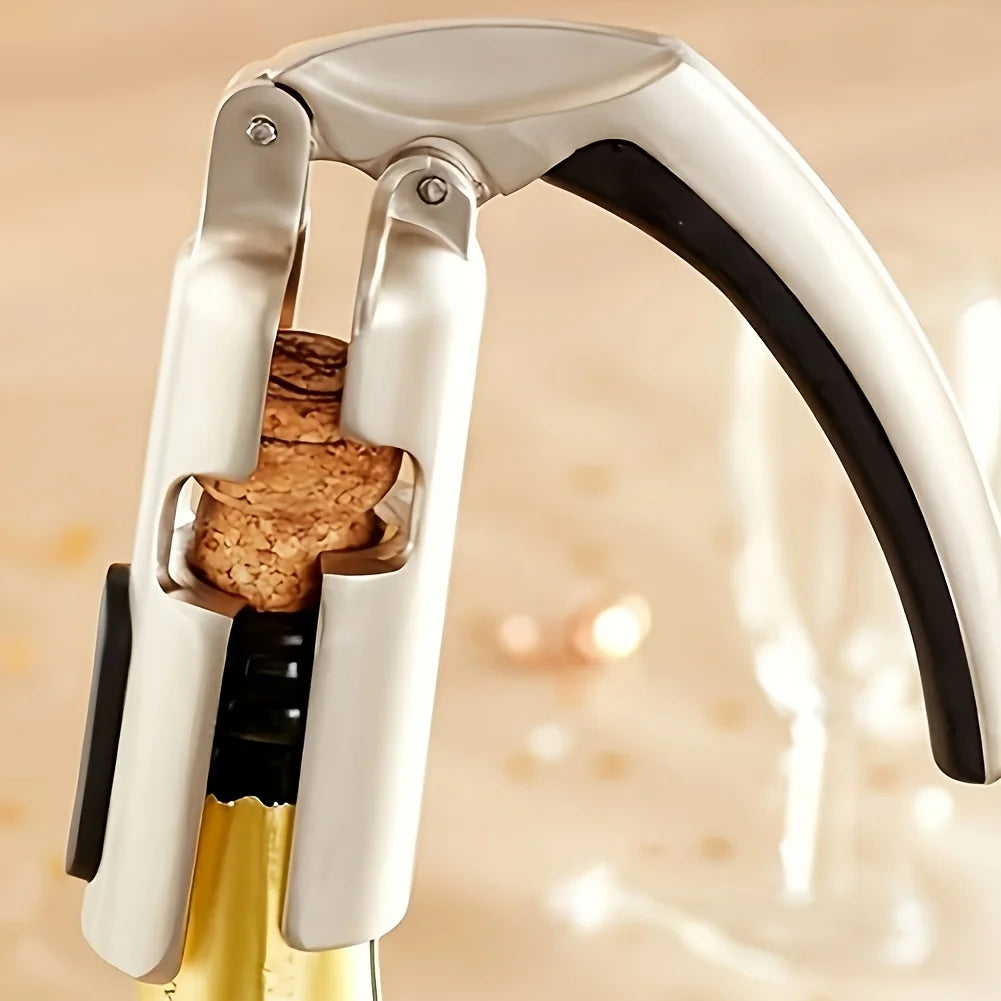

Champagne corkscrew
A bottle of champagne contains approximately 6 bars of pressure. That's three times more than a car tire. The mushroom-shaped cork is held in place by a wire cage. A standard corkscrew cannot be used on it; a tool specifically designed for opening sparkling wines is required.
At Limonadier , we've selected accessories perfectly suited for champagne, crémant, prosecco, and cava. Each product has been chosen for its grip, safety, and ease of use. Our collection covers all price points, from entry-level tongs to tulip-shaped champagne glasses for your tasting experience.
Why a special champagne corkscrew?
The cork of a still wine is a cylindrical piece of cork that is removed with a corkscrew. The cork of champagne or sparkling wine is different. Before bottling, it resembles a classic cylinder. But once compressed by the pressure of carbon dioxide, it takes on its mushroom shape. It expands at the bottom and narrows at the top.
This shape makes manual extraction difficult. Fingers slip, the cork resists, and when it finally gives way, it can fly out like a projectile. A champagne corkscrew solves this problem by offering a firm grip and complete control over cork removal. Importantly, even in professional use, this type of opening preserves bubbles and aromas better than manual extraction.
This is not a gimmick. In bars, cafes, and restaurants, these utensils prevent accidents and speed up service. At home, they reassure those who are apprehensive about opening a bottle of sparkling wine.
The four types of champagne corkscrews
Not all models work the same way. Here are the main systems available, with details of each mechanism.
The cork puller. The simplest tool. Two stainless steel jaws grip the cork after the wire cage is removed. You turn the bottle (not the cork) while holding the puller. The cork comes out effortlessly, held in the puller's hood. L'Atelier du Vin manufactures the benchmark model in this category. Compact, elegant, ideal for regular use in the cellar, kitchen, or bar. Price: between €15 and €35.
The corkscrew. Four metal prongs that fit into the notches of the cork. Same principle: you turn the bottle while holding the corkscrew. VacuVin and Le Creuset offer the best-known models on the market. The corkscrew provides a wider grip than the tongs. Some models also function as nutcrackers. Good value for money at around 10 to 20 euros.
The Pop-Bubble (tube extractor). The most spectacular of champagne corkscrews. Slide the tube onto the neck of the bottle, tighten, and twist. The cork rises in the tube and is safely ejected thanks to a flange. The "pop" is preserved, but without any danger. Le Creuset Screwpull popularized this system. Some brands offer it in a gift box. A good choice for parties and receptions. Price: between 20 and 40 euros. (Not to be confused with a compressed air corkscrew )
The electric version. An internal system absorbs the pressure and impact of the cork. Cheer Moda produces the Ace model, which is battery-operated. More expensive and bulkier, but effortless to use. Suitable for professionals who open many bottles or for people with hand pain. Price: between 30 and 60 euros. Spare parts (silicone seals, mechanism) are readily available.
The sommelier's technique for opening a champagne
The tool isn't everything. Technique is just as important as the accessory.
Start by chilling the bottle to between 7 and 10°C. The colder the drink, the lower the pressure. Remove the foil cap. Unscrew the wire cage (six half-turns) while keeping your thumb on the cork. Never let go of it.
Tilt the bottle at a 45° angle. Hold the cork (or your corkscrew) firmly with one hand. With the other, rotate the bottle. This is the rule all sommeliers learn during their training. Rotating the cork risks breaking it, especially with an older vintage.
The ideal sound isn't a loud "pop." It's a soft sigh, a discreet hiss. This sigh means you're controlling the release of the gas. You're not losing any foam or aromas. Then pour into flutes or, for a full-bodied champagne, a wide wine glass. Some sommeliers even use a decanter to aerate prestige cuvées before serving.
I've opened hundreds of bottles in the cellar and while serving in cafes and restaurants. The tool doesn't replace technique, it complements it. It provides a secure grip, reduces effort, and reassures those unfamiliar with it. For older corks, you can use a double-bladed corkscrew for added safety.
Champagne, crémant, prosecco: same tools
A champagne corkscrew works on all sparkling wines. The cork and the neck of the bottle are the same standard size, regardless of the appellation.
Crémant from Alsace, Burgundy, or the Loire Valley, Italian Prosecco, Spanish Cava, German Sekt: they all use the same type of mushroom-shaped cork and wire cage. Your pliers, claw, or extractor will work on each of them. It's a worthwhile investment for all sparkling wines.
The only exception: small 20cl bottles don't always have the same neck diameter. Check compatibility details before buying.
Storage after opening
Once opened, champagne loses its bubbles within a few hours. An airtight stopper made of food-grade silicone or stainless steel with a locking system will preserve the effervescence for 24 to 48 hours in the refrigerator.
Some of our gift sets include a wine preservation stopper in addition to the corkscrew. It's an inexpensive accessory that makes all the difference between a flat bottom and a sparkling glass the next day. An essential item for any wine bar.
Interview
These accessories require minimal maintenance. After each use, rinse the pieces with warm water to remove any cork and wine residue. Dry the metal thoroughly to prevent marks.
Stainless steel models are corrosion-resistant. For wood or bamboo finishes, avoid the dishwasher. Silicone seals are easily replaced when they lose their elasticity.
Store your accessory in its original box or in a kitchen drawer. Boxes with compartments protect the moving parts and extend the life of the mechanism.
How to choose your champagne corkscrew
For personal use , the pliers or claw are sufficient. Compact and easy to store in a kitchen drawer or bar. Between €10 and €30 depending on the finish: stainless steel, wood, or bamboo.
For gifting , a gift box remains a safe bet. Useful and elegant, it appeals to both connoisseurs and novices. Some sets include additional accessories: an airtight stopper, a pouring spout, and a decanter.
For professionals (caterers, waitstaff, champagne bars, café-restaurants), the Pop-Bulle or electric dispenser speeds up service. The investment pays for itself quickly when you open ten bottles per evening.
Our leading brands include : Le Creuset (Screwpull Pop-Bubble), VacuVin (claw and tongs), Atelier du Vin (cork tongs), Peugeot (Rého model), and Cheer Moda (electric). We tested every product in our collection before offering it for sale.
Why we chose these models
At Limonadier, every product we sell has been evaluated based on three criteria: grip security, material quality (metal, wood, silicone), and ease of everyday use. We've eliminated corkscrews with slippery grips or mechanisms that don't withstand pressure well. And if you're still looking for one, check out our professional Limonadier collection!
Our selection covers all needs and budgets. We ship within 48 hours and offer free delivery on all orders in France.

Discover our news in preview
Newsletter
Subscribe to our newsletter and enjoy 10% off