Sort by

tulip glass champagne
Tulip-shaped champagne glass: why sommeliers are abandoning the flute
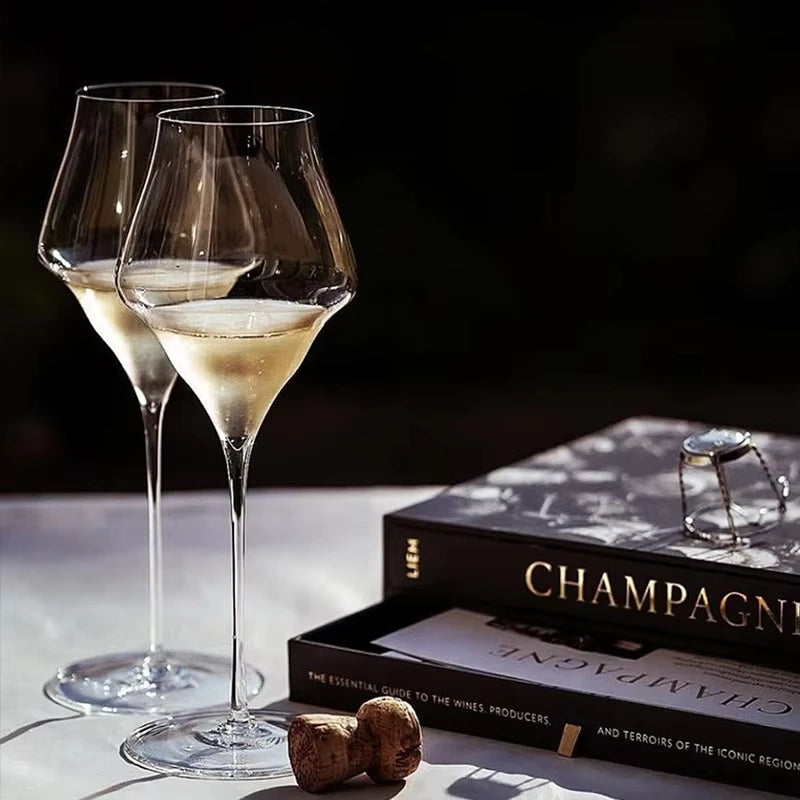
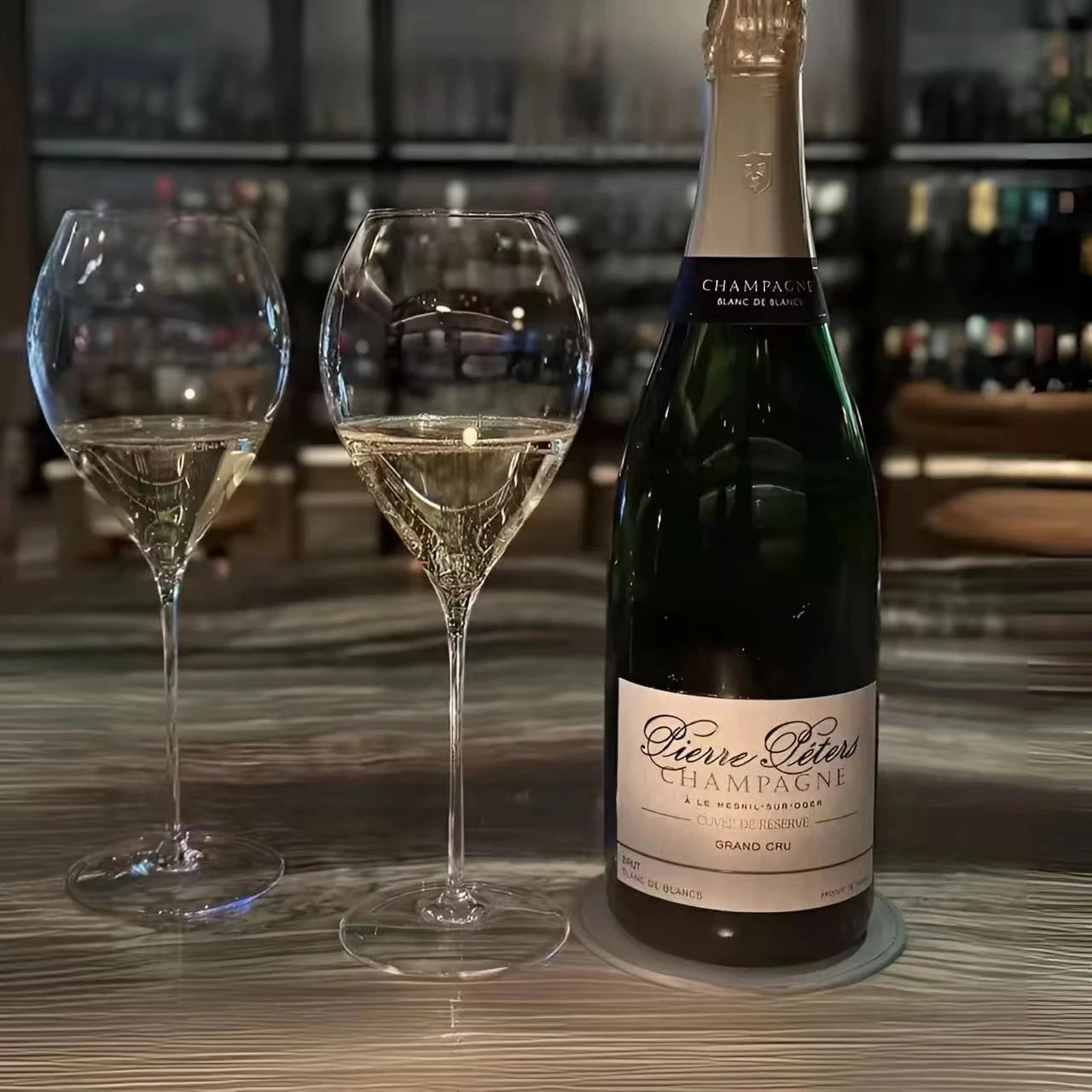
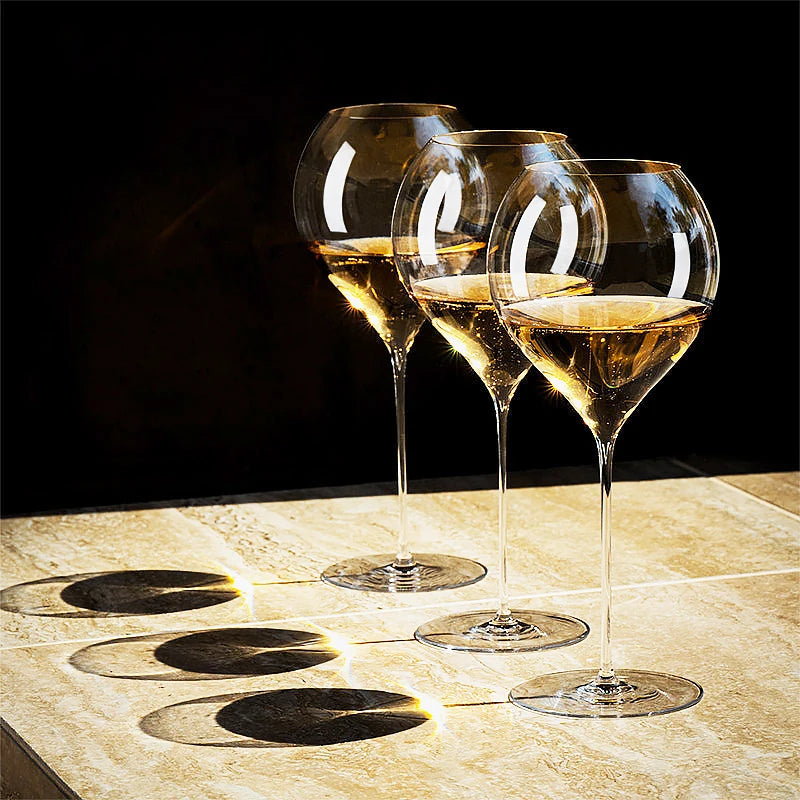
Pour a vintage Blanc de Blancs into a flute. The nose reveals acidity, a touch of yeast, not much else. Pour the same wine into a tulip glass . White fruit aromas emerge, along with brioche notes, followed by a chalky minerality that the flute had concealed. Same wine, same bottle. It's the tulip glass that makes all the difference.
This shape has existed since the interwar period, like the champagne corkscrew . But the major champagne houses only recently adopted it. Ruinart serves its cuvées in tulip-shaped Lehmann glasses. Krug has abandoned the flute for its press events. In 2014, Riedel launched its Veritas series, the first range designed to drink champagne like a still wine. Champagne is a wine, not a toast drink. It deserves a glass that respects its aromas. There are as many tulip glasses as there are spirits: tulip glasses for cognac , or even for beer—each spirit has its own glass!
What the tulip shape changes in your glass
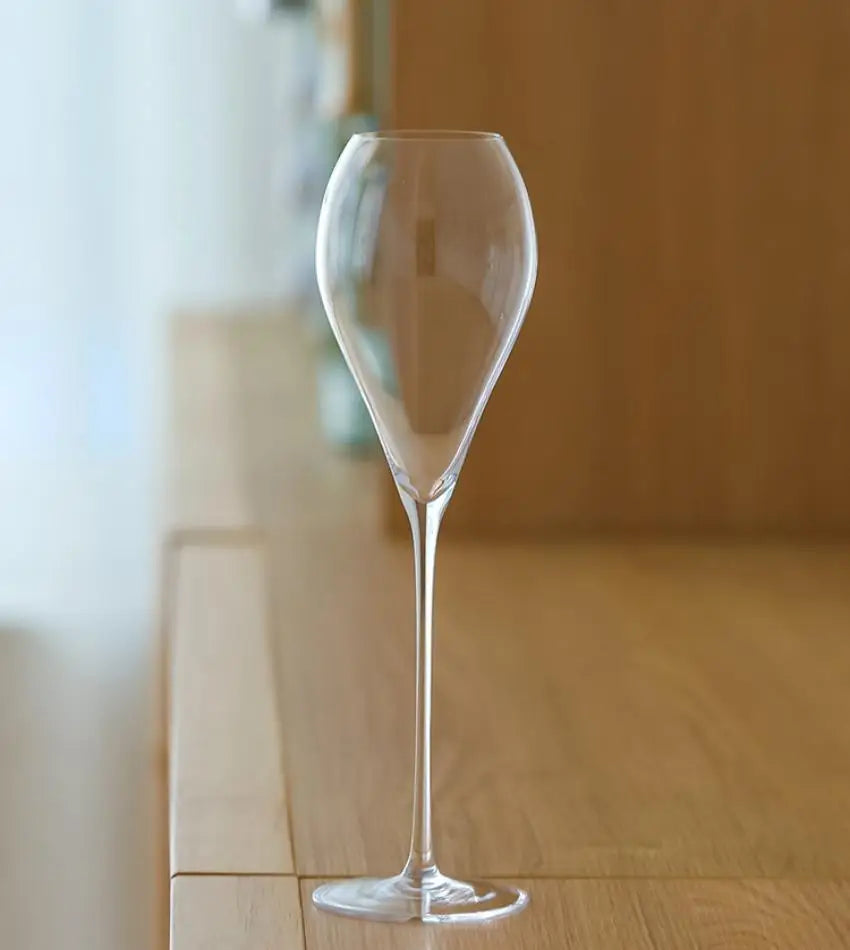
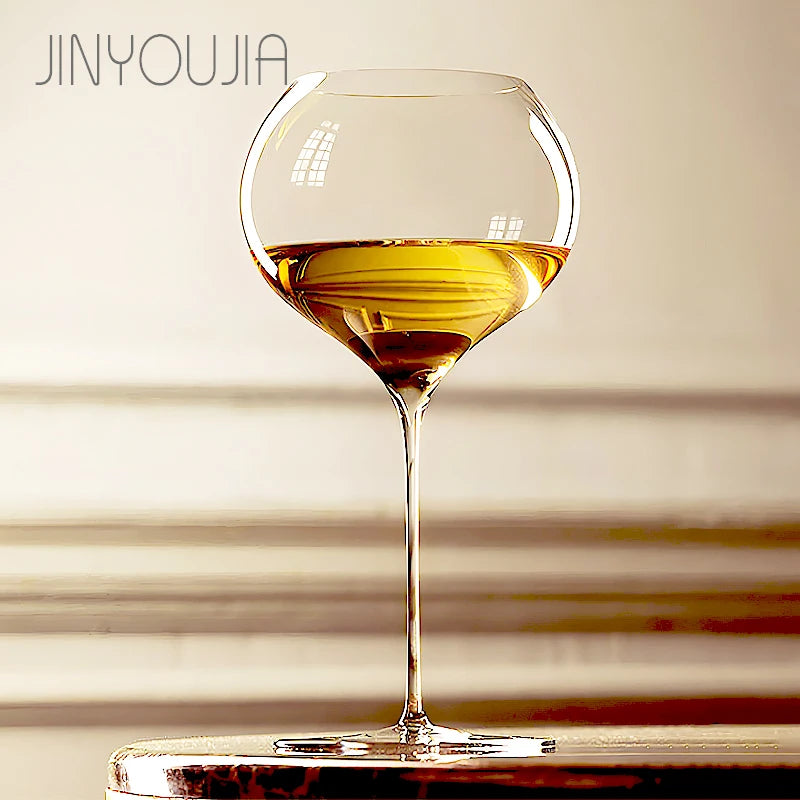
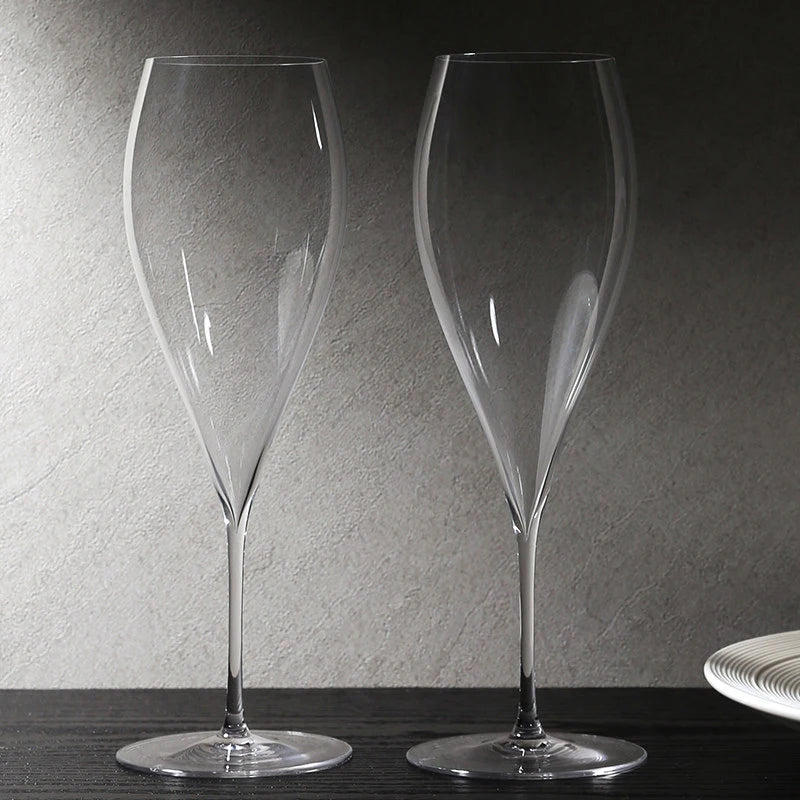
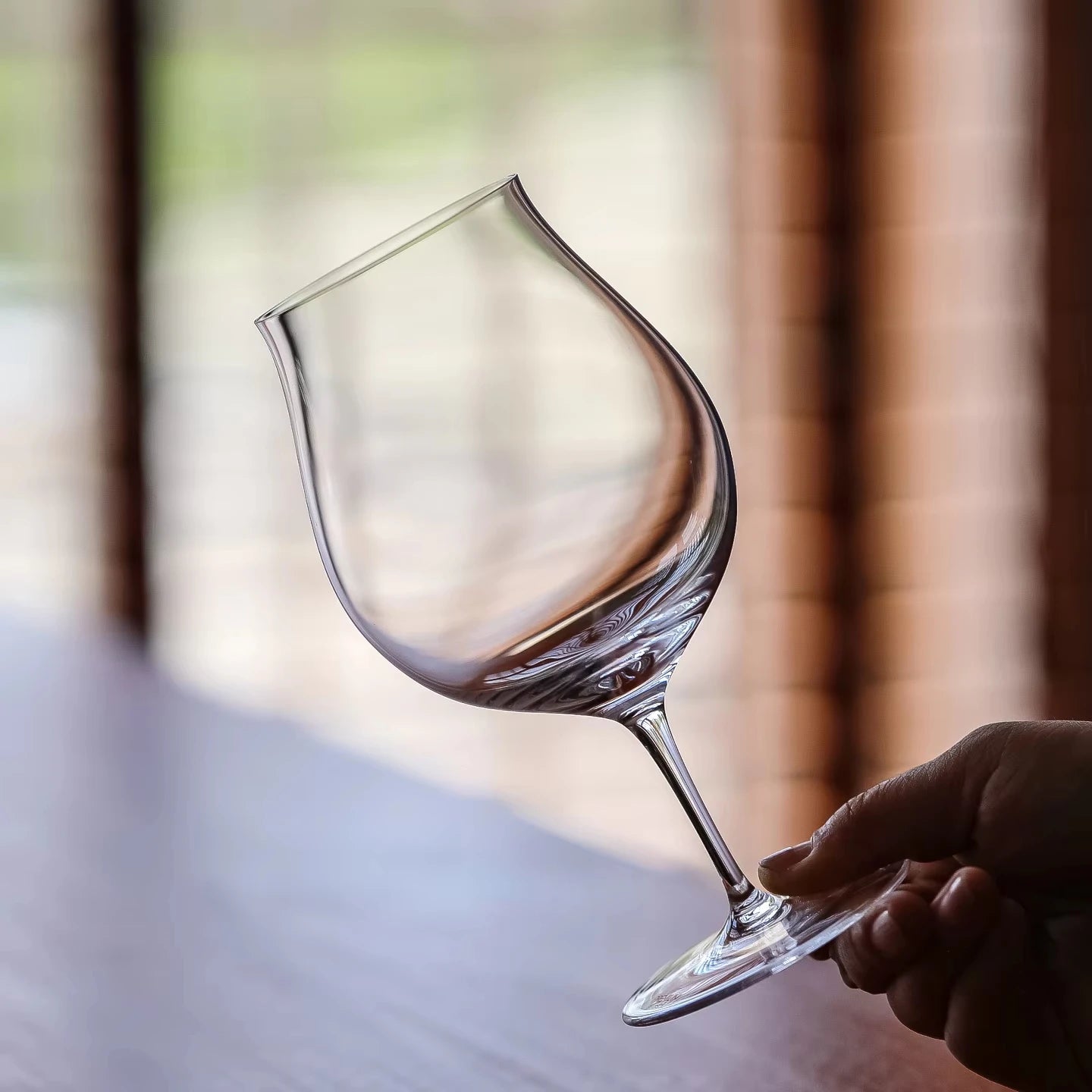
The bottle is flared at the base and narrows at the neck. The wide base allows the champagne to breathe, releasing aromatic compounds over a sufficient surface area. The narrower neck directs the flavors towards the nose instead of dispersing them throughout the room.
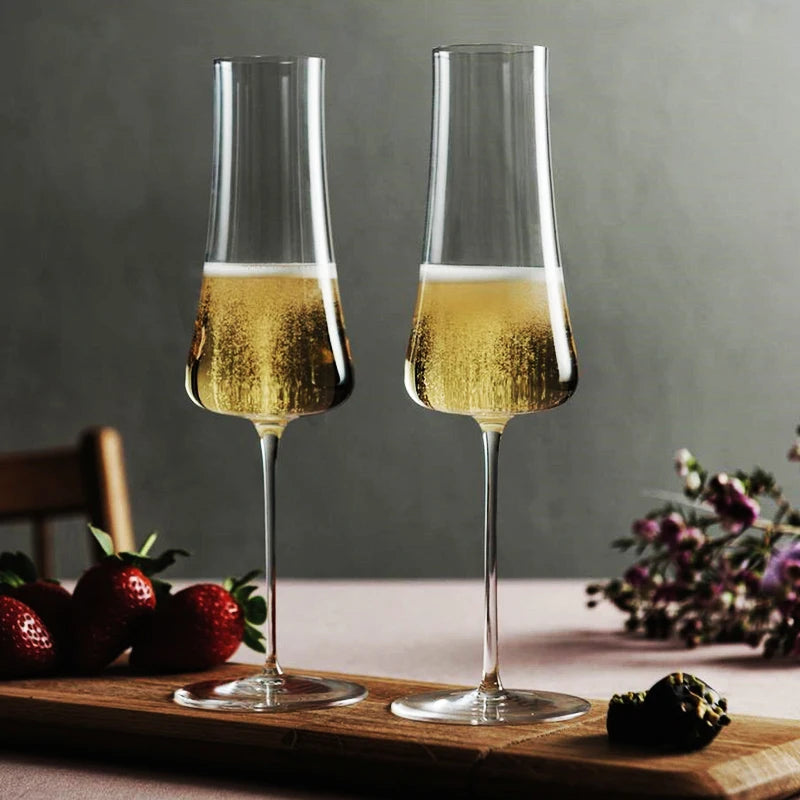
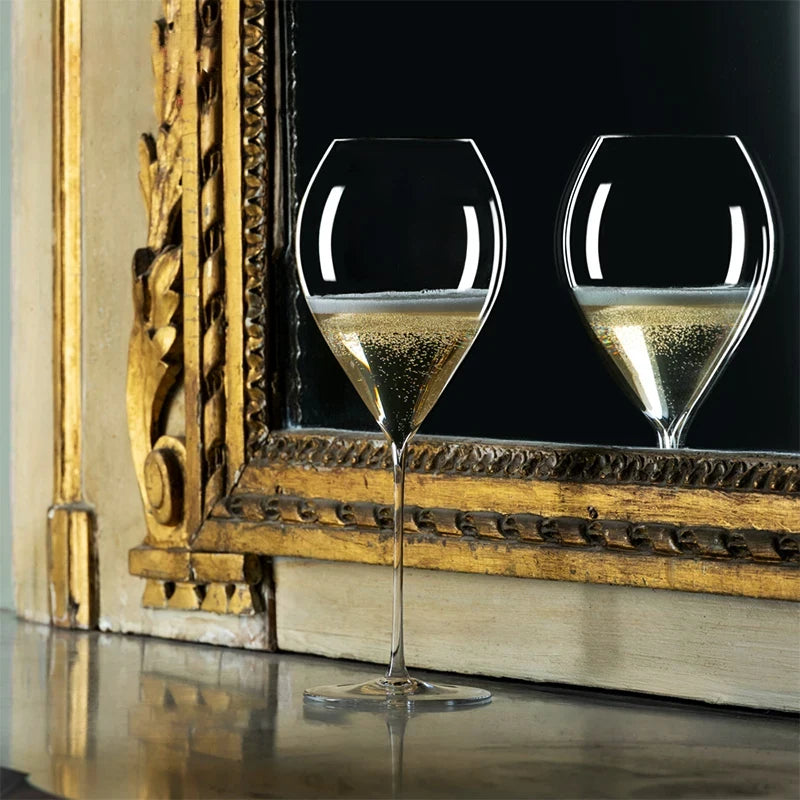
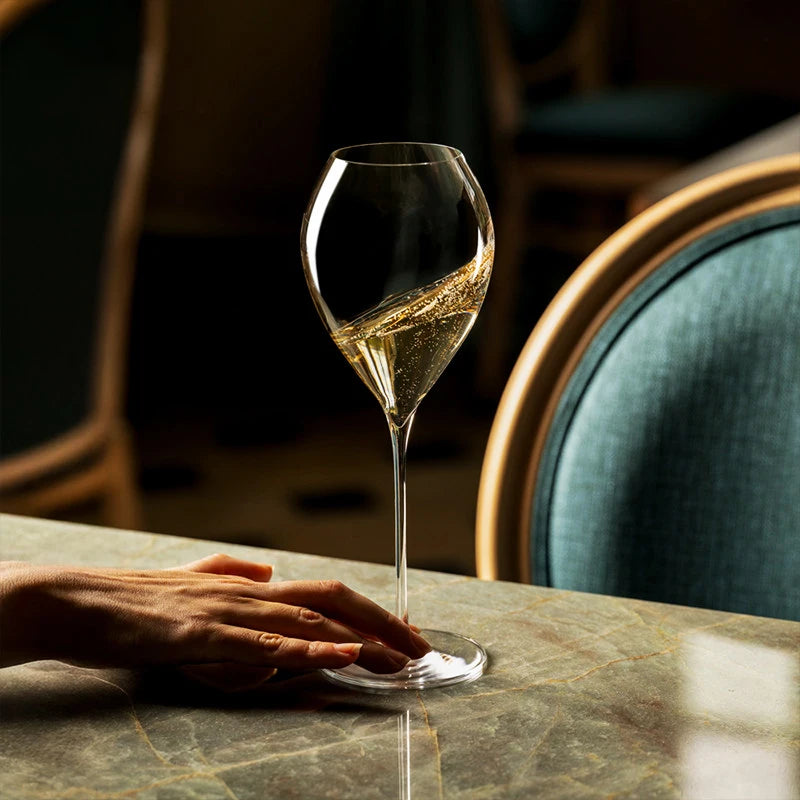
The bubbles add an extra layer of complexity. The narrower opening of the tulip glass slows the loss of CO2. The bubbles rise along the sides, burst at the surface in a concentrated area, and release the aromas as they do so. The tulip glass retains its effervescence much longer than a coupe glass.
One technical detail is important: the pointed base. This is a small, engraved indentation at the bottom of the bowl. It creates a point of contact that stimulates the formation of bubbles and produces a steady stream of water to the surface. Without this point, the wine appears flat more quickly. Lehmann incorporates it into its entire Opale collection. Spiegelau and Schott Zwiesel use the same principle under the name "sparkling point." On entry-level glasses, this point is often absent.
Flute, coupe or tulip: choosing the glass according to its use
The coupe is the oldest. Legend has it that its shape was molded from the breast of the Marquise de Pompadour (or Marie Antoinette, depending on the version). The anecdote is false—the coupe was used to drink the sweet, sugary champagnes of the 18th century. Its open shape disperses the aromas and allows the bubbles to dissipate within minutes. For a modern brut, it's a poor choice. It remains useful for cocktails and glass-tossing at receptions, but not for tasting.
The flute glass became popular in the 1950s and 60s, when champagne houses repositioned champagne as a celebratory drink. The rising column of bubbles creates a beautiful visual effect. The problem: the narrow opening restricts the aromatic expression. It's fine with a non-vintage brut as an aperitif. But with a vintage, a characterful rosé, or a Blanc de Blancs, you lose half the flavors. Flutes remain acceptable for serving large quantities—weddings, cocktails—where practicality takes precedence over tasting.
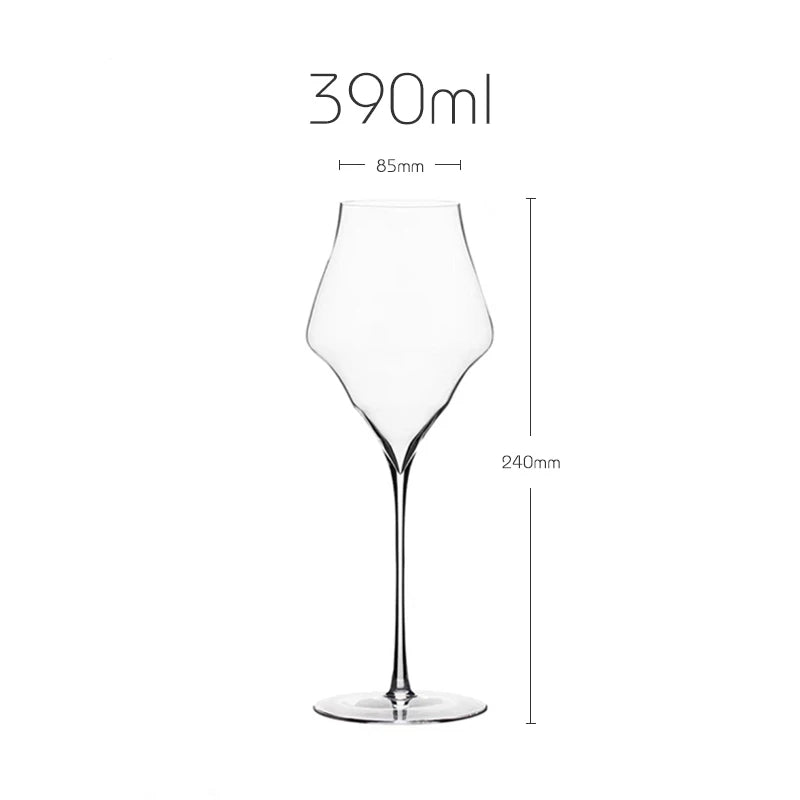
The tulip bottle does the job of both. Its 14 to 25 cl capacity, depending on the model, allows champagnes to breathe without losing their effervescence. This is the format I've been using for tastings for the past five years, and the one preferred by sommeliers in Michelin-starred restaurants in France. If you're only going to buy one bottle for your sparkling wines, this is the one.
Which tulip glass goes with which champagne?
Not all champagnes require the same format. I tested several combinations in tastings, and the difference is real.
For a Blanc de Blancs (100% Chardonnay), a modestly sized tulip-shaped glass works best. A glass that's too large dilutes the delicate flavors of the Chardonnay: the aromas get lost, the minerality fades. I tested this with a Premier Cru: in a wide Burgundy-style bowl, it seemed thin and acidic. In a 17 cl tulip-shaped glass, the chalky and almond flavors unfolded with a length I hadn't noticed.
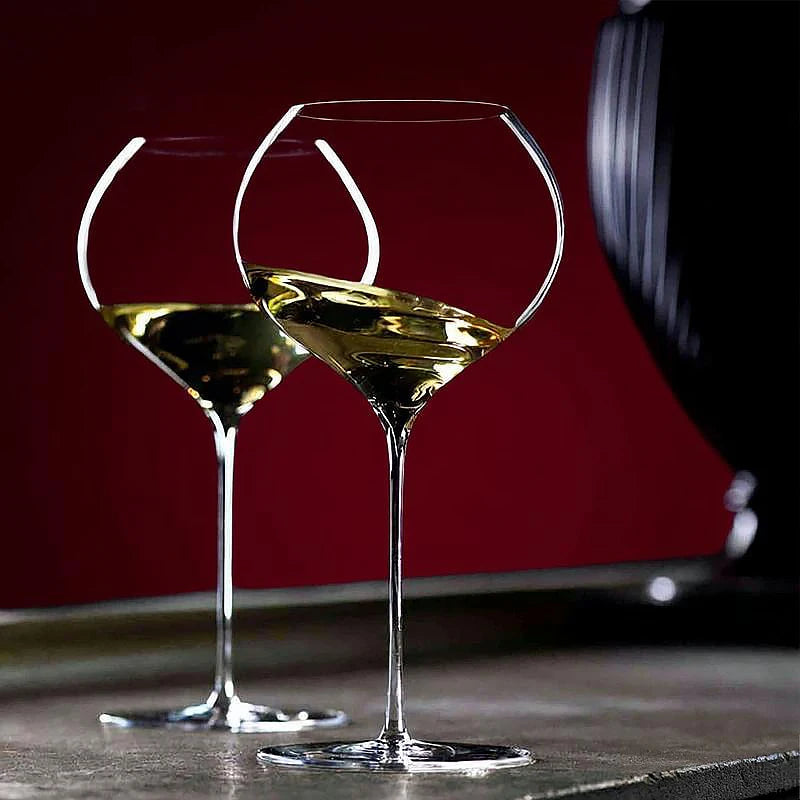
For a rosé Champagne or a Pinot Noir-dominated blend, a wider glass helps. These wines have more body, aromas of red fruit, and sometimes spices. A narrow bowl compresses the flavors. A more generous bowl allows the raspberry and redcurrant notes to emerge without crowding. The palate gains in roundness.
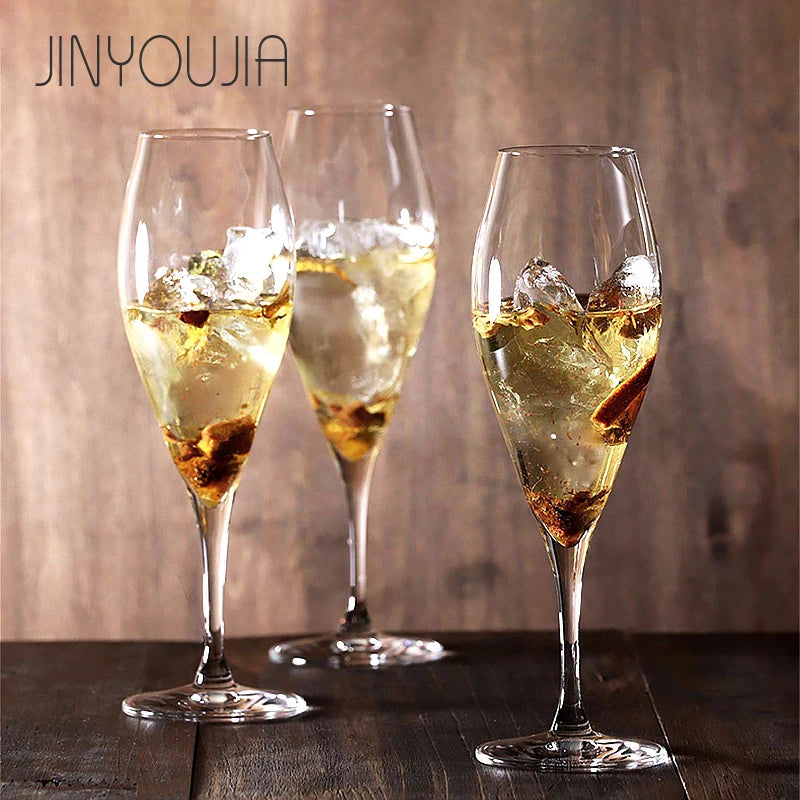
For a non-vintage brut as an aperitif or for other sparkling wines (crémant, prosecco), the standard tulip-shaped bottle covers all situations. It's the most forgiving format, whatever wine you open.
Four glassmakers, four price ranges
All the glasses in this selection are made of lead-free crystal: more durable than traditional lead crystal, dishwasher-safe on a delicate cycle, and with virtually identical transparency. Lead crystal (Baccarat, Saint-Louis) remains superior in brilliance, but it requires hand-cleaning and is priced far beyond what is needed for everyday use.
Lehmann , the leading glassmaker in France. Based in Reims since 1983, Lehmann supplies over 250 Michelin-starred restaurants and several Champagne houses, including Krug and Roederer. The Opale collection, machine-blown with a textured base, is available in 14, 16, 17, and 21 cl sizes. A set of six 21 cl Opale glasses retails for around €29. This is the glass you'll find in hundreds of restaurants across France, and the one I use every day.
For a gift or a more refined tasting experience, the Philippe Jamesse Grand Champagne collection takes things a step further. Mouth-blown, with a design by the former sommelier of Domaine les Crayères in Reims, it comes in a gift box with two signature glasses. Lehmann also offers the A. Lallement collection and the Ultralight range, with walls just one millimeter thick.
Riedel , for lovers of vintage wines and rosés. Austrian glassmakers since 1756, eleven generations in the business. The Veritas series offers an egg-shaped model with an integrated sparkling point. Expect to pay around €50 for a set of two glasses. Riedel also offers red wine, whisky, and decanters if you're looking to outfit your table with a coordinated range.
Schott Zwiesel , for durability. Their Tritan crystal withstands impacts better than the competition—the safest choice if you have children or if your glasses are frequently washed in the dishwasher. The Pure and Vervino ranges offer well-proportioned tulip shapes. Sets of 4 between €35 and €50.
Spiegelau offers the best value for money. A subsidiary of Riedel, it uses the same manufacturing standards but is more affordable. The Authentis range offers tulip-shaped lenses in sets of four or six at reasonable prices. A good choice for equipping your glasses without sacrificing lens quality.
Service and maintenance
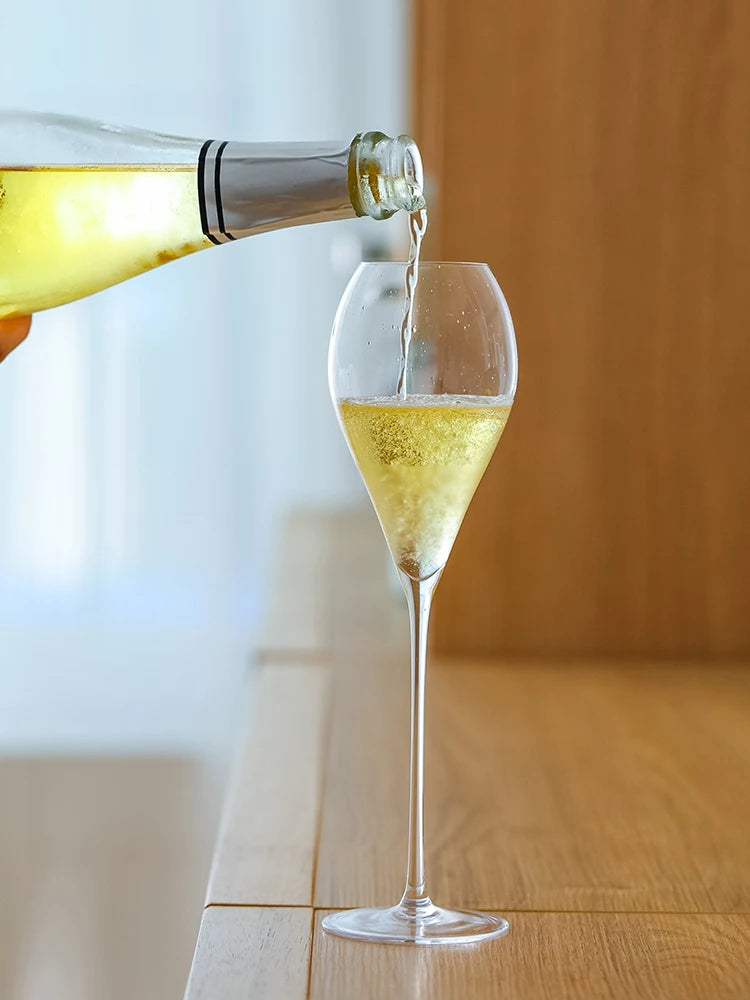
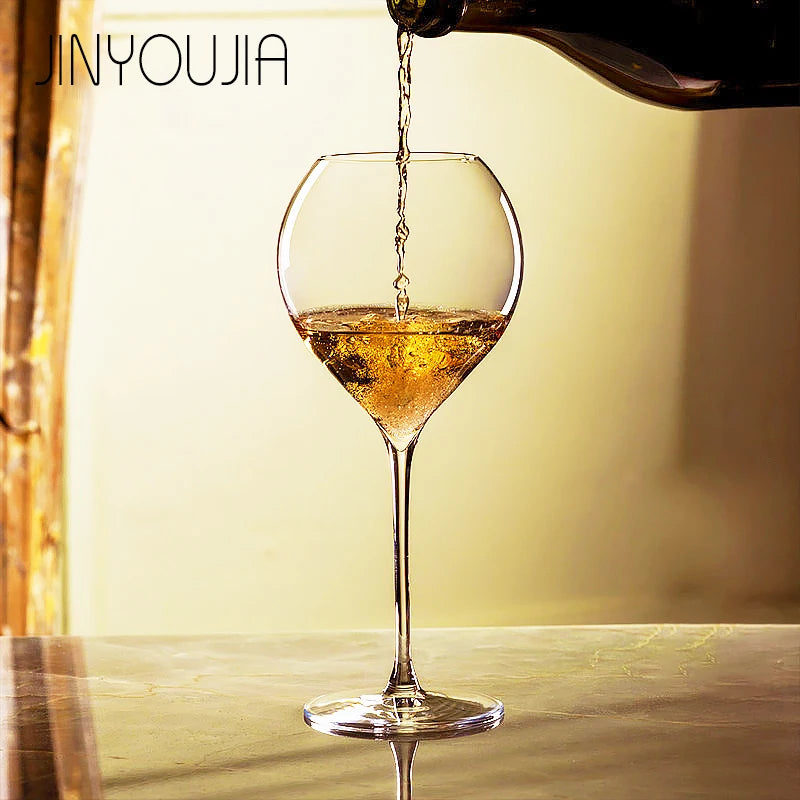
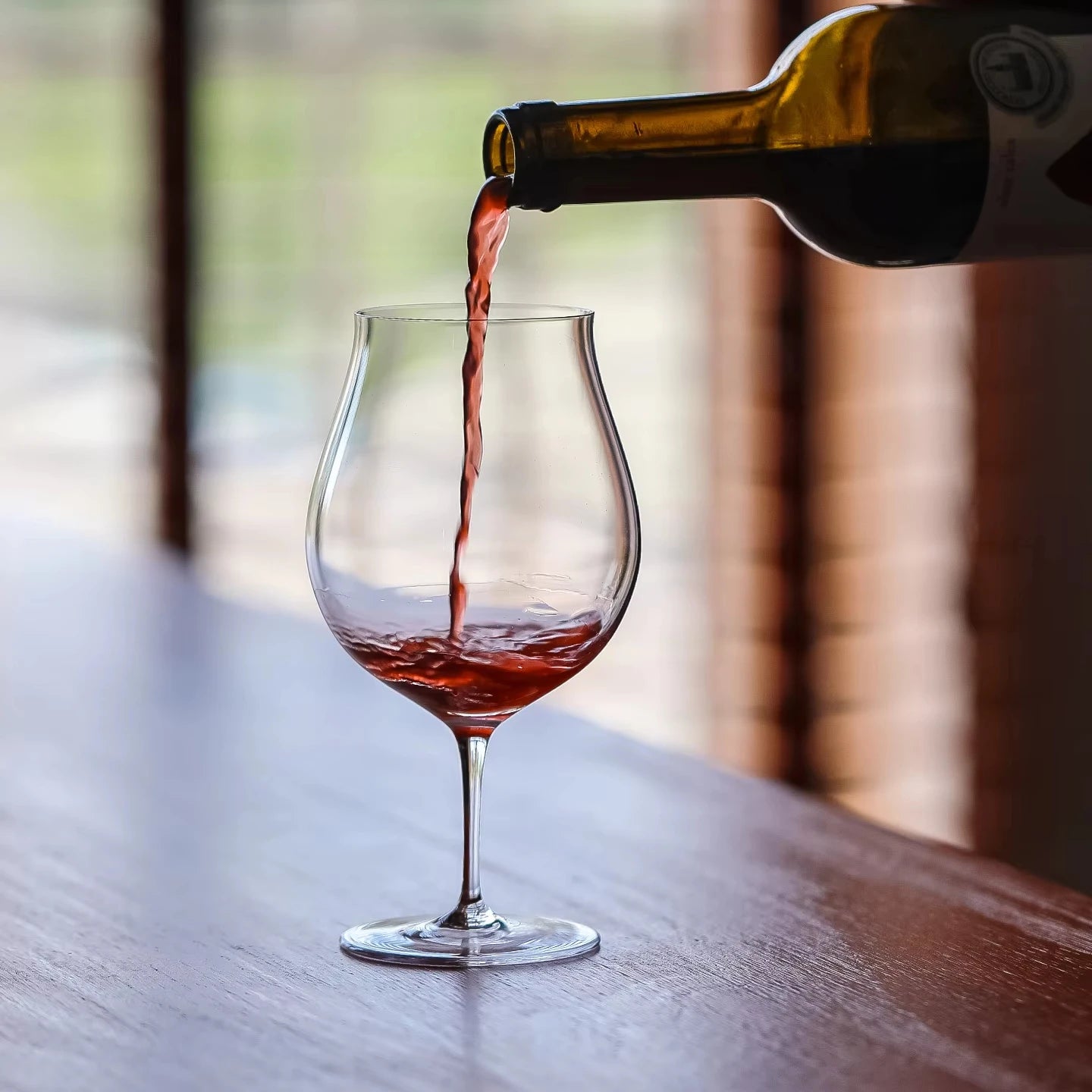
The pouring technique changes with a tulip glass . The wider base absorbs the effervescence better. Pour slowly into the center of the bowl, in two stages: first, pour a small amount of 3-4 cl to allow the foam to settle, then top up to 12-15 cl. The wine should fill about a third of the glass. The rest is where the aromas concentrate. Hold the glass by the stem or the bowl, never by the rim—the warmth of your hand will warm the wine.
Serving temperature: 8 to 10°C for a non-vintage brut, 10 to 12°C for a vintage or complex rosé. Champagne served too cold will not express its full potential, regardless of the serving size.
As for maintenance, just like with a tulip-shaped rum glass, limescale is the enemy. A gray deposit inside the bowl disrupts bubble formation and dulls the elegance of the crystal. Rinse with clean water after use. Lehmann recommends hand washing in warm water without detergent, and a few drops of white vinegar on a cloth to restore the shine. For the dishwasher: delicate cycle, maximum 50°C. Do not turn the base and bowl in opposite directions—this is the most common way to break stemmed glasses.
Delivery, warranty and returns
Buying glassware online raises a legitimate concern: breakage during shipping. Our gift sets are shipped in reinforced boxes with individual foam padding for each glass. In the event of breakage upon receipt, Limonadier will replace or refund the item—that's our breakage guarantee, free of charge. Returns are accepted within 14 days if the product is unsuitable.

Discover our news in preview
Newsletter
Subscribe to our newsletter and enjoy 10% off