Sort by




tulip glass wine
Tulip wine glass: why this shape changes everything
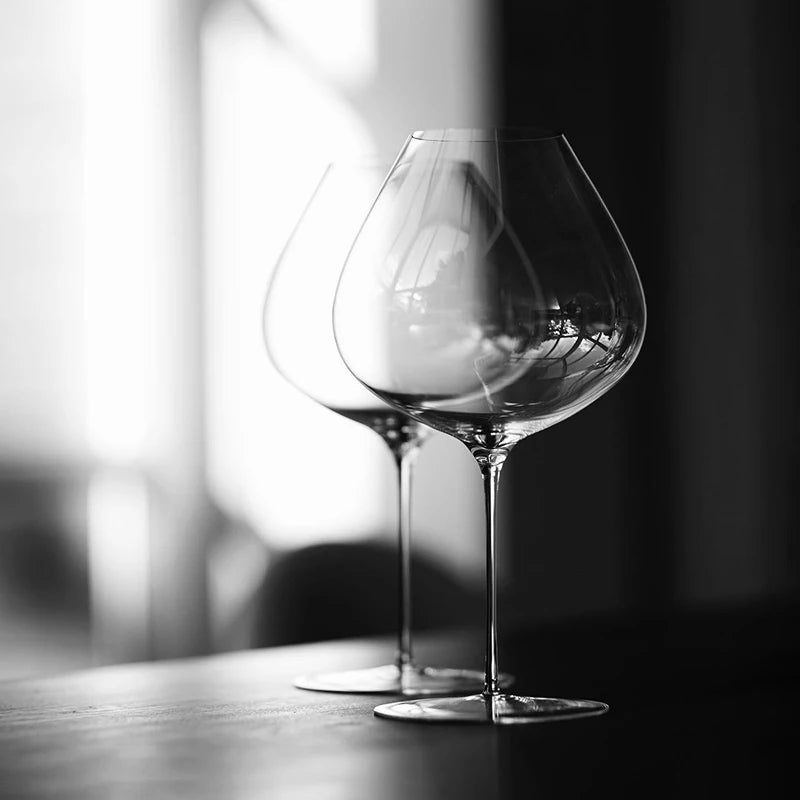
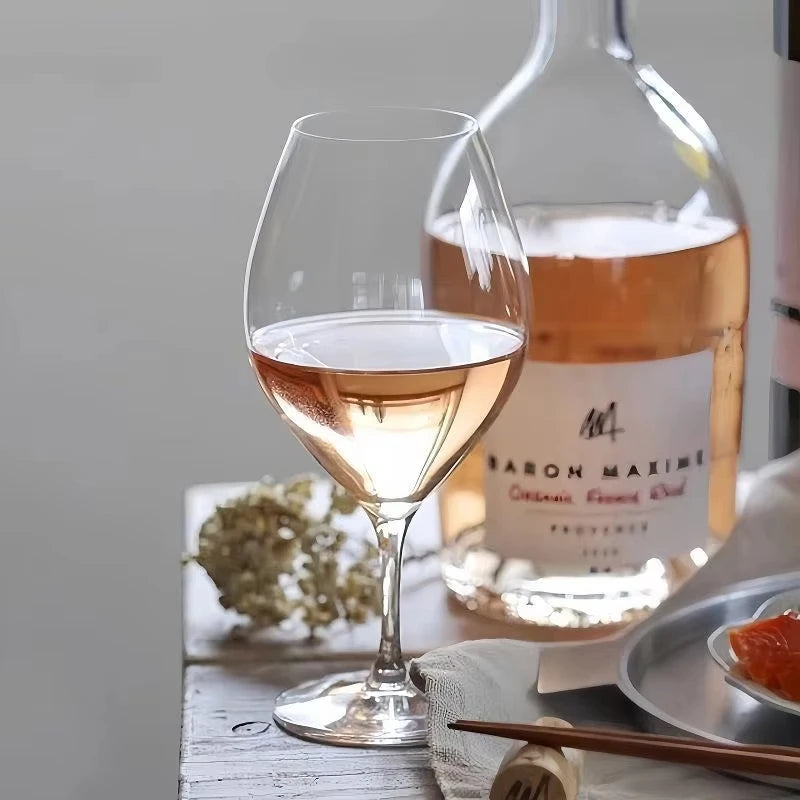
The tulip glass owes its name to its shape: a rounded base that tapers towards the top, like the flower. This shape is not merely decorative. The narrow neck traps the aromas in the bowl and directs them towards the nose when drinking. The effect on the tasting experience is immediate: nuances are perceived that a straight glass or tumbler would miss.
The principle is simple. The wide base provides the wine with sufficient surface area in contact with the air for oxygenation. Volatile compounds are released and rise into the bowl. Upon reaching the narrow neck, they concentrate instead of dispersing into the room. The nose then detects notes of fruit, spice, or wood that you wouldn't perceive in an ordinary glass.
Think of it as an inverted funnel: wide at the bottom for aeration, narrow at the top for concentration. Sommeliers know this: it's the best shape for tasting red wine. It also works with white and rosé wines, as well as with cognac, beer, and even in a tulip glass for champagne .
Tulip, balloon, or flute: what's the difference?
Confusion is common. Three types of glass coexist on the market, and each has a specific use.
The balloon glass is rounder, with a wide opening. It allows aromas to disperse quickly. It's a suitable choice for spirits ( tulip glass for cognac and armagnac) and for very mature wines of 15 or 20 years that need significant aeration to open up. For a young or mid-range wine, the balloon dissipates aromas instead of retaining them.
The champagne flute is narrow and elongated. Its role is to preserve the bubbles, not to concentrate the aromas. In fact, a gastronomic champagne is best enjoyed in a tulip glass rather than a flute: the aromas of brioche, hazelnut, or citrus are more pronounced.
The tulip glass occupies the space between the two. It offers enough space for aeration while retaining aromas: it is the most versatile format for wine, and if you had to choose only one, this is the one.
What tulip shape goes with which wine?
According to our experts at Limonadier, the tulip glasses in this selection do not all have the same capacity or opening. These differences are not intended to complicate the choice; they address real needs depending on the type of wine you are serving.
Bordeaux Tulip
Tall and rather narrow bowl. Capacity of 350 to 450 ml (only one-third full, or approximately 12 to 15 cl of wine per serving). This shape concentrates the aromas of tannic wines: Cabernet Sauvignon, Merlot, Malbec, Syrah. The narrow neck also reduces the sensation of astringency by directing the wine towards the center of the tongue rather than the sides, where the taste buds are more sensitive to tannins.
This is the format found in Bordeaux restaurants, Médoc châteaux, and Southwest wine cellars. If you mainly drink red Bordeaux, Languedoc, Rhône Valley, or Côtes-de-Provence wines, this is the ideal format.
Burgundy Tulip
Wider, more rounded cup. Capacity of 500 to 700 ml. The generous opening gives the wine more space to breathe and releases the delicate aromas that Burgundy wines develop with age: cherry, undergrowth, leather, truffle for the reds; hazelnut, butter, honey for the whites.
Pinot Noir, Gamay (Beaujolais), and Chardonnay express themselves particularly well in this format. Lovers of Alsatian wines (Riesling, Gewurztraminer, Pinot Gris) also appreciate it for the same reason: these aromatic wines need space to fully develop their bouquet.
The larger surface area for oxygenation is suitable for wines that remain closed upon opening. A young Pommard or a 5-year-old Gevrey-Chambertin will benefit greatly from being served in a Burgundy glass rather than a Bordeaux glass.
Universal Tulip
A compromise between the two formats, around 350 ml. This is the shape of the INAO glass, the one that professionals have been using in blind tastings since the 1970s. Its geometry has been calibrated so as not to favor any particular type of wine.
It goes from tannic reds to full-bodied whites, to gastronomic rosés. It's the Swiss Army knife of wine glasses. If you entertain regularly and serve different wines with each meal, the universal format simplifies everything: just one set of glasses instead of two or three.
For light and crisp white wines (Sauvignon, Muscadet, Entre-Deux-Mers), choose a 250-350ml glass. A smaller glass will keep the wine chilled longer.
Which material to choose
The material of the glass affects three things: the brilliance, the thinness of the rim (the edge where the lips rest), and the impact resistance. These characteristics vary depending on your intended use.
Lead crystal
This is top-of-the-line. Lead crystal (Riedel Vinum, Baccarat, Saint-Louis) offers the finest rim on the market and unparalleled light refraction. The wine's color appears brighter and deeper. When you swirl the wine in a crystal glass, you can see the legs (the tears that run down the side) with a clarity impossible to achieve with a standard glass.
The downside is that lead crystal is fragile and unforgiving of any mishaps. Hand washing is essential, and it must be dried immediately. A knock against the tap and the glass is ruined. Expect to pay €25 to €50 per glass at Riedel, considerably more at Baccarat. It's the choice of collectors, fine dining establishments, and connoisseurs who demand the very best for their grand cru wines.
Crystalline Tritan and Kwarx
Lead-free crystal has been the revolution in glassmaking over the last fifteen years. Schott Zwiesel patented Tritan , and Chef&Sommelier developed Kwarx . The principle is the same: a glass as transparent and luminous as crystal, but with far greater impact resistance.
In practice, a Tritan glass withstands the minor bumps of everyday life without breaking. It's dishwasher safe, retaining its shine even after hundreds of cycles. The patented manufacturing process of these crystals eliminates the micro-cracks that weaken ordinary glass over time.
This is the material we recommend for everyday use. At between €6 and €15 per glass, it offers the best value for money on the market.
Soda-lime glass
The most common and cheapest glass, starting at €2-3 each. Thicker than crystal, less brilliant, with a rougher rim. But virtually unbreakable. It's the glass of choice for bistros, brasseries, and large gatherings where breakage is part of the experience.
For a serious tasting, crystal glass remains a cut above. The difference is most noticeable at the rim: a thin rim allows the wine to touch the tongue more naturally. With a thick rim, the wine arrives in a rush and overwhelms the taste buds instead of stimulating them gradually.
The importance of the foot and the stem
A detail many people overlook: the way you hold the glass changes the taste of the wine. Fingers resting on the bowl warm the wine by 2 to 3°C in just a few minutes. For a white wine served at 10°C, this raises the temperature to 12-13°C in fifteen minutes. The wine loses its freshness, and the aromas change.
Red wine should be served between 16 and 18°C, white wine between 10 and 12°C, and rosé between 8 and 10°C. Hold the glass by the stem or the base to maintain these temperatures. The base has a second advantage: it stabilizes the glass when swirling the wine to aerate it, a gesture sommeliers always perform before tasting.
How to care for your tulip glasses
A clean glass isn't necessarily a well-washed glass. It's a well-rinsed glass. Detergent residue remains invisible but alters the wine's aromas. Even a small amount of dish soap in the bowl is enough to mask the subtle notes of a fine vintage.
Lead crystal
Warm water, a splash of mild dish soap, rinse thoroughly with clean water. Dry immediately with a linen or thin cotton cloth. Synthetic microfiber leaves lint on the glass; avoid it. Do not use a dishwasher: the heat and harsh detergents attack the lead in the crystal and dull the surface with repeated washings.
Crystalline (Tritan, Kwarx) and classic glass
Dishwasher safe on a delicate cycle at 45-50°C. Avoid concentrated detergent tablets and harsh rinse aids. Space the glasses out in the basket so they don't clink together during the cycle.
Storage
Store your glasses upright on a clean shelf. Never upside down in a raw wood cupboard: untreated wood releases organic compounds that permeate the bowl. You'll smell them even before pouring the wine. If you're short on space, place a clean cloth between each glass to prevent them from bumping against each other.
Order on Limonadier
Expect to pay between €30 and €60 for a set of six good-quality, all-purpose crystal glasses. For an extra touch, add a set of Bordeaux or Burgundy tulip-shaped glasses, depending on your preference: this duo is perfect for any occasion, from drinks with friends to a festive dinner.
All tulip glasses in this selection are in stock and shipped within 48 business hours. Delivery is free in mainland France for orders over €50.
Glasses are fragile. Each order is packaged with reinforced packaging and individual padding to prevent breakage during transport. If, despite our precautions, a glass arrives broken, please contact us: we will replace it free of charge.
Secure payment by credit card, PayPal or bank transfer. If a product does not suit you, you have 14 days after receipt to return it to us in its original packaging.
A question about the format or material? Our team will answer you by email or phone and can guide you according to your tasting habits.

Discover our news in preview
Newsletter
Subscribe to our newsletter and enjoy 10% off