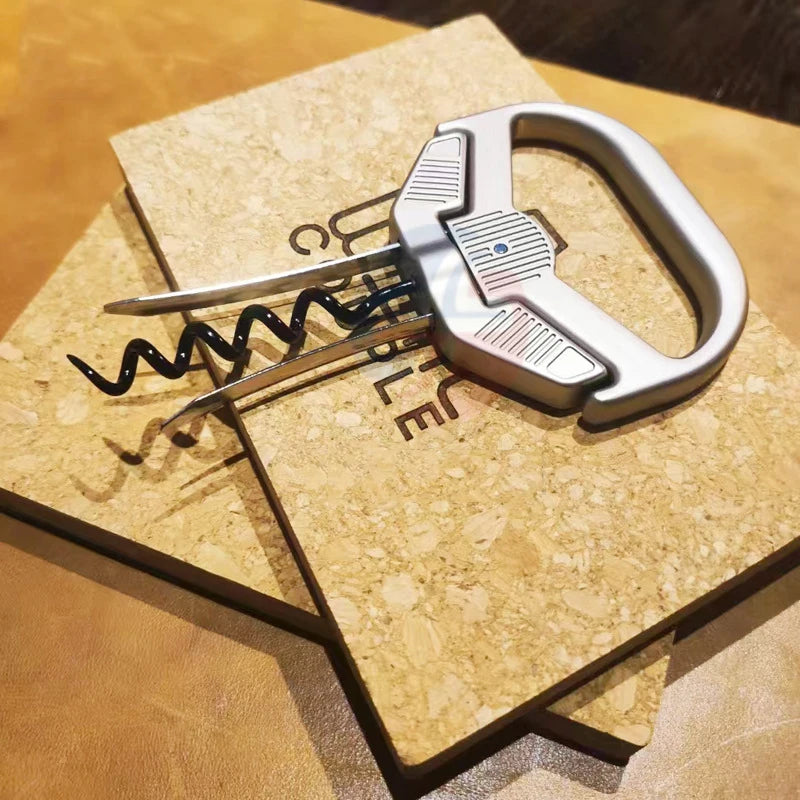
Bi-bladed corkscrew
Tax included. Shipping calculated at checkout
Vintage, fragile, two-bladed corkscrew
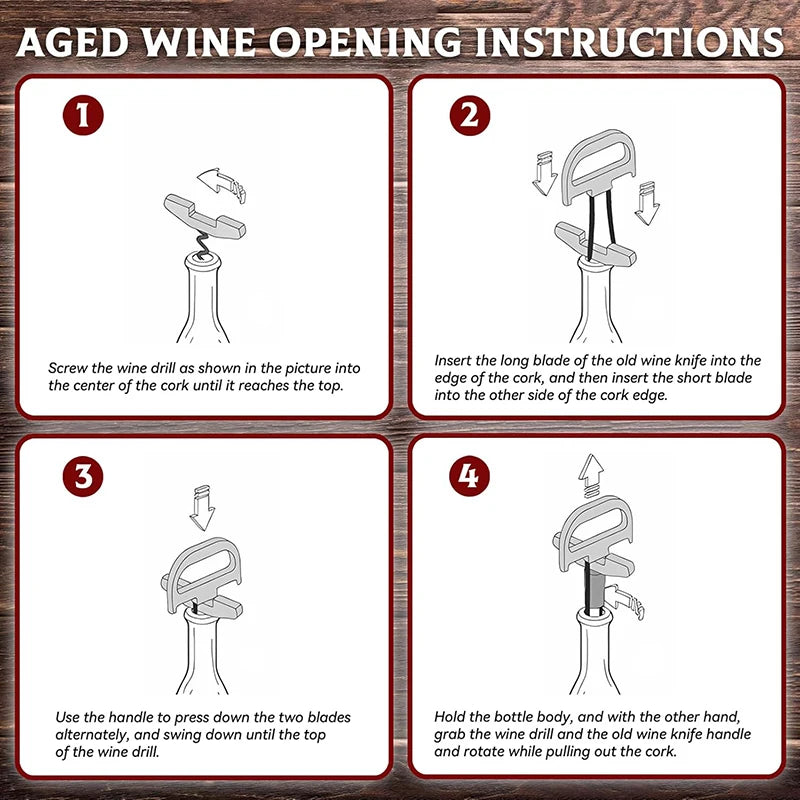
Our online store , Limonadier, presents this double-bladed corkscrew. For corks that are unforgiving. This double-bladed corkscrew answers a simple question: how do you open a bottle whose cork, softened by 25 years in a humid cellar, would collapse under a helical screw? The answer: two 18/8 stainless steel blades—9.5cm + 8cm—that are drawn by capillary action into the natural gap between the glass and the aged cork. The technique does not generate any internal twisting of the cork. The cork emerges intact, even if reduced to 40% of its original density.
- 18/8 stainless steel: excellent resistance to the acidity of aged white wines
- Blades with a 15° beveled front edge for easier entry into narrow bottlenecks
- Extraction by lateral pressure and rotation: zero vertical stress on the fragile cork
- Long body (14cm) allowing for a two-handed grip for a gentle extraction
The 15° bevel on the leading edge of the blade is a technical feature that distinguishes this model from basic, square-edged bi-blades. On a 30-year-old cork, the gap between the glass and the cork can shrink to less than 0.3 mm—imperceptible to the naked eye, and difficult to achieve with a straight-edged blade. The bevel guides the steel into this space without tearing the surrounding cork. The 14 cm long body allows for two-handed pressure: left arm supporting, right hand rotating.
Technical specifications
| Characteristic | Detail |
|---|---|
| Material | 18/8 stainless steel |
| Beveled angle | 15° at the leading edge of the blade |
| Long blade | 9.5cm |
| Short blade | 8cm |
| Body length | 14cm (can be gripped with two hands) |
| Recommended use | Fragile cork, vintage corks 20+ years old |
Tasting guide for old vintages
Before opening: leave the bottle upright for 48 hours to allow the sediment to settle. Serving temperature: 16-18°C for older red wines, 12-14°C for aged white wines. After using the double-bladed corkscrew, examine the cork: dark spots on the inner surface are normal up to 5 mm. Wine penetration throughout the cork indicates probable oxidation—open the wine first before serving. The double-bladed corkscrew technique preserves the cork for resealing the bottle if the wine is diverted.
Choose options

Discover our news in preview
Newsletter
Subscribe to our newsletter and enjoy 10% off