Double-bladed corkscrew: Our opinion
Why a double-bladed corkscrew is essential for older vintages, when to avoid it, and how to choose the right model. Wine merchant's advice and a comparison of the best options. A Limonadier guide.
This guide explains the mechanism, provides field advice, and helps you choose the right model for your needs.
What is a double-bladed corkscrew?
Two prongs, no twisting. The cork comes out intact. It's as simple as that — provided you know the technique.
The double-blade system: how it works physically
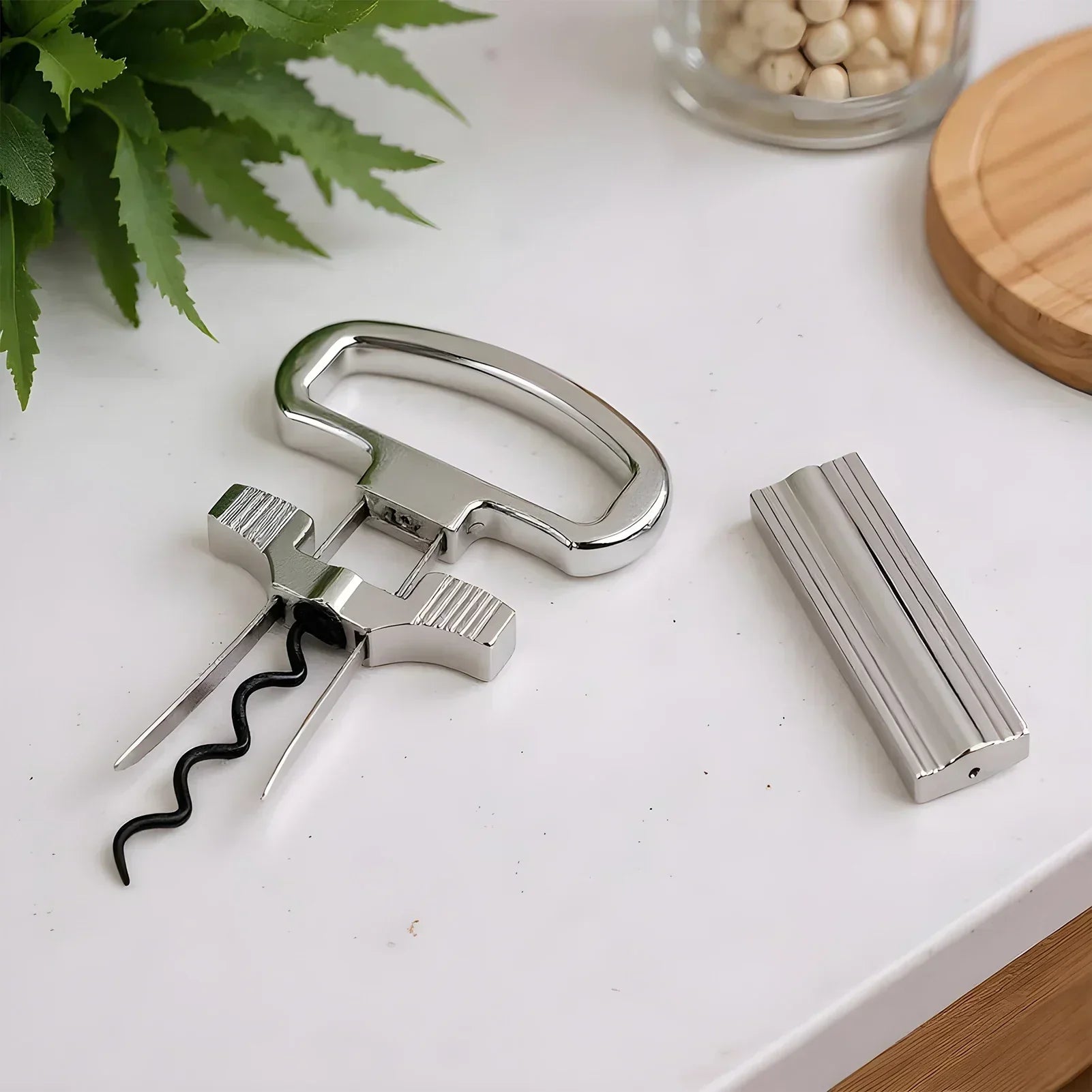
The longer rod goes in first, towards the neck of the bottle. The shorter one follows on the other side. Push them in with a slight rocking motion, left then right, gradually. When the base of the handle touches the cork, pull while twisting in either direction. The cork will pop up without being pierced.
Physically, the prongs press against the neck of the bottle and grip the cork by lateral compression. This allows even a fragile cork to be extracted without losing a piece in the glass. This is the opposite of a compressed air corkscrew , which injects air to push the cork out.

The different types of corkscrews: which one to choose?
Before buying a bi-blade, understand what each model does well — and what it does badly.
Wine lovers often have several accessories at home. It's rarely out of whim.
| Kind | Main advantage | Main limit | Price |
|---|---|---|---|
| Bilaminate | Extract without piercing, reseal | Learning curve | 15–45 € |
| Lemonade maker / sommelier | Quick and practical for everyday use | Risky on fragile corks | 10–60 € |
| Lever model | Very easy, effortless | Bulky, not portable | €20–80 |
| Compressed air | Fast on healthy plugs | Dangerous on fragile corks | 15–30 € |
| Electric | Zero effort, ideal for beginners | Battery, maintenance, unnecessary in use | €20–60 |
For typical household use, the professional lemonade dispenser covers 90% of needs. The double-bladed dispenser handles the remaining 10%, where the others fail. 
My opinion as a wine merchant: when is a bimetallic strip really useful?
Field review — 5 years of service in the cellar. I only use the bi-blade in three specific situations. No more, no less.
Older vintages. On a bottle that's 15, 20 years old or more, the cork becomes fragile. Temperature variations in the cellar, humidity, time: all contribute to weakening its upper part, which is in contact with the air. A waiter will pierce this damaged cork and risks dropping pieces into the glass. The bimetallic corkscrew bypasses this problem: it doesn't pierce anything, it grips and extracts.
A cork that's already damaged. When a first attempt fails and the cork is half-buried in the bottle, a bimetallic strip is often the only solution. You slide the strips around and extract what's left.
Resealing an opened bottle. When tasting, if you want to properly reseal a bottle for the next day with its original cork, only a bimetallic strip will do the job.
Its true limits
The learning curve is real. The first attempts on a cork in good condition can go wrong: the stems tend to slip, you force it, you lose the angle. I recommend practicing on ordinary bottles before attempting a grand cru.
The bimetallic strip is not very effective on thick synthetic closures: the prongs cannot be inserted properly. Very narrow necks pose the same problem, particularly on some old foreign bottles.
Bilame or lemonade maker: which to choose depending on the situation?
| Situation | Bilaminate | Lemonade maker |
|---|---|---|
| Young wine, sound cork | — | ✓ Better suited |
| Old vintage, fragile cork | ✓ Essential | Risk |
| Cap partially inserted | ✓ Often the only option | Ineffective |
| Close the bottle | ✓ Only capable | Impossible |
| Fast service at the bar or restaurant | — | ✓ Faster |
In practice, a good wine merchant has both. The waiter/barrier for daily opening, the bi-blade for difficult cases.

How to use a double-bladed corkscrew step by step
The technique to acquire — practice first on ordinary bottles before approaching a grand cru.
The 5 steps with the pendulum motion
- Remove the capsule. This accessory does not have a built-in capsule cutter. Use a separate knife or cutter.
- Insert the long rod. Slide it between the cork and the outside of the neck. Gently, without forcing it.
- Insert the short rod. On the other side. The two rods now frame the stopper.
- Push down using the rocker. Alternate left and right while maintaining light downward pressure. The handle will gradually descend until it touches the cap.
- Pull while twisting. Gently, in either direction. The cork rises and comes out intact.
Mistakes to avoid
If the rods get stuck, stop. Forcing them will be pointless and may damage them.
Maintain the axial rocking motion. The rods have some flexibility, but twisting them laterally in a fan shape will eventually damage them.
Take your time. It's the slowest of all the models on the market. It's also the smoothest.

Selection criteria: materials, design and color
This is what really makes the difference between a good model and an accessory that breaks down in six months.
The materials used for the stems: primarily stainless steel
The stems are the critical component. High-quality stainless steel resists twisting, doesn't rust, and retains its flexibility over time. Entry-level models use a thinner metal that deforms after a few dozen uses. The physical test is simple: by slightly flexing a stem with your finger, it should spring back to its original position without wobbling.
A solid metal handle is preferable to plastic. It offers a better grip when removing the cork, especially when the cork is stuck. For those who appreciate natural materials, a wooden corkscrew also adds a beautiful handcrafted touch.
Matte or chrome: which finish to choose?
The matte finish (L'Atelier du Vin Classic) is understated, discreet, and doesn't show fingerprints. The chrome version is more visually elegant, better for gift-giving, but requires a little more maintenance to keep it clean. In terms of performance, the finish makes no difference.
Handle ergonomics
The triangular shape of the handle (L'Atelier du Vin, Peugeot) is designed to prevent fingers from slipping during the extraction process. With a stubborn cork, a round handle will eventually spin in your hand. The triangular one won't.

Comparison of the best models
5 selected models — from professional to honest entry-level.
The Bilame Classic Wine Workshop
A reliable choice. Made in France since 1949, with a matte finish and an ergonomic triangular handle. The steel rods are robust and slightly curved to fit standard bottle necks. This is the model you'll see in the hands of sommeliers and wine merchants. Price: around €25–30.
The Wine Workshop Chrome Version
The same design, but with a glossy chrome finish. The rods are protected by a rectangular case that prevents them from getting damaged at the bottom of a drawer. Same level of performance, slightly higher price (€30–38).
Peugeot with blades
Solid, well-designed, and with a high-quality finish. Peugeot has a long history of mastering wine cellar accessories. Slightly more expensive (€35–45), but the level of finish justifies it. A good choice for enthusiasts who want something durable.
Le Creuset
Le Creuset offers its version in a variety of colors, with a more contemporary design. Solid build quality, priced similarly to Peugeot. A good choice for customers who want a specific color to match their kitchen.
VacuVin
A decent entry-level option. Less ergonomic, plastic handle, but it does the job for occasional use. Often priced under €15. For someone who wants to try this type of accessory without making a commitment.
| Model | Finishing | Materials | Price | For whom |
|---|---|---|---|---|
| The Classic Wine Workshop | Mast | Steel, metal | €25–30 | Serious amateur, pro |
| The Chrome Wine Workshop | Bright chrome | Chrome steel | 30–38 € | Gift, regular use |
| Peugeot with blades | Stainless steel | Stainless steel | 35–45 € | Demanding amateurs |
| Le Creuset | Various colors | Steel, plastic | 30–40 € | Colorful design gift |
| VacuVin | Mast | Steel, plastic | 12–15 € | Beginner, occasional use |

Gift idea: give a double-bladed corkscrew
For the connoisseur of old vintages — not for the one who drinks rosé at a picnic.
This is a gift that will appeal to someone who is truly interested in wine. It's for the collector who has old bottles in their cellar and for the enthusiast who appreciates well-made accessories.
If you're unsure, choose the chrome version from L'Atelier du Vin. Made in France, with a meticulous finish and a beautiful box, it makes a perfect gift. To expand your selection, also check out our range of de Gaulle corkscrews .

FAQ
What is the best corkscrew for home use?
For everyday use at home, a bottle opener remains the most practical choice: quick, easy, and effective on all corks in good condition. A double-bladed corkscrew takes over for large bottles or fragile closures. Having both covers all eventualities.
Does the bimetallic strip work on synthetic earplugs?
Rarely good. Synthetic closures are denser and more slippery than natural cork. The pins struggle to insert, and the grip is poor when they do manage to. For this type of closure, a corkscrew or lever-operated model would be more suitable.
How do you reseal a bottle using a bimetallic strip?
Place the stopper upright on the neck of the bottle. Slide the stems in on either side as if opening the bottle. Gently press down, rocking the stems back in the opposite direction. It will gradually go in. Lower it 1 to 2 cm below the neck for a good seal.
What materials are preferable for a double-bladed corkscrew?
Choose high-quality stainless steel for the shafts and a solid metal handle. Thin metal will warp after a few dozen uses. Avoid handles made entirely of plastic on a model designed to last.
Bi-blade or compressed air corkscrew: what's the difference?
The compressed air corkscrew injects air under the cork to extract it by pressure. Quick and easy, but on a very old or fragile cork, the pressure can cause it to burst, leaving you with cork in your glass. The bimetallic corkscrew is slower but more reliable for fine vintages.
Is a bi-blade difficult for a beginner to use?
Yes, at first. The swinging motion isn't intuitive. Practice first on ordinary bottles. After 3 or 4 openings, the movement will become natural.
Key takeaways
The double-bladed corkscrew isn't a universal tool—it's a precision tool for situations where others fail. Old vintages, fragile corks, recorking: it excels where the corkscrew gives up. For everything else, stick with your corkscrew. Having both means you're covered 100% of the time.
Have you ever had a cork crumble on an old vintage? The double-bladed corkscrew really makes a difference in those situations. Share your experience in the comments—the best stories will enrich this guide.
Benjamin Fournier
Wine merchant and sommelier / Spirits, wines, beers and cocktails
Read also
What type of glass should champagne be served in?
Flute, tulip or coupe: the sommelier's guide to choosing.