How to open a bottle of champagne?

The classic method, sabering, the right tools. What a lemonade maker does differently — and why it changes everything.
⚡ Key points
- Internal pressure: 6 bars — three times that of a car tire.
- We rotate the bottle , never the cork.
- Target sound: a whistle , not a pop.
- Sabrer ≠ sabler — two traditions confused.
- Bubbles preserved for 24–48 hours with an airtight closure.
First and foremost: temperature and rest
At 7–8 °C, the gases remain manageable. Above 12 °C, the plug comes out on its own as soon as the cage is loosened.
An effervescent bottle holds about 6 bars of internal pressure—three times that of a car tire. The warmer it is, the higher this number rises. A bucket half-filled with cold water and half-filled with ice cubes will bring it back to normal in 30 minutes.
If it has been transported, wait half a day before opening it. And enjoy it in a tulip-shaped champagne glass . Even a short journey stirs up the gases—when opened, the foam erupts and you easily lose a third of the contents.

How to open a bottle of champagne — the 5-step method
Remove the cap, loosen the cage, tilt the bottle at a 45° angle — and twist the bottle, not the cork, until you hear a hiss. No pop, no splash.
- Remove the foil. Pull the tab. If it resists, a knife will cut cleanly at the base of the wire cage.
- Loosen the wire cage. Six half-turns counterclockwise. The thumb remains on the cork from beginning to end.
- Tilt at 45°. Base in dominant hand, neck in the other. Away from people.
- Turn the bottle, not the cork. The cork adheres to the neck. If you force it in the other direction, it will tear — and you'll find pieces of it in the wine.
- Continue until you hear a hissing sound. When it starts to move, resist with your thumb. The subtle "psshht" means the gases are escaping gently and the bubbles are staying in the wine.
💡 For regular service — restaurant, receptions — the champagne bottle opener (€22.50) fits onto the cage and maintains control even with wet hands. 
The 5 mistakes to avoid
Most incidents stem from the same thing: a bottle that is too hot, shaken, or incorrectly oriented when opening.
- Shake it. The gases are agitated and the pressure rises sharply. There's no way to control anything when you open it.
- Uncorking too hot. Above 12°C, the cork will escape even before the cage is loosened.
- Turn the cork rather than the bottle. The cork will tear and you'll find pieces in the wine.
- Pointing towards someone. At 13 m/s, that's fast enough to cause injury. Always point towards a wall.
-
Opening too quickly after transport. Ten minutes in the car is enough to agitate the gases. Foam erupts and easily empties a third of the contents before you can react.

Sabering and sandblasting: two traditions not to be confused
To saber : to slide a blade along the collar to snap the top off cleanly. To saber : to drink generously to celebrate something. The two have nothing to do with each other — but they are always confused.
The sabering technique originated with Napoleon's hussars, who would open glasses this way while mounted, without dismounting. The seam at the neck is the glass's weak point—the blade slides flat along it with a firm upward motion from the middle. Check for chips before serving.
Save this for formal occasions. During a serious tasting, the shock slightly oxidizes the wine, and broken glass poses a real risk if the technique is imprecise.

Magnum and large formats: what's changing
Same technique. What changes: the weight (1.5 kg in magnum, 3 kg in jeroboam) and the gas pressure, which is significantly stronger in larger volumes.
Rest the base on your hip while loosening the corkscrew for stability. Place both hands on the neck while rotating. A champagne bottle opener with a reinforced grip is really helpful here. Magnums age better than standard bottles—the surface area for evaporation is smaller relative to the volume, hence the prestige cuvées often offered in this format. A compressed air corkscrew won't work with champagne. The needle won't pierce the cork.

Flute, tulip or coupe — how to store
The bubbles carry the aromatic molecules to the surface. The narrower the rim, the better this works. That's why a tulip-shaped glass offers a better tasting experience than a coupe.
| Container | For | Against |
|---|---|---|
| Flute | Beautiful visual effervescence | Rim too narrow, aromas trapped |
| Tulip | Better balance of bubbles and aromas | Less spectacular |
| Cut | Bubble cocktails | Large surface area, gas and aromas evaporate quickly |
Storage: With a pressure cap placed on the neck of the bottle, upright in the refrigerator, the bubbles remain active for 24 to 48 hours. The spoon trick is a myth—it makes absolutely no difference.

Essential accessories
There's no need to have ten. Three or four targeted tools are sufficient for all situations.
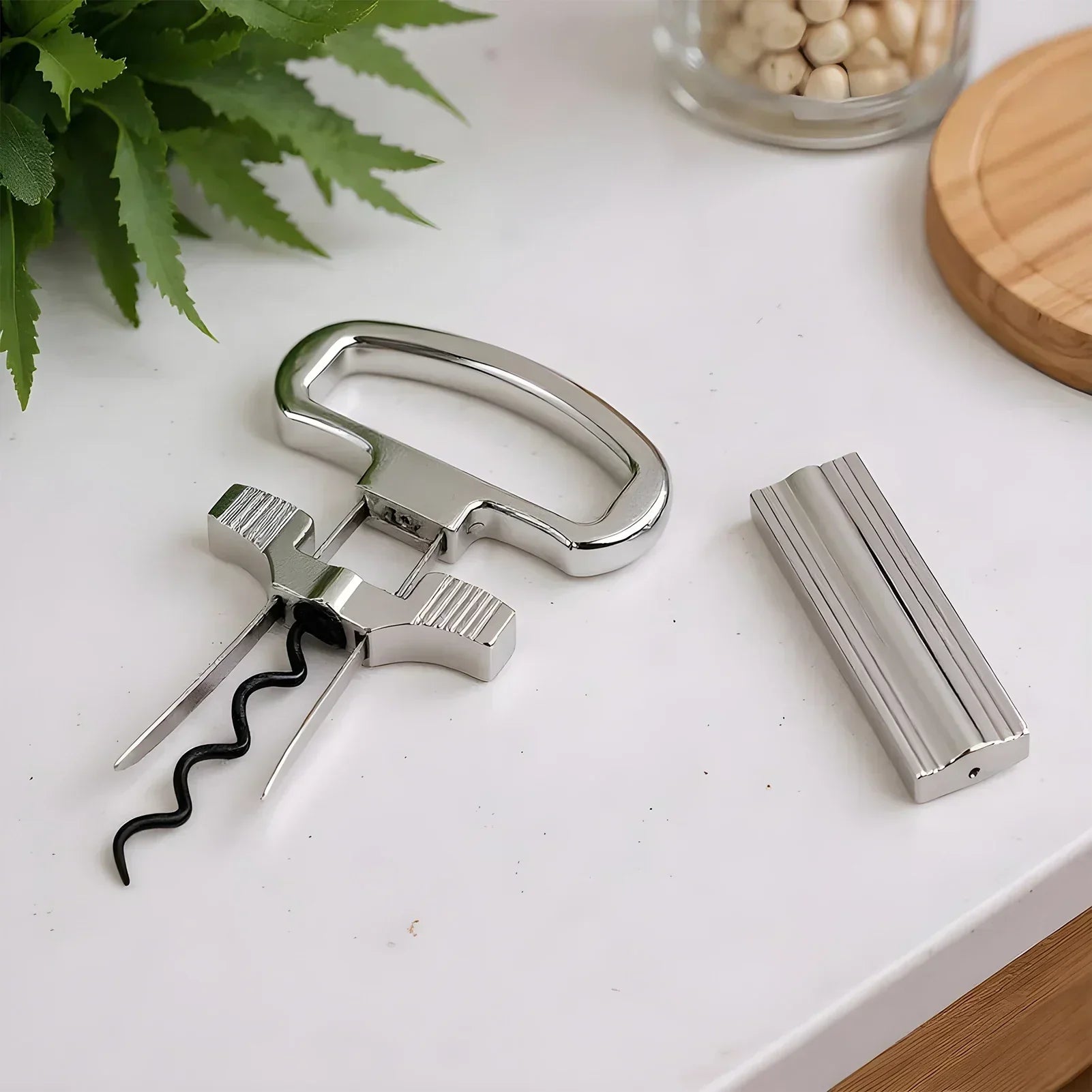
Champagne bottle opener — €22.50
Fits onto the cage. Two-handed control, even with wet hands. Essential in catering services or on large formats.
Champagne corkscrew — €19.50
Compact version for a drawer or pocket. Fits all standard collars.
Champagne extractor — €24.99
For corks that no longer move — swollen cork on a bottle kept for a few years. A mechanical lever that avoids having to force it by hand.
Champagne claw — €24.99
Holds the cage in place during uncapping. Highly appreciated by professionals who open dozens of bottles per night.

Frequently Asked Questions
Is it possible to unclog it silently?
Yes — and that's exactly what sommeliers do. By slowly twisting the cork and holding it with their thumb, the gases escape with a hissing sound. No pop, no lost foam.
The cork is stuck — what to do?
The cork extractor (see accessories section). If you don't have one, soak the neck of the bottle in hot water for 30 seconds — the glass will expand slightly and release the cork.
How long after opening?
Leave for 24 to 48 hours with a pressure-sealed cap, upright in the cold. A spoonful in the neck does nothing.
Sabering or sabering the champagne?
Sabrer = a blade technique. Sabler = to drink generously. Two words, two completely different meanings.
A classic corkscrew on a sparkling wine?
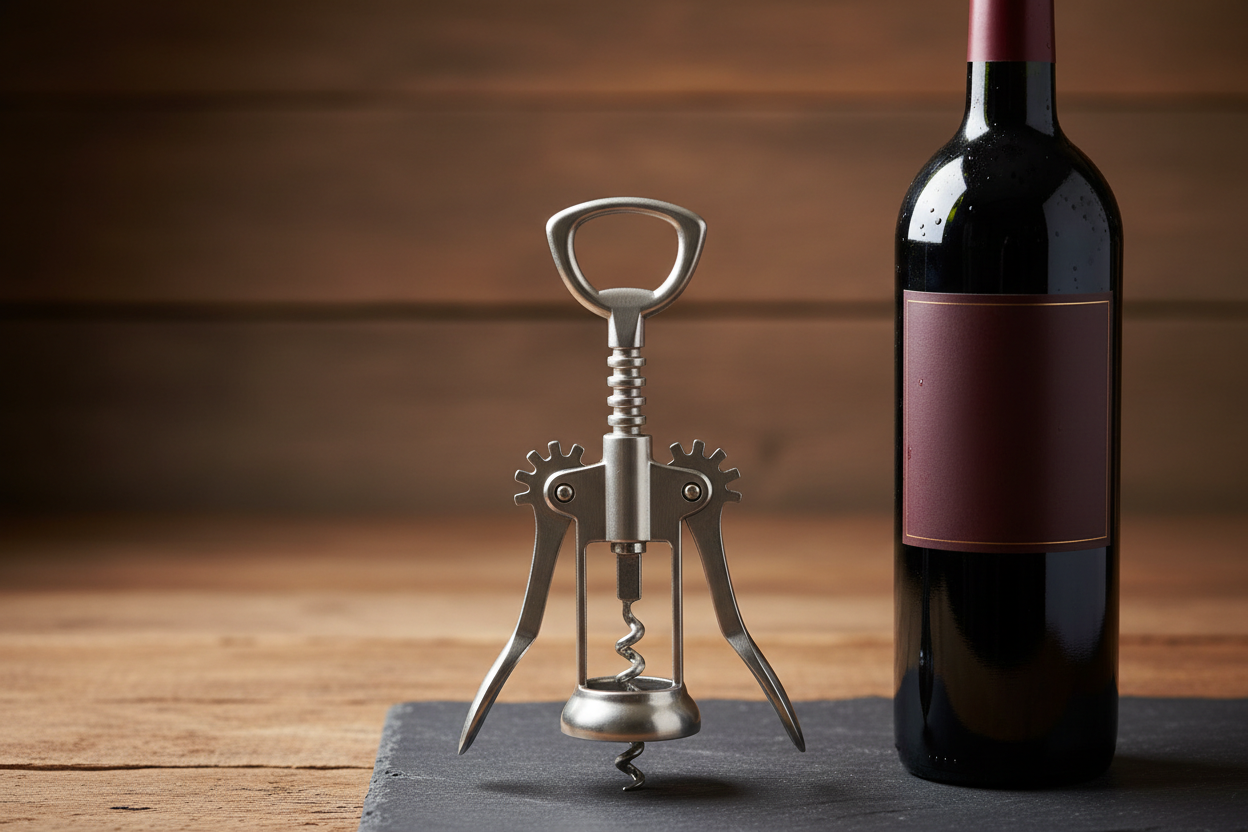
No. A corkscrew pulls—here, the gases push. The tool's role is to control the extrusion, not to extract the cork. Specific models are designed precisely for that purpose.
📖 To learn more
Benjamin Fournier — Sommelier-Consultant
Graduate of the University of Wine in Suze-la-Rousse · 5+ years in the winery · Founder of Limonadier.co
Key takeaways
It's a gesture of control, not force. A cold bottle, the cage held securely, and you twist the glass—not the cork. These three reflexes cover the essentials. A good tool helps to apply them consistently, even when you're in a hurry.