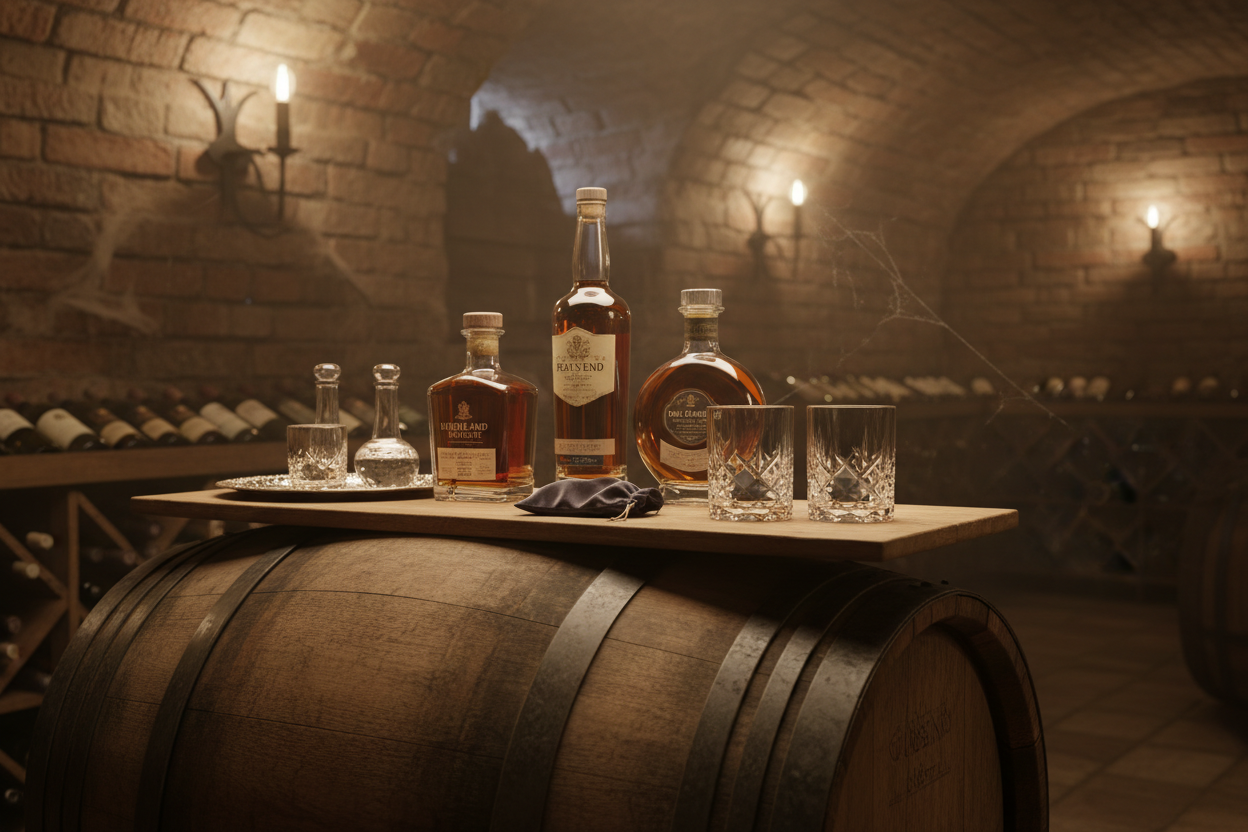
At what temperature should whisky be enjoyed?
Whisky serving temperatures by type, ice-free summer solutions, common mistakes, and tasting methods used by Scottish distillers. A study by Limonadier
Why is 18-20°C the Reference Temperature for your whisky?
Serve your whisky between 18 and 20°C; this is the ideal temperature range where the aromas are released without the alcohol overpowering them. Below 15°C, the aromas remain trapped, and above 24°C, the ethanol saturates the nose.
Most Scottish distilleries taste their whiskies at around 20°C. This is the ambient room temperature in Scotland, and it's no coincidence. The master blenders at Glenfiddich, Highland Park, and Talisker have always worked under these conditions.
At this temperature, the aromatic molecules are released from the liquid without evaporating too quickly. The nose first detects the light notes (fruit, flowers), then the middle notes (spices, honey), and finally the deeper notes (wood, leather, peat). This progression is what makes a tasting so rich.
- Below 15°C: the aromas remain trapped in the liquid. You drink the same whisky, but you only perceive a fraction of it.
- Between 18 and 20°C: the aromatic molecules are released gradually. This is the ideal window for a complete tasting.
- Above 24°C: the ethanol evaporates first and saturates the nose. Only the alcohol is smelled.

Adjust the temperature according to your whisky.
A peated whisky is served warmer than a fruity one, and a bourbon handles temperature fluctuations better than a single malt. Peated whisky: 19-21°C, fruity whisky: 17-19°C, bourbon: 16-20°C.
The 18-20°C range works for most single malts. However, some profiles require adjustment.
Peated whiskies: aim for 19-21°C
The phenols responsible for peaty aromas need a little more warmth to fully express themselves. An Ardbeg 10 or a Laphroaig Quarter Cask served at 16°C will seem flat. Let it warm to 20°C and the peat, iodine, and sea salt suddenly appear. The difference is striking when you taste them side by side.
Fruity and floral single malts: 17-19°C
Speyside wines like Glenfiddich 12, Glenlivet, and Macallan Gold emphasize delicacy. Serving them slightly cooler preserves the fruity esters—green apple, pear, citrus—which evaporate quickly at higher temperatures. The cooler temperature helps them linger a little longer in the glass.
Bourbons and blends: 16-20°C, more tolerant
Maker's Mark, Bulleit, or Jameson have a more robust aromatic profile, dominated by vanilla, caramel, and wood. These notes hold up well over a wider temperature range. This is why they are often found in iced cocktails: they withstand temperature variations without losing their character.
Cask strength: 18-20°C with a little water
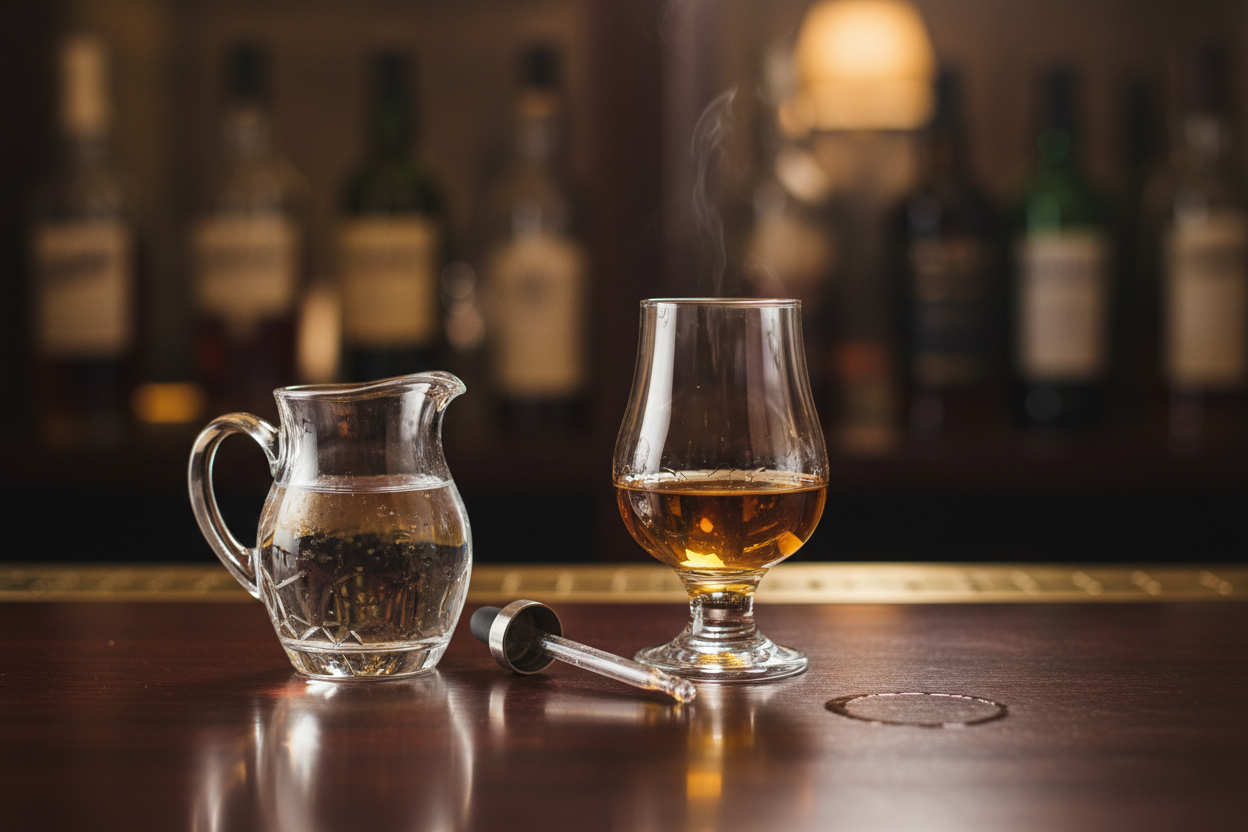
A whisky with 55-65% alcohol served at 22°C will burn your nose. Keep it at 18-19°C and add a few drops of room-temperature water. The water releases guaiacol, the molecule that gives whisky its smoky and spicy notes, while also calming the harshness of the alcohol. This was demonstrated by chemists Karlsson and Friedman in a study published in 2017 in Scientific Reports .

The Real Problem: How to Chill Your Whiskey in Summer
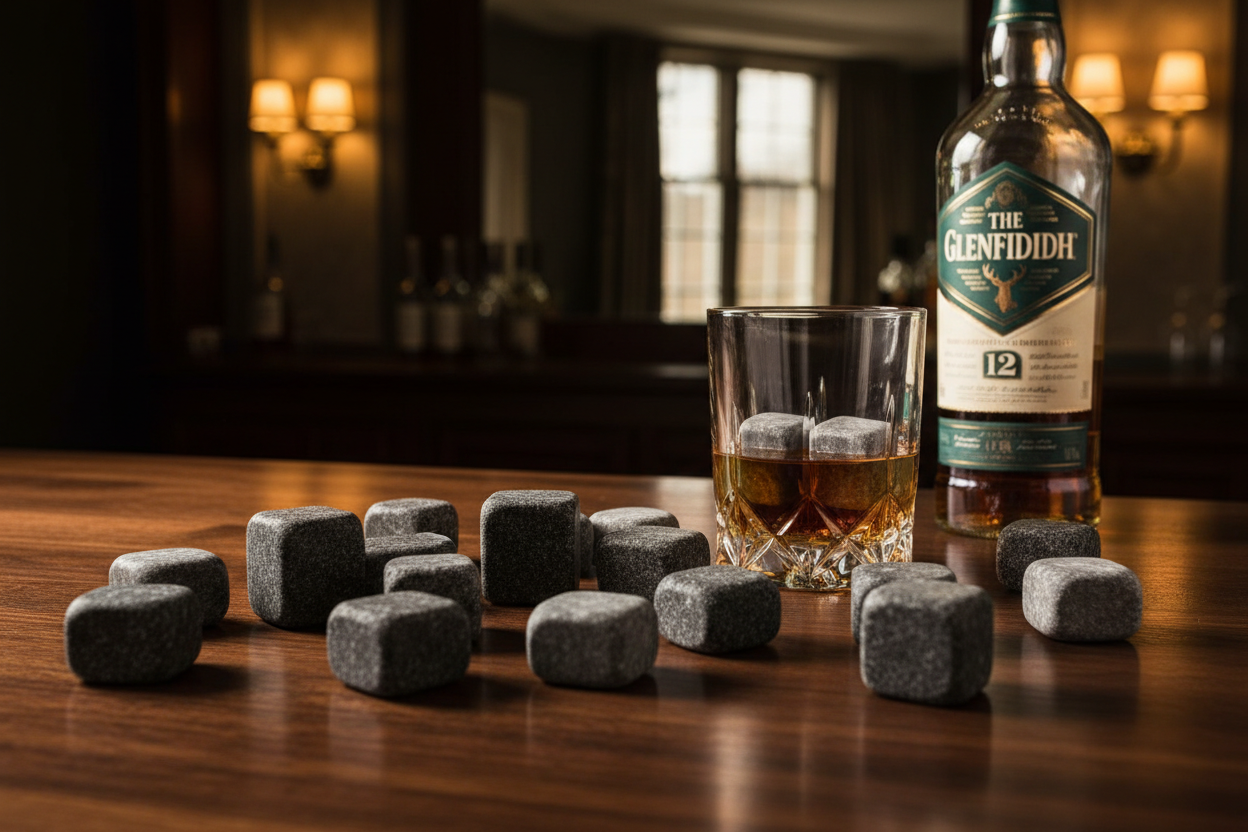
When it is hot, use stone ice cubes or a pre-chilled glass rather than ice cubes which dilute and freeze the flavors.
In winter, no problem. The bottle in the cupboard is naturally between 17 and 20°C. Enjoying it is effortless.
Summer is a different story. The living room is 27°C, and so is the bottle. The whisky warms up in the glass. The alcohol evaporates, and the delicate aromas disappear before you have a chance to enjoy them.
Four solutions, from the simplest to the most committed:
- The glass should be pre-chilled. Place your empty glass in the refrigerator 10 minutes before serving. The whisky will drop 2 to 3°C upon contact with the cold glass, then slowly rise again. Simple and free.
- Whisky stones. Two or three soapstone or stainless steel stones, placed in the freezer for a few hours, will chill the whisky by 4 to 6°C without diluting it. The cold diffuses slowly, maintaining the temperature for about fifteen minutes. This is the preferred method for regular whisky enthusiasts.
- A few drops of fresh water. Five to ten drops of very cold spring water slightly lower the temperature while opening up the aromas. This is what the Scots themselves do.
- Store in a cool place. Cellar, pantry, or cupboard on the north side of the house. If you keep your bottles between 15 and 18°C all year round, you'll never have this problem again.
What to avoid: ice cubes in a single malt. An ice cube can lower the temperature by 10°C in just a few minutes. At this temperature, the aromas are locked in. And when the ice melts, the dilution disrupts the balance intended by the distiller. For a blended whisky as an aperitif on a summer evening, why not? For an 18-year-old Talisker, it would be a shame.
Source: Discover our review of Stone Ice Cubes

Mistakes That Ruin a Whisky Tasting
Freezer, hot glass, direct sunlight — most tasting errors are temperature errors.
We often see them, even among knowledgeable amateurs:
- Take the bottle out of the freezer. Some people store their whisky in the freezer "to keep it nice and cold." At -18°C, whisky doesn't freeze thanks to the alcohol, but its aromas are completely lost. You might as well drink vodka.
- Serve in a glass rinsed with hot water. The hot water raises the glass's temperature to 35-40°C. The whisky heats up on contact, and the alcohol evaporates quickly. Rinse with cold water or simply wipe with a clean cloth.
- Enjoy it near a radiator or in direct sunlight. The ambient heat warms the glass much faster than you might think. On a terrace in summer, a whisky at 20°C can reach 28°C in ten minutes. Choose a shady spot if possible.
- Fill the glass to the brim. The more liquid there is, the greater the thermal mass, and the longer it takes for the whisky to reach the right temperature. Serve 3 to 4 cl, no more. This also leaves room for the aromas to develop in the glass.
- Trust the feel of the bottle. The glass is a poor indicator. It may feel cool even though the whisky inside is 24°C. If in doubt, pour and wait a few minutes for the liquid to settle in the glass.

The Distillers' Method: Letting the Glass Evolve
Don't aim for a fixed temperature — serve at 18°C and enjoy as it warms up, each stage reveals new aromas.
In tasting rooms in Scotland or Japan, no one serves whisky at a fixed temperature. The protocol is more interesting than that: the whisky is poured, and it is tasted as it warms up in the glass.
- First nose at 18°C: light notes arrive first — fresh fruit, flowers, cut grass.
- Second nose at 20°C (after a few minutes) : the core aromas are revealed — honey, spices, vanilla, caramel.
- First sip at 21-22°C: the mouth warms the liquid even more. The heavy notes — wood, leather, smoke — unfold in the finish.
Every minute in the glass changes the whisky. That's what makes the tasting experience alive.
The ideal glass for this: a Glencairn. The wide base allows the whisky to breathe, the narrow neck concentrates the aromas towards the nose. And the fact that it has no stem forces you to hold it by the base. Your hand gently warms the glass. That's intentional.

Summary by Whisky Type
You have the bottle in your hand and you just want the right number? This table sums it all up:
| Type of whisky | Temperature | For what |
|---|---|---|
| Peated single malt (Ardbeg, Laphroaig, Caol Ila) | 19-21°C | Peat phenols need heat |
| Fruity single malt (Glenfiddich, Glenlivet, Macallan) | 17-19°C | Preserves volatile fruity esters |
| Bourbon (Maker's Mark, Bulleit, Woodford Reserve) | 16-20°C | More tolerant vanilla profile |
| Blend and Irish (Jameson, Monkey Shoulder) | 16-20°C | Handles variations well |
| Cask strength | 18-20°C | + a few drops of fresh water |
| Japanese whisky (Yamazaki, Nikka, Hibiki) | 18-20°C | Precision, fine and subtle aromas |
FAQ
What is the ideal temperature for enjoying a single malt whisky?
Most whiskies are best served between 18 and 20°C. Peated whiskies (like Ardbeg and Laphroaig) are best served at 20-21°C. Fruity Speyside whiskies are best enjoyed at around 17-19°C. The idea is to allow the aromas to develop without the alcohol overpowering them.
How to chill whisky in summer without using ice cubes?
Three options: whisky stones that have been chilled in the freezer (they cool without diluting), a glass pre-chilled for 10 minutes in the refrigerator, or a few drops of fresh spring water. Ice cubes lower the temperature too much and dilute the whisky as they melt.
Can you put a bottle of whisky in the refrigerator?
For storing it, no. Fluctuations in temperature are detrimental to whisky. For a quick chill before serving in summer, yes, for 10 to 15 minutes. Take the bottle out and let the whisky reach 18-20°C in the glass.
Why does my whisky have no taste when it's cold?
Below 15°C, aromatic molecules don't have enough energy to evaporate and reach your nose. They remain in the liquid. Leave your glass at room temperature for a few minutes and repeat the test. The difference will be clear.
Should you hold your glass of whisky in your hand?
With a stemless Glencairn glass, yes. The warmth of your hand gently warms the whisky and allows the aromas to develop during tasting. With a stemmed glass like a copita, hold it by the stem to maintain control over the temperature.
Key takeaways
The serving temperature makes all the difference between a whisky that bores you and one that tells a story. Aim for 18-20°C for most single malts , adjusting according to the profile (peaty, warmer; fruity, cooler), and above all: let the glass breathe. In summer, whisky stones or a pre-chilled glass will do the job without diluting your favorite bottles. Avoid ice cubes in a tasting whisky, and never store your bottles in the freezer.
Benjamin Fournier
Wine shop in Avignon / Spirits, wines, beers and cocktails


Leave a comment
This site is protected by hCaptcha and the hCaptcha Privacy Policy and Terms of Service apply.