Article: Tiki Glass: Everything You Need to Know
Tiki Glass: Everything You Need to Know
What is a tiki mug? Polynesian origin, exotic cocktails, mug collection: complete guide by a certified sommelier-consultant at Limonadier.
⚡ Key takeaways
- "Tiki" means "first man" or "demi-god" in Polynesian
- The first tiki cocktails date back to 1933, created by Don the Beachcomber in Hollywood
- Thick ceramic keeps drinks colder longer than standard glass
- A tiki cocktail combines 2 to 3 different rums, tropical juices, and orgeat syrup
- Vintage mugs from the 1950s-60s fetch several hundred euros at auction
What is a tiki mug?
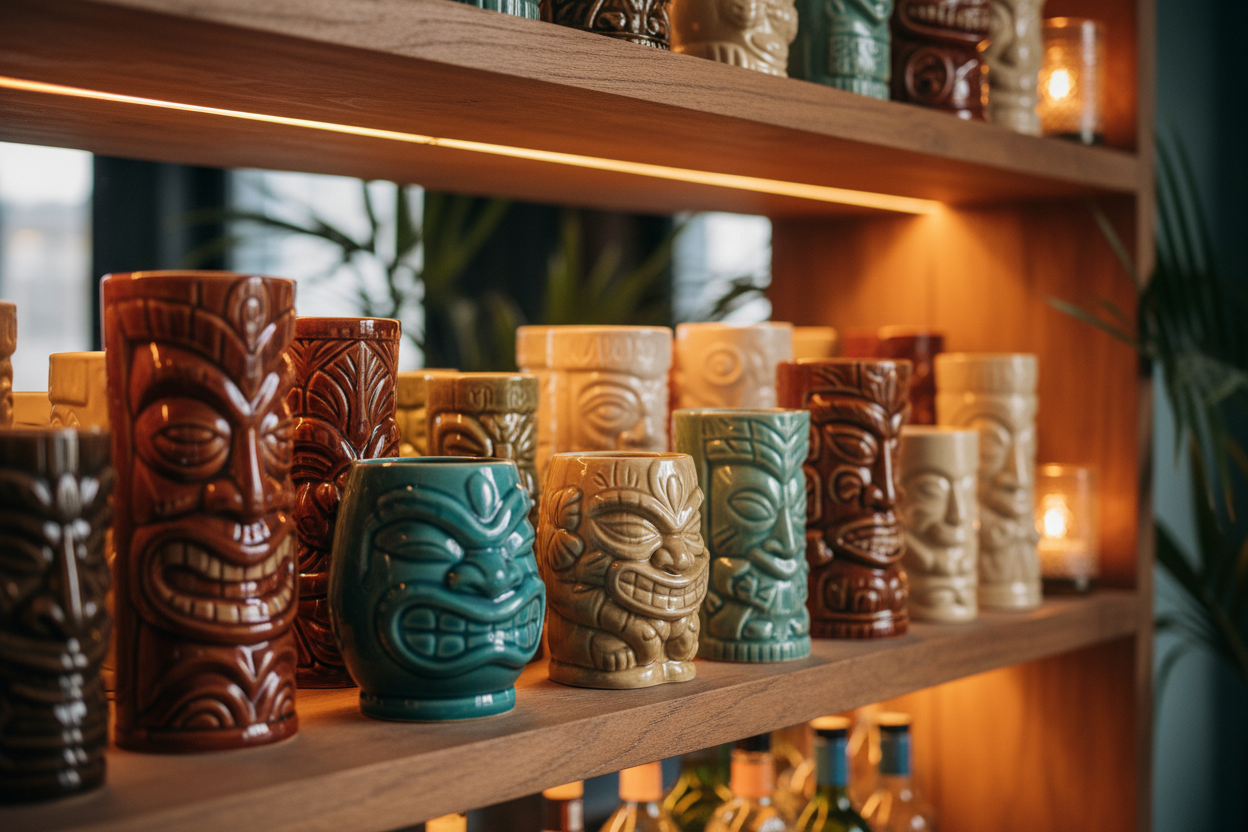
A tiki mug is a ceramic mug sculpted in the likeness of Polynesian deities, used to serve tropical cocktails. With a capacity of 35 to 60 cl, it reproduces the characteristic faces of Pacific totems with their prominent eyes and open mouths.
Two formats dominate the market. The 35 cl models are sufficient for an individual Mai Tai or Jungle Bird. The 50-60 cl formats accommodate shared cocktails like the Scorpion Bowl, served with several long straws. Finishes range from matte volcanic brown to glossy turquoise depending on the manufacturer.
In the cellar and at the bar, I use tiki mugs as rum glasses for aged rums served with plenty of crushed ice. The thick ceramic wall prevents rapid condensation and maintains the temperature longer than thin glass. Prices start around €15-€20 for a basic mug and go up to over €200 for artisan pieces.

What does tiki mean?
In Polynesian, "tiki" refers to the first man created by the gods. In Tahitian, it's called "Ti'i," which translates to "demigod." The word encompasses both the mythological figure and the sculptures that represent it in Oceanian culture.
Carved tikis served as guardians in marae, open-air temples. Each island—Tahiti, the Marquesas, Hawaii, New Zealand—developed its own style. Common features: round, fixed eyes, frontal posture. Tiki mugs have adopted these codes since the 1930s.
Where do tiki drinks come from?
Tiki drinks originated in the United States in the 1930s. Ernest Gantt, also known as Don the Beachcomber, opened the first tiki bar in Hollywood in 1933. Victor Bergeron (Trader Vic) followed in Oakland in 1936. Both invented the foundational recipes: the Zombie for one, the Mai Tai for the other.
American fascination with Polynesian exoticism began after World War I. The golden age lasted from the 1940s to the 1960s. There were two reasons: the return of GIs from the Pacific and Hawaii's annexation as the 50th state in 1959.
Why tiki bar?
A tiki bar didn't just sell a cocktail; it offered a complete escape. Bamboo decor, torches, Hawaiian music, and sculpted mugs transformed an American bar into a Pacific island. The concept boomed after the war, when GIs returning from the Pacific wanted to recapture that atmosphere.
What is a tiki cocktail?
A tiki cocktail is a tropical drink combining several rums, fresh fruit juices (pineapple, lime, passion fruit), orgeat syrup, and spices. Recipes often include 5 to 8 ingredients, with a spectacular presentation: tropical garnishes and sculpted mugs.
What strikes me about tiki cocktails is the logic of assembly. A good Mai Tai combines an aged agricultural rum for structure with a molasses rum for roundness. Orgeat syrup provides almond notes, curaçao citrus bitterness. It's far from a 3-ingredient cocktail.

What is the tiki alcohol?
Rum is the base alcohol for almost all tiki cocktails. Classic recipes combine 2 to 3 rums of different styles: white agricultural rum, amber molasses rum, and overproof rum (50-75°) for potency.
What is the difference between a tiki cocktail and a classic cocktail?
A classic cocktail relies on 3-4 ingredients with a dominant spirit. A tiki uses 5 to 8, combines several rums, and focuses on fresh tropical juices. The presentation is also radically different: sculpted mugs, elaborate garnishes, and crushed ice.
| Criterion | Classic Cocktail | Tiki Cocktail |
|---|---|---|
| Ingredients | 3 to 4 | 5 to 8 |
| Base Alcohol | 1 spirit | 2-3 blended rums |
| Glassware | Coupe, tumbler, flute | Sculpted ceramic mug |
| Presentation | Simple, zest or olive | Tropical garnishes, umbrellas |
Are tiki cocktails strong?
Yes, tiki cocktails are generally strong. A Zombie contains up to 9 cl of total rum (including overproof at 75°). The fruit juices mask the alcohol, making them deceptive. Don the Beachcomber limited his customers to 2 Zombies per person.
What makes a tiki mug unique?
A tiki mug is primarily distinguished by its sculpted shape, reproducing Polynesian deities, and its thick ceramic that thermally insulates the drink. Colored glazes—ochre, turquoise, volcanic brown—add a visual effect that classic glass cannot offer.
Unlike a whiskey glass, the tiki mug hides the contents. The customer does not see the color of the liquid—they discover the cocktail by smell and taste. This is an approach I appreciate because it recreates the mystery of Don the Beachcomber's first secret recipes. If you are looking for your first tiki mug, choose a 40 cl glazed ceramic model—versatile enough for most recipes.

Why do people collect tiki mugs?
Tiki mugs are collected for their connection to the golden age of American tiki bars (1940-1960) and the rarity of certain pieces. Every legendary bar produced its own exclusive models. Vintage pieces from Trader Vic's or Mai-Kai fetch several hundred euros at specialized auctions.
The tiki community is active. Events like Tiki Oasis in San Diego or Hukilau in Florida bring together thousands of collectors each year. Some contemporary artisans—Munktiki, Tiki Farm, Eekum Bookum—release limited series that sell out in a few hours. A collector's mug starts at €30-€50.

📖 Recommended Articles
Benjamin Fournier — Sommelier-Consultant
Graduated from the Université du Vin de Suze-la-Rousse · 5+ years of cellar experience · Founder of Limonadier.co
Key takeaway
The tiki mug is as much a vessel as it is a historical object. Born in American bars in the 1930s, it brings Polynesian visual codes into your glass. To start, a 40 cl ceramic mug and a good Mai Tai recipe are all you need.
Article updated on 2026-03-21


Leave a comment
This site is protected by hCaptcha and the hCaptcha Privacy Policy and Terms of Service apply.