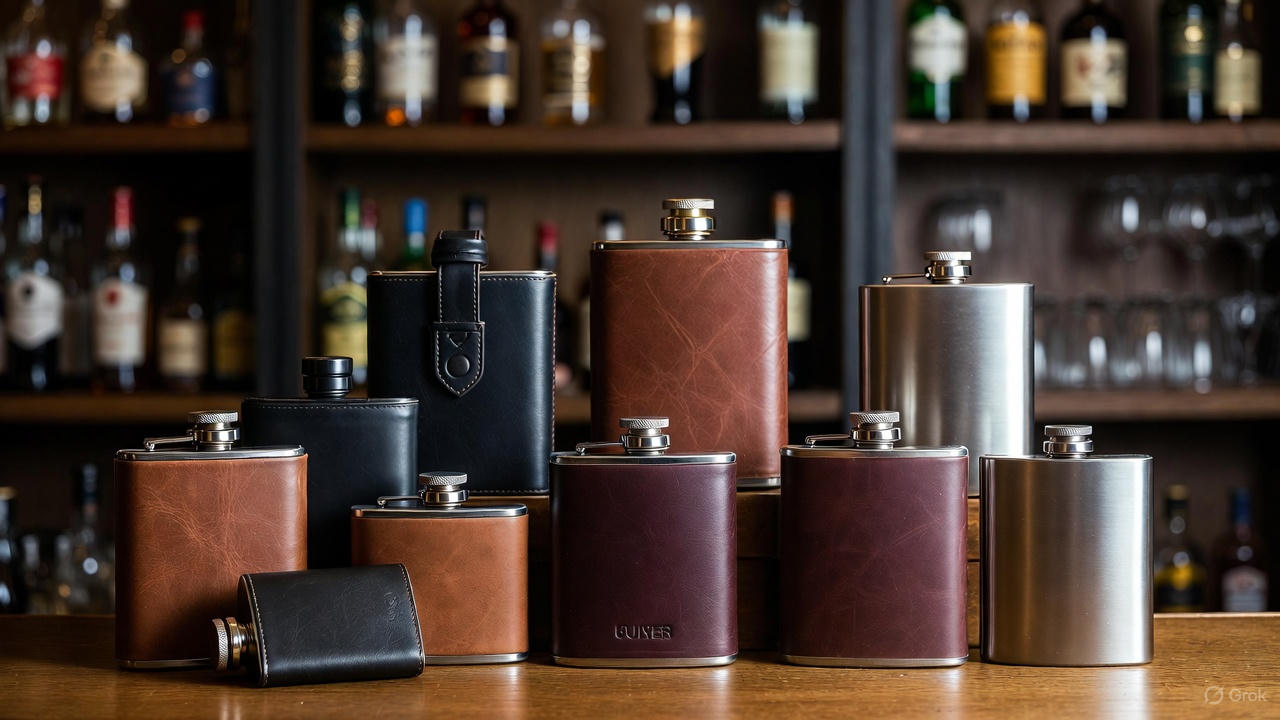
What types of alcohol can be put in a flask?

Summary: Choosing the right drinks is important when storing your flasks . Spirits (whiskey, vodka, amber rum) contain between 40 and 50% alcohol and will be well preserved and protected inside your flasks. However, if you opt for wine, you should drink it within 12 hours to preserve its aromas and flavors before they oxidize. You can forget about alcoholic beverages like beer, which are not suitable for your flasks; a good mug of beer is much better.
Flasks are not simply containers like tulip glasses . They are airtight containers with stainless steel walls. Your drink won't stay fresh the same way as in a bottle. That's why not all beverages are compatible with this type of container.
According to the Wine & Spirit Education Trust, spirits that are aged in casks are more resistant to oxidation caused by this metallic container.
Recommended spirits:
| Beverage | Optimal degree | Maximum duration | Compatibility |
|---|---|---|---|
| Whiskey (scotch, bourbon, Irish) | 40-46° | 3-7 days | ★★★★★ Excellent |
| Neutral vodka | 40-50° | Up to 2 weeks | ★★★★★ Excellent |
| Amber/aged rum | 40-45° | 3-5 days | ★★★★☆ Very good |
| Cognac/Armagnac | 40° | 3-7 days | ★★★★☆ Very good |
| Tequila reposado/añejo | 38-40° | 3-5 days | ★★★☆☆ Acceptable |
| Gin | 40-47° | 24-48 hours max | ★★☆☆☆ Limited (volatile botanicals) |
Alcohols to absolutely avoid

Most beverages are compatible with flasks. The key factor is how long the beverage remains in the container. In most cases, the drink will be consumed within 12 hours, so the aroma and flavor will be intact. Beyond 24 hours, the beverage can oxidize, compromising its shelf life. Cleaning will also become more difficult.
- Wines (red/white): Rapid oxidation within 12 hours, alteration of tannins upon contact with metal
- Beers and ciders: Carbonation + gas pressure = risk of the cork exploding
- Cocktails with fresh juice: Perishable ingredients, phase separation, rapid fermentation
- Anything containing added sugar: Sticky residue impossible to clean properly
Material compatibility
Now, 95% of flasks are sold with a stainless steel lining that is food-grade certified. This alloy guarantees no chemical reactions that could alter the quality of your drink. Proof of this is that, with regular maintenance, they last for over 10 years without any problems.
One point to note: Although it is certified for food use, prolonged exposure to sunlight will alter the taste and quality of your drink.
Impact on materials:
- Stainless steel: Completely neutral, the essential choice for your purchase
- Silver: Excellent, slight patina possible but without alteration
- Leather: Beware of spills! Leather will be damaged if it comes into contact with alcohol.
Important note: Limonadier advises you to avoid anything too acidic. This can damage the metal, making cleaning more difficult.
How to fill a flask without spilling?
Equipment needed
Most flask kits now include two small shot glasses, your flask, and a small funnel that fits into the opening of your flask. Without this small accessory, refilling your flask will be difficult and messy.
Filling technique

Here is the method that Limonadier recommends you follow carefully:
- Position the flask: Perfectly upright on a stable surface. Work over a sink.
- Insert the funnel: Firmly into the neck without forcing.
- Pour very slowly: Controlled and steady flow.
- Allow air to escape: Air must be able to escape while the liquid enters.
- Fill to 80-90% max: Never to 100%! Alcohol expands with heat.
- Wipe the neck: Thoroughly with a clean cloth before closing.
Anti-waste tips
If you don't have a funnel to help you, simply position yourself over a sink and pour slowly. With a little practice, you shouldn't lose too much of your precious drink!
Costly mistakes
I've made all of these mistakes at least once:
- Fill to 100%: Body heat creates leaks at the cap.
- Pouring too quickly: Air bubbles will form, it will overflow, and you'll have to clean everything up.
- Forgetting to clean the threads: Alcohol residue will make your flask sticky.
How long can alcohol be stored in a flask?

Summary: It all depends on storage conditions! At room temperature or chilled, any beverage should last 72 hours without any problem. For some spirits, 7 days is possible. However, if your flasks are subjected to significant temperature fluctuations, it's best to limit them to 24 hours maximum.
A common question every enthusiast asks is how long alcohol lasts in a flask. In our experience, very few people finish it within 24 hours. However, if you're going on a long, multi-day hike and your consumption is low, here's my answer:
Maximum shelf life per spirit:
| Spirits | Stainless steel flask | Tin flask | Silver flask | Signs of deterioration |
|---|---|---|---|---|
| Whisky 40-46° | 3-7 days | 24-48 hours | 5-7 days | Subtle metallic notes |
| Neutral vodka | Up to 14 days | 48-72h | 10-14 days | Very stable, little change |
| Amber/aged rum | 3-5 days | 24-36h | 4-6 days | Loss of delicate aromas |
| Cognac/Armagnac | 3-7 days | 24-48 hours | 5-7 days | Aromatic bouquet evaporation |
| Gin | 24-48 hours max | 12-24h | 36-48 hours | Botanicals evaporate quickly |
Chemical degradation phenomena
In an airtight container, several processes affect your alcohols. Oxidation remains inevitable due to contact with air.
- Progressive oxidation: Inevitable contact with air
- Aromatic alteration: Appearance of metallic notes
- Excessive temperature: Your drink heats up and becomes unpleasant to drink
Factors that influence conservation
The quality of your cap and its seal accounts for 80% of the work. A quality flask with a leak-proof screw cap will keep your drink fresher for far longer than a standard flask with an aging cap.

The 5 determining factors:
- Cap sealing: The number one factor absolutely crucial for preservation
- Construction material: Stainless steel remains the standard for your purchase
- Type of alcohol: Spirits are more resistant to oxidation than wine.
- Storage temperature: 15-17°C stable, ideal; avoid variations above 20°C
- Initial cleanliness: If it is not properly cleaned after each use
Good conservation practices
At Limonadier our personal rule: never keep any alcohol (spirits, gin, wine) for more than 48 hours in my flask.
- Consume within 48 hours: Ideal for preserving all the aromas and flavors.
- Inspect the smell before consumption: If it smells strange, throw it away.
- Clean after each emptying: Essential to avoid spoiling the next use
Caution: If you detect a metallic taste or a suspicious odor, empty and clean your flask.
How to clean and maintain your flask effectively?
Summary: As with cleaning a port glass, it is recommended to rinse quickly with lukewarm water after each use. Rinse thoroughly with clean water and dry upside down for 24 hours. If any odors remain, cleaning with baking soda will eliminate the residue.

With a flask, you have to perform regular maintenance. If you neglect it, your flask will simply become unusable because it will smell bad, and the taste of your whiskey or other beverage will be altered and become unpleasant.
If you do it correctly and the wall of your flask is made of stainless steel then you can keep it for more than 10 years without worry.
Cleaning after each use (mandatory)
This 5-minute routine ensures proper maintenance of your water bottle. Limonadier strongly recommends doing this after each use.
- Rinse immediately: With lukewarm water as soon as the flask is empty. The alcohol evaporates and leaves sticky residue if you wait.
- Mild soap: A few drops of dishwashing liquid.
- Brush brush: Essential for reaching the bottom that is completely inaccessible by a sponge.
- Intensive rinsing: Minimum 4-5 successive rinses with clean water.
- Complete drying: Upside down, cap open, minimum 24 hours on a draining rack. Humidity = mold.
- Permanent ventilation: Always store with the cap open between uses.
If you're coming home from a night out or are simply tired, take the time to fill it with warm water and a few drops of liquid soap. You'll be very glad you did the next morning.
Cleaning methods:
| Method | Dosage | Action time | Efficiency | Use |
|---|---|---|---|---|
| Bicarbonate | 25g/250ml at 60°C | 2-4 hours (overnight is ideal) | ★★★★★ | Odors, organic residues |
| White vinegar | Pure or diluted 50/50 | 1-2 hours | ★★★★☆ | Limescale, persistent odors |
| Stainless steel cleaning beads | 1 handful + water | 5 min agitation | ★★★★☆ | Adhesive mechanical residues |
| Household alcohol 90° | Pure | 30 min | ★★★★★ | Sticky sugary residue |
Limonadier's method: 25g of baking soda in 250ml of water. Leave it on overnight, then rinse thoroughly in the morning. Impeccable results every time.

Addressing specific problems
Every problem has its own dedicated solution. I've solved all of these cases at least once:
- For stubborn, persistent odors: Leave on baking soda overnight, then rinse 3-4 times.
- Sticky, sugary residue: Use pure 90% rubbing alcohol and leave for 1 hour.
- Pewter patina stains: Freshly squeezed lemon juice + fine, mild salt, rub gently, rinse immediately
- Mold (rare): Diluted 1% food bleach, soak for 30 minutes, rinse 4-5 times.
Specific maintenance for each material
Not all materials are cleaned the same way. Stainless steel is almost forgiving, while tin and leather require more attention.
Maintenance guide by material:
- Food-grade stainless steel: The most robust, dishwasher safe
- Exterior leather: Nourishing cream for natural leather twice a year to soften it.
- Traditional lead-free tin: Specific mild tin polish only, microfiber cloth.
- Universal storage: Always in a dry, breathable environment. Cap open between uses.
Mistake: Never keep the flask closed. It will smell musty. And you'll have to use baking soda overnight to get rid of it.
Purchase your alcohol flask:
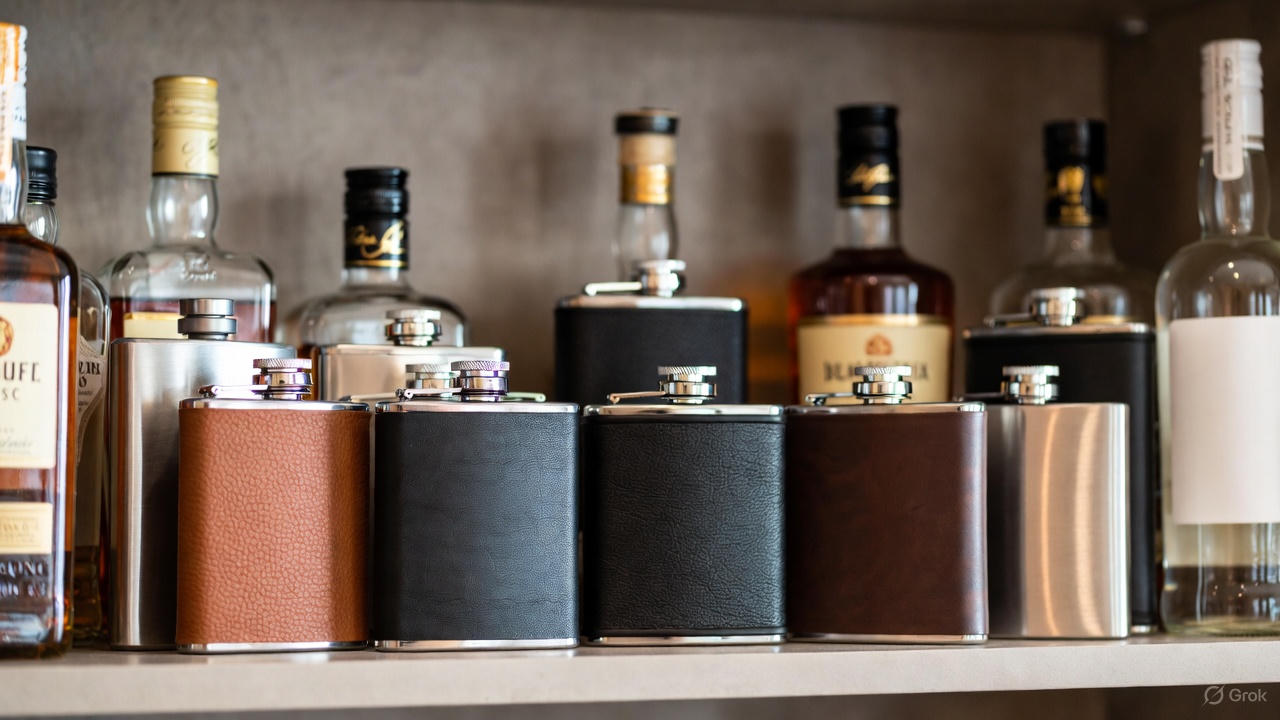
Limonadier, your online shop, offers a selection of 17 flasks of spirits. Enjoy free delivery on orders over €10. Our selection starts at a low price of €19.99 and goes up to €31 for a tasting set. Don't wait any longer!


%20contain%20between%2040%20and%2050%25%20alcoho...)
Leave a comment
This site is protected by hCaptcha and the hCaptcha Privacy Policy and Terms of Service apply.