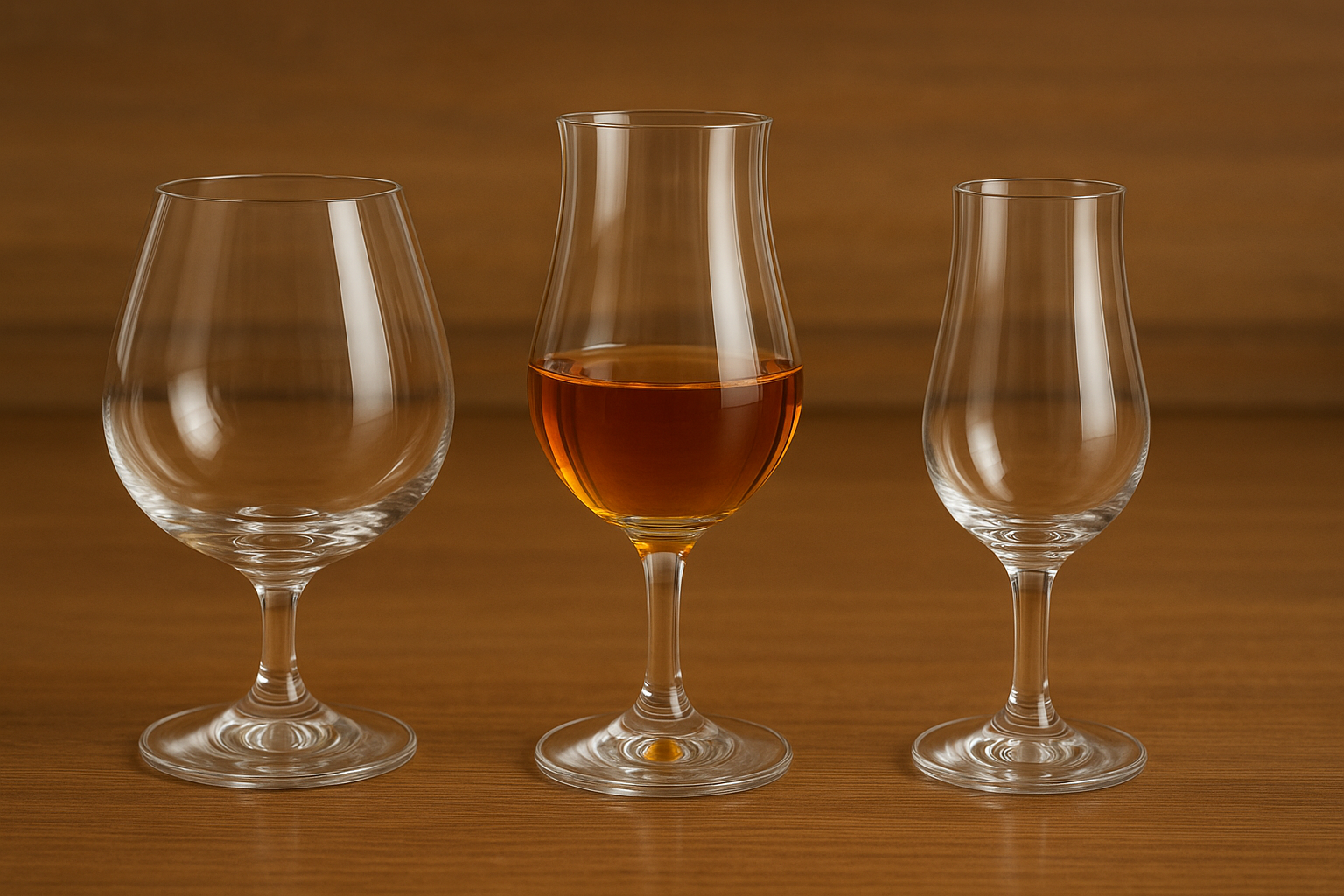
Whether in the world of spirits or champagne, it's well known that the choice of glass type (stem, balloon, etc.) and capacity can influence your appreciation of the balanced flavors of your wines. The same is true in the world of port glassware . But does that mean you absolutely have to buy a set of Baccarat or Riedel glasses for your service, just like sommeliers? That's what we'll explore in this blog post.
How does the tulip glass work and why is it most commonly used for port?

Operating principle of the Tulip glass:
Phase 1: Concentration of volatiles
As soon as alcohol is poured into the tulip glass, a reaction begins when the wine comes into contact with the air. Indeed, the Port wine begins to aerate, to oxygenate. This will reveal the primary and secondary aromas of the Port. Allow 2-3 minutes for this magic to happen, and a minimum temperature of 16 degrees Celsius is required.
Phase 2: Alcohol Evaporation Management
Once the primary and secondary aromas of Port are revealed, they will detach from the wine and accumulate in the rounded belly of the tulip glass. Inside this belly, they will gather and be trapped. Conversely, the gases contained in Port are lighter and will not be trapped in the glass, thus reducing the unpleasant sensation of "heat" in the mouth.
Phase 3: Tasting Ergonomics
When the drinker brings the glass to their mouth, all the aromatic notes will be directed to their nose, allowing for the identification of each note in your Port.



%20and%20capacity%20can%20influence%20your%20appreciation%20of%20the%20balanced%20flavors%20of%20your%20win...)
Leave a comment
This site is protected by hCaptcha and the hCaptcha Privacy Policy and Terms of Service apply.