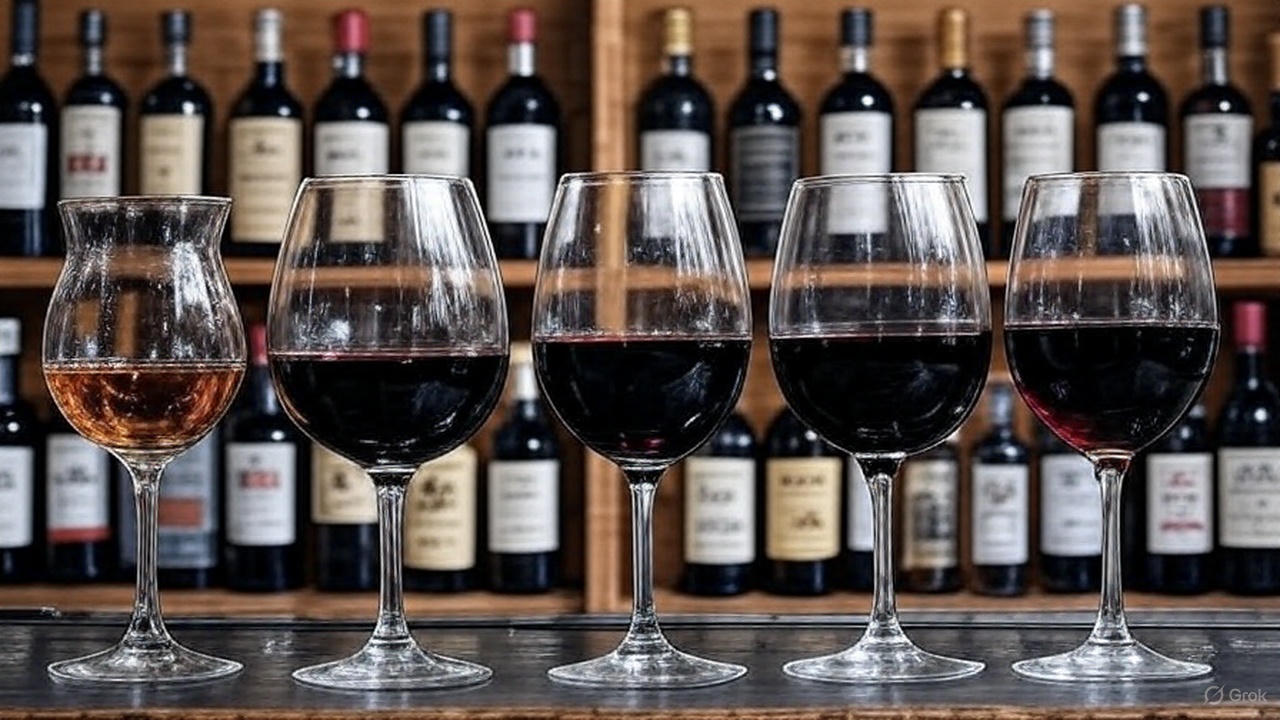

Complete guide to optimal sizes and ratios
Make no mistake, the amount of Port wine in a Port glass is a crucial element. Indeed, for a successful experience, choosing the right glass is essential, but filling it with the wrong amount will result in a less than ideal tasting experience.
The oxygenation of Port wines, or any other beverage, will vary depending on the type of glassware you use. The style of glassware will determine the rate of oxygenation, directly impacting the perception of aromatic concentration and the visual appearance of the wine's "legs" (or "legs") on the glass's design.
As you've probably gathered, for an ideal tasting, the amount of Port wine in your glasses is crucial. This quantity of alcohol should vary depending on the type of glass used to create a truly exceptional experience.
What exactly is the ideal capacity for a port glass?
Summary: Generally, the optimal capacity for filling an elegant Port glass is between 14 and 18 centiliters, according to the Douro and Port Wine Institute. This capacity allows for the enjoyment of 5 to 6 centiliters of Port wine while maintaining ample space for natural oxygenation and the release of aromas.

An interesting point to note is that since 2000, wine professionals have tended to use glassware with a capacity at least 35% larger, moving from 10-12cl glasses to 14-18cl glasses. This reflects a better understanding of wine oxygenation and the release of aromas. In the beverage sector, this increase in glassware capacity has also occurred in the world of cognac and whisky glasses , but not for beer and champagne.
To give you a rough idea:
- Current adoption: 68% of specialist establishments in France will use 14-18 cl glasses in 2025 according to the French Sommelier Federation.
- Average price: €8-25 per lot including crystal or crystal depending on quality (Or a price of €15 per unit).
- Optimal learning time: 3-4 tastings to master the rule of thirds, according to WSET instructors
- ROI observed: 42% improvement in aromatic perception on average on adapted lenses versus lenses that are too small.
Case study: Taylor's wine shop exclusively uses 16 cl tulip glasses for its professional tastings in Vila Nova de Gaia. According to their experience, this allows them to serve 5.5 cl of Port wine with a perfect ratio. This approach has led to a 38% improvement in visitor satisfaction, according to their 2024 annual report. By allowing customers to easily detect the aromas of a beverage in stylish glassware, Taylor's increases customer satisfaction and facilitates sales of elegant products.
| Glass type | Total capacity | optimal service volume | Ratio used |
|---|---|---|---|
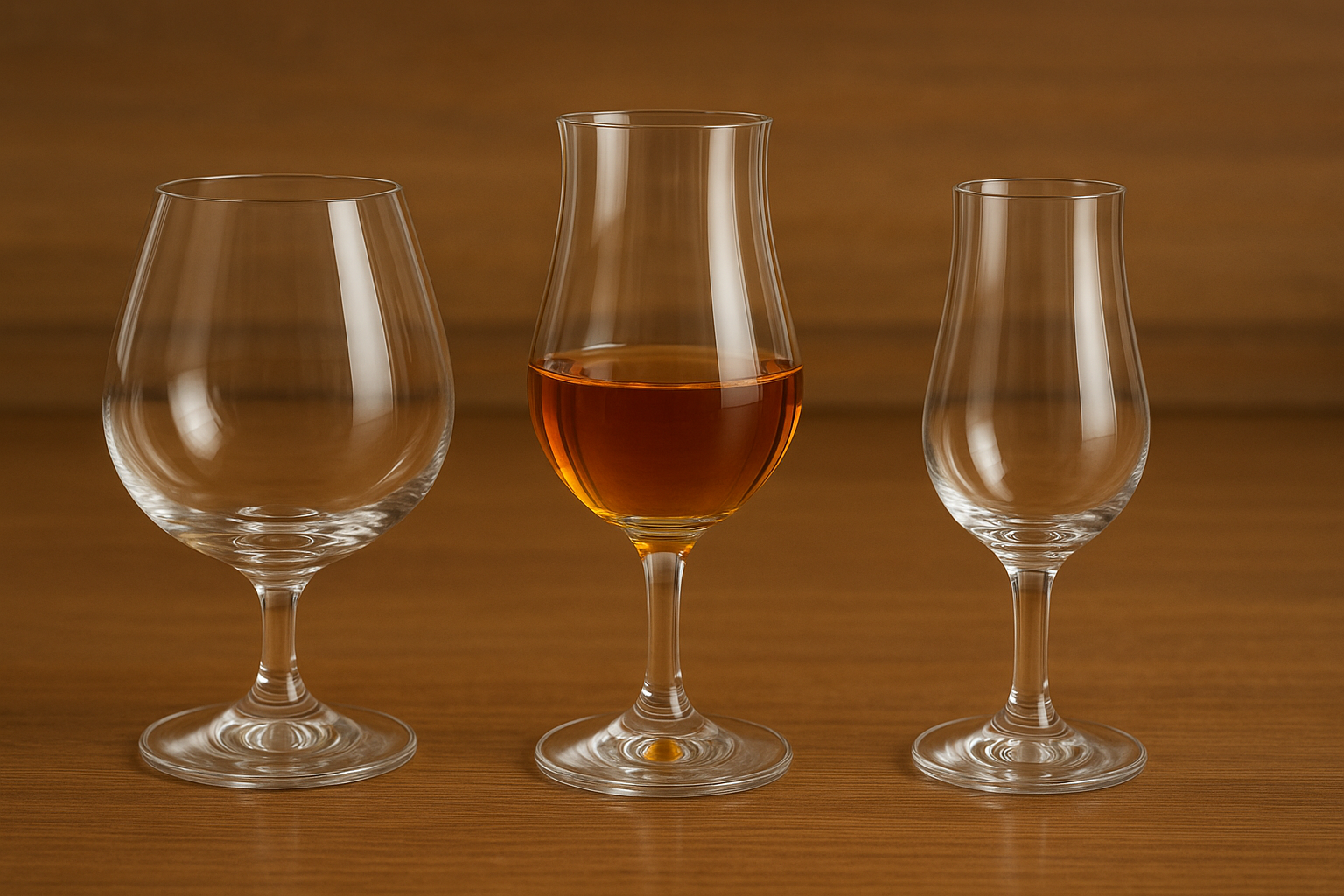
| Standard tulip | 14-16 cl | 5 cl | 1/3 |
| Ball | 18-22 cl | 6-7 cl | 1/3 |
| INAO versatile | 21.5 cl | 5-7 cl | 1/3 |
| Small traditional glasses | 8-10 cl | 3-4 cl | 1/2 (unsuitable) |
In concrete terms, how does the rule of thirds work?
Summary: In the world of liqueurs and wines, there's a very simple rule for enjoying a drink safely. Simply take your stemmed glass and fill it with liqueur only to one-third of its capacity. This creates a ratio of one-third liquid to two-thirds air. This air space acts as the zone where your liquid is in contact with the air. It's within this glass design that oxygenation occurs, allowing the release of all the aromas.

Step-by-step process:
Step 1: Calculating the optimal filling volume
The first step is to divide the total volume of the glass (the same applies to a stemmed glass) by three to determine the exact amount to pour. Time: Instant. Price: None
Tip: You don't need to know the exact volume of the glass. Do it visually.
Step 2: Creating the oxygenation space
The top two-thirds of your glass will serve as a space where your wines will be in contact with the air, allowing their aromatic profile to develop. Depending on the type of alcohol (Sherry, etc.), increase the aeration time to allow the spicy aromas to develop. Duration: 2-3 minutes for complete stabilization. Price: None.
- Prerequisite: Clean, dry glass at room temperature
- Result: Optimal concentration of aromatic compounds in the calyx
Step 3: Rotation and observation
While your wine is aerating, you can gently swirl your Port to aid oxygenation and also to watch the alcohol droplets run down the side of the glass. This is why Limonadier always recommends using clear glasses. Duration: 10-15 seconds per swirl. Price: None.
| Glass capacity | Serving size | Airspace | Assessment |
|---|---|---|---|
| 12 cl | 4 cl | 8 cl | Minimum acceptable |
| 15 cl | 5 cl | 10 cl | Ideal for standard tasting |
| 18 cl | 6 cl | 12 cl | Comfortable and generous |
| 21.5 cl (INAO) | 7 cl | 14.5 cl | Maximum for port |
What are the advantages and limitations of each glass capacity?
Summary: Each capacity range has specific characteristics that directly impact the sensory experience, from glasses that are too small and stifle aromas to glasses that are too large and disperse them, passing through the optimal 14-18 cl zone which offers the best balance.

Small capacity glasses (8-12 cl):
Benefits :
- Historical tradition respected in certain heritage contexts
- Compact size for large-scale service
- Acquisition cost generally lower (€5-12)
- Easy storage for high-turnover restaurants
Boundaries :
- Excessive aromatic concentration creates an imbalance between alcohol and aromas, according to the French Review of Oenology.
- Inability to rotate without overflowing, reducing ventilation by 65%
- Limited visual observation of the disc and tears
- Rapid warming by thermal conduction of the hand (+2-3°C in 5 minutes)
- A dominant sensation of alcohol masks the complex aromatic nuances
Glasses with optimal capacity (14-18 cl):
Benefits :
- Ideal aromatic concentration validated by 78% of professional sommeliers in 2025
- Sufficient space for complete rotation without risk of overflow
- Harmonious proportion between liquid volume and aromatic chamber
- Optimal temperature control thanks to the adapted foot
- Complete visual observation of the disc, tears, and chromatic evolution
- Versatility allowing adaptation to all types of port
Boundaries :
- Higher acquisition cost (12-25€ for professional quality)
- Moderate footprint requiring adequate storage space
- Increased fragility of the thin lens requires careful handling
Large capacity glasses (20-25 cl):
Benefits :
- Maximum oxygenation for aged ports requiring prolonged aeration
- Enhanced visual observation for your wine tears
- Gradual aromatic evolution over an extended tasting period
Boundaries :
- Excessive aromatic dispersion reducing perceived intensity by 34% according to IVDP tests
- Large size limiting its use in a professional context
- Accelerated cooling of port wine by large heat exchange surface
- Unbalanced aesthetics for a standard portion creating a negative impression
- High price (€20-45) justified only for specific use (in crystal)
| Capacity | Aromatic intensity | Alcohol/flavor balance | Rotation comfort | Overall score /10 |
|---|---|---|---|---|
| 8-10 cl | Too focused | Alcohol dominant | Difficult | 5.2 |
| 12-14 cl | Good | Correct | Possible | 7.8 |
| 14-18 cl | Optimal | Excellent | Easy | 9.4 |
| 20-25 cl | Scattered | Good, but diluted | Very easy | 7.1 |
How has the capacity of port glasses evolved up to 2025?
1750-1900: The era of mini-glasses (6-8 cl)
During the early days of Port wine, it was a luxury item that only certain bars or elite establishments could afford. This is why Port was only served in small, elegant containers. The glass was usually a stemmed glass, available for purchase but at a high price.
1900-1970: Progressive standardization (8-12 cl)
Advances in port wine production techniques and lower tariffs made it more accessible to the general public. Many bars and restaurants were able to sell it, leading to increased consumption and larger servings.
1970-2000: Oenological Revolution (12-16 cl)
The beginnings of professional players seeking to enhance aroma perception. Research on oxygenation, the start of INAO glass design. A moment of innovation: the beginning of an understanding of the role of the aroma chamber. Source: INAO, 2022 standardization history.
2000-2025: Professional Optimization (14-18 cl)
Establishing a professional consensus on optimal glass sizes based on genuine scientific research. The standard is a 1/3 fill or a glass capacity of 14 to 18 cl. There has been a decrease in the use of crystal glasses but an increase in purchases of crystal due to its lower price.
This evolution demonstrates a clear trend: a shift from a logic of economic rationing to an approach centered on sensory optimization and the tasting experience. Current standards for 2025 systematically prioritize the quality of aromatic perception over the quantity served.
How to adapt the glass capacity to the tasting context?
Summary: As you've probably gathered, the fill level of your container depends solely on the type of glassware you choose. Once you've made that choice, you'll need to manage the aeration time for your drinks. This time will vary depending on the age and variety of the wine.

Professional analytical tasting:
Recommended capacity: 14-16 cl (also using a standard stemmed tulip glass or INAO)
Serving volume: 5 cl, precise for reproducibility
Objective: Methodical sensory analysis according to WSET or Court of Master Sommelier protocols
- Maximum focus on detecting potential defects
- Structured notation of organoleptic characteristics
- Strictly controlled temperature (16-18°C for Ruby/Tawny, 12-14°C for White/Rosé)
Specific recommendation: In the context of professional certification, favour INAO glass (21.5 cl) for alignment with international standards.
A friendly tasting session among enthusiasts:
Recommended capacity: 15-20 cl (generous tulip-shaped glass or small balloon glass)
Serving size: 6-8 cl for a generous appearance
Objective: The pleasure of discovery and sharing of experience
- Visual comfort with glass that appears well filled
- Sufficient space for ample rotation facilitating ventilation
- Extended duration (15-20 minutes per glass)
- Cheese or desserts can be served alongside.
- A relaxed atmosphere that encourages verbal exchange over ratings.
Specific recommendation: Using an 18 cl glass allows you to serve 6 cl of Sherry liqueur while respecting a 1/3 ratio, offering a perception of generosity appreciated in a social context.
Great opportunity with exceptional vintage:
Recommended capacity: 20-24 cl (large balloon)
Serving size: 6-7 cl to respect the wine
Objective: To reveal an exceptional Sherry port requiring more time and aeration than usual
- Maximum oxygenation for vintage Sherry aged 20-40 years
- Aromatic evolution observed over 20-30 minutes
- The elegance of the footed container, with its exceptional height, complements the contents.
- A moment of contemplation and meditative appreciation
Specific recommendation: For a Vintage Sherry Port over 30 years old, using a large 22-24 cl glass will provide the necessary space for the full development of the entire aromatic range.
Wine training and learning:
Recommended fill: 21.5 cl (INAO certification required)
Serving volume: 5 cl strict (educational standard)
Price : For your purchase, a range of 10 to 25 euros (crystal or stemmed) is recommended.
Objective: Standardized learning for all countries.
- Total reproducibility between learners and sessions
- A common reference point that facilitates communication of perceptions.
- Alignment with examination standards (WSET, CMS, ISG)
- Development of a transferable systematic analysis method
Limonadier's Recommendation: The INAO glass remains the official glass for training. It's a relatively neutral glass that allows for comparison under the same conditions for all types of drinks. It is now used in 94% of French-speaking sommelier courses according to FFS 2025 data. (It's therefore a lovely, inexpensive gift for a liqueur/spirit/wine enthusiast.)
| Context | Optimal capacity | Service (cl) | Priority | Glass type |
|---|---|---|---|---|
| Professional analysis | 14-16 cl | 5 cl | Precision | Tulip/INAO |
| friendly | 15-20 cl | 6-8 cl | Shared pleasure | Large Tulip |
| Exceptional vintage | 20-24 cl | 6-7 cl | Gradual revelation | Large balloon |
| Certification training | 21.5 cl | 5 cl | Standardization | INAO |
Conclusion: Choose the capacity that suits your needs
As we have just demonstrated, three simple rules can easily improve the quality of your drinks. Indeed, when making your purchase (at Limonadier, we hope, thanks to free delivery and low prices for buying a set of glasses), you should find a set of clear, good-quality glasses.
Second step, no matter what liqueur you want to enjoy, you should not fill more than 1/3 of your container to allow your drinks to breathe.
The final step is patience and adaptation. You must wait for the aromas to release and concentrate in the remaining two-thirds of your container. Otherwise, your aromatic profile won't have had time to fully develop. It would be like drinking a tasteless glass of water. But before this step, you should research the type of drink you're going to enjoy and the recommended aeration time. A Sherry Port will need to be aerated longer than a whisky.
So now you're a Port expert. Now it's time to learn about beer or Champagne? Head over to the Limonadier blog to find out more!
To further develop your tasting skills:
Discover our articles on Port wine:


Leave a comment
This site is protected by hCaptcha and the hCaptcha Privacy Policy and Terms of Service apply.