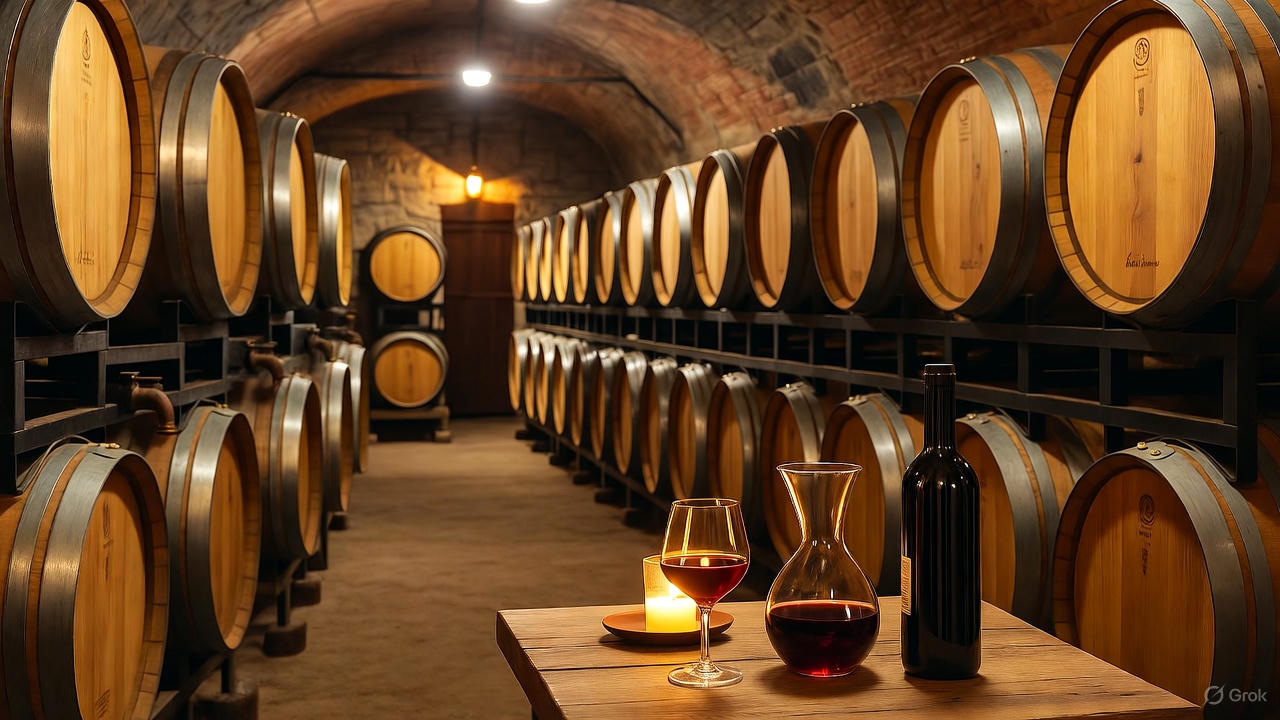
Aerating Port: Decant or Just Let It Breathe in the Glass?

Last year, I wanted to impress my girlfriend and her parents with some vintage 1985 Ports I'd unearthed at an old wine merchant's in Bordeaux. Preparing them for service was simple: I decanted them three hours in advance, thinking it would work its magic. The result? A disaster. The aromas vanished, the balance was ruined... I served a bland, €200-a-bottle concoction. (Okay, I'm exaggerating a bit, but the embarrassment was palpable, especially when her father grimaced after the tasting.) Since then, I've been agonizing over it: decanting or just serving by the glass? Each Port has its own character, and what enhances one can ruin another. We'll explore this together, without overthinking it, like chatting around a table with friends.
What is Ventilation and Why Does It Matter?
For ventilation, whether in a decanter or a chalice, it's simply a matter of exposing your port to air. Easy, right? Well, it triggers a whole host of cool chemical reactions in the wine. I read something about it on an old sommelier chat blog – air helps release trapped aromas, softens tannins, and gets rid of odors like sulfur or mustiness that can ruin a tasting.

The Little Miracles of Oxygenation
When you aerate, several things happen simultaneously. As a result, controlled oxidation transforms the aromatic compounds—imagine opening bottles of spices forgotten at the back of a cupboard. Volatile molecules evaporate and tickle your nose (that's why it smells better after a few minutes). The tannins soften, becoming less harsh on the palate. And the air disperses impurities. (Incidentally, my uncle, a fan of Portuguese wines, swears that without aeration, a young port remains "closed like an oyster.") Around 70% of professionals consider this essential for a concentrated port, according to what I saw in an online discussion on a specialized website. The remaining 30% relate to choosing the right port glass for your tasting.
When Ventilation Works Wonders
Young, robust port wines love air. A 5-10 year old vintage, for example, is an explosion of tannin notes that needs time to breathe. Without it, you're drinking wasted potential – like flipping through a book without really reading it.
For those with sediment, like unfiltered vintages, you have to separate the particles. Nobody wants to bite into crystals in their €150 glass, believe me. And if the wine smells "closed" when you open the bottles—resulting in a flat, expressionless taste—twenty minutes of airing out makes all the difference.
But beware, when things go wrong
Oxygenation isn't always a good idea for port wines. Very old ones (40 years old and over) are as delicate as butterflies. Their aromas dissipate in the blink of an eye. I saw a 1963 vintage wither after 30 minutes of decanting during a dinner at friends' house in Lisbon... (I still wonder if I should have listened to the conversation of that old sommelier who warned me, a guy with an impressive mustache named Antonio.)
Aged tawny whiskies (30-40 years old) are already quite oxidized in the cask. Decanting them is like recooking a perfectly cooked steak. You disrupt the balance of flavors they've taken decades to develop. Frankly, I tried it once, and it was... pff, disappointing.
The same thing happens in the world of Whisky and Rum. This is the most important step, followed by choosing a whisky glass suited to your drink.

Timing is an art.
Oxygenation is a matter of precise timing:
- Too short: the port remains closed, with hard tannins and overly timid aromas and notes.
- Just right: full aromas, melted tannins, top balance (often 15-45 min, depending on the port).
- Too long: fatigue, flatness, the port "falls" and they become dry.
I saw in a conversation on the wine geeks website that many people struggle with over-oxidation – like, half the failures come from that. You're not alone.
Decanting: Techniques, Advantages and Pitfalls
What does it mean to decant a Port wine?
Decanting is pouring the bottle into a decanter. In theory, it's easy, but it combines two things: decanting (removing the sediment) and aerating (contact with air). In professional jargon, decanting and carafeing aren't exactly the same, but for port, we often do both at the same time because it adds richness to the tasting experience.

The Gear You Need
A suitable decanter is key. For maximum aeration (young vintages), choose one with a wide base – around 20-25 cm. For softer wines (mature vintages), opt for a narrower neck. Clear glass helps you observe the color evolution. Accessories: a funnel with a filter for sediment, a lamp or candle to monitor for particles (old-school but effective), and a cloth for the neck of the wine bottles.
How to Decant Step by Step
Prepare 24-48 hours in advance: stand the bottle upright so the sediment settles. On the day, gently remove the capsule and cork – an old vintage bottle might have a crumbling cork. Pour slowly, tilt the bottle, and shine a light under the neck to watch for the sediment. As soon as the particles appear (a dark cloud), stop. Losing 2-3 cl is fine – better than sediment in the glasses.
How long to decant?
It varies:
- Vintage young: 1-2 hours.
- Vintage mature: 30-60 min.
- Unfiltered LBV: 30-45 min.
- Tawny: never, or 10 min max if closed.
According to a winemaker from Symington, for vintages <40 years old, 2-3 hours is ideal.
The Advantages of Decanting
Remove the sediment: clear liquid, no grimaces for the guests.
Boosted ventilation: large air-wine surface, a closed one opens up quickly because it brings richness.
Seeing the evolution: fascinating, port wine changes before your eyes.
Classy look: a crystal decanter on the table, that's impressive.
The Risks
Over-oxidation: a nightmare for delicate hair, from top to very dry and dull in no time.
Loss of aromas: the delicate ones evaporate, which is dramatic for an old wine.
Annoying timing: if the guests are late, your port has already passed its peak.
No going back: once you've decanted it, you're stuck.
Beware of Lead Crystal
Old crystal decanters contain lead. Don't store wine in them (acidic wine dissolves it). But for less than 2 hours, there's no risk. If you're paranoid, use lead-free crystal.
Glass Oxygenation: The Gentle Option
The Principle
Let the port open up in the tasting glass. Limit air contact to the surface of the glass (ideally a tulip glass ). You're in complete control. Many experts prefer this method, according to what I saw in a discussion on the Decanter website.
How to Boost Oxygenation in Glass
A balloon glass (Burgundy style) is ideal for maximum oxygenation, if needed to develop the richness. A tulip glass is better for those with delicate palates. Avoid glasses that are too narrow. Gently swirl the glass to create a vortex, moisten the sides, and repeat every 5-10 minutes. Patience is key: wait 5-10 minutes before the first sip, and observe every 10 minutes. A good port opens up over 30-60 minutes.

The Advantages
Total control: taste at every stage.
Gentleness: gradual, no shock.
Everyone has their own pace at the table.
Safe: no sudden over-oxidation.
Simple: just a good cup.
Perfect for fragile items: old vintages (30+ years), old tawnies, colheitas.
The Limits
Sediment remains: particles in the glasses, not great.
Slower: insufficient for a very young closed-hearth child.
Small surface area: less effective than a large carafe.
Top Glass Technique
Serve 5-6 cl max. Let it rest for 5-10 minutes. Stir, wait. Sip. Observe for 30-45 minutes. Refill if necessary – repeat the cycle.
A Guide to Decanting: To Decant or Not to Decant, Depending on the Port
Theory is all well and good, but what about in practice? Here's my grid, built on 12 years of testing (and failures, like that 20-year-old tawny I over-aired at my sister's house at Christmas).
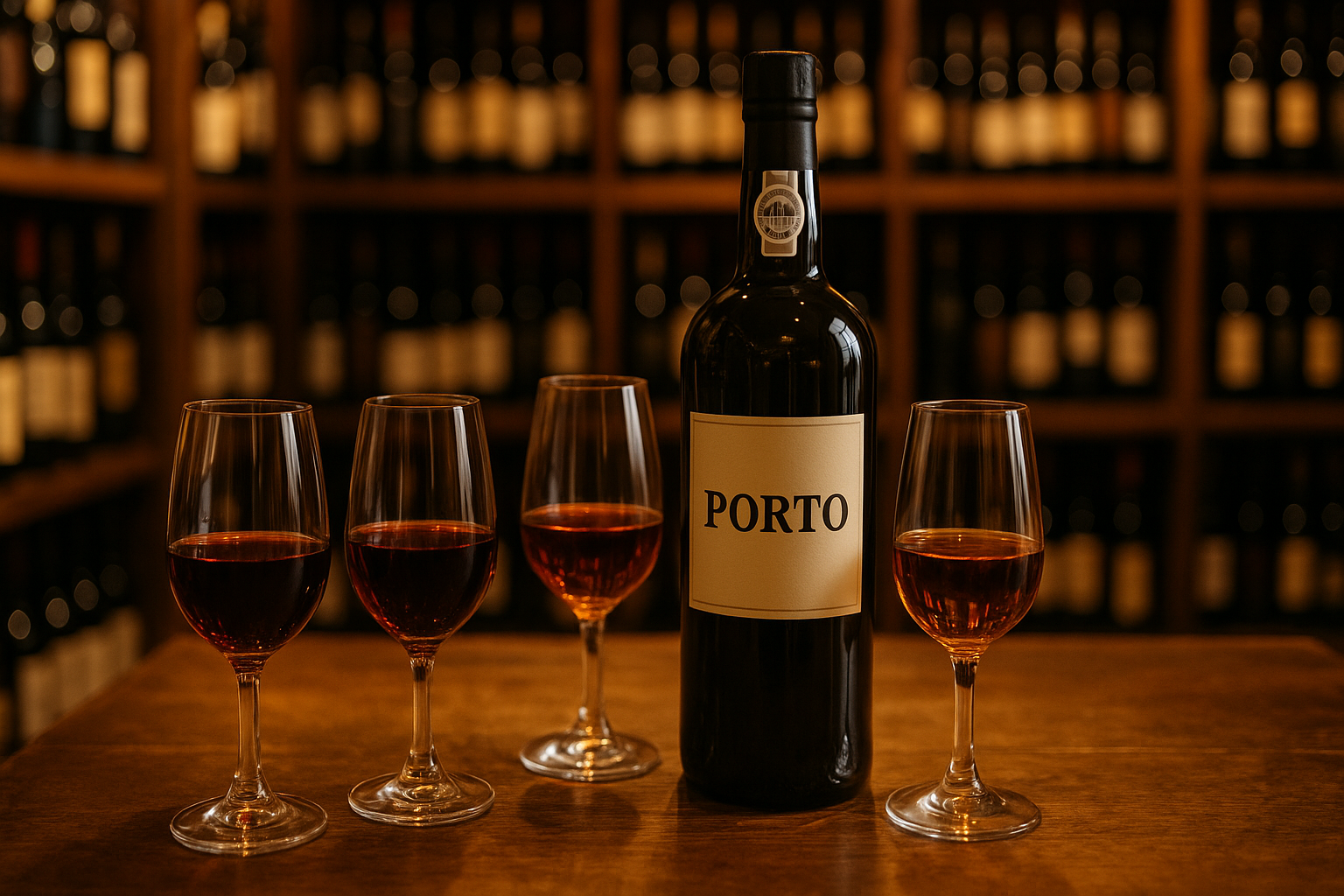
Porto Ruby (Standard and Reserve)
Oxygenation in a glass only. 5-10 min. Volatile fruity aromas (red berries, cherry), keep it fresh. No sediment. Decanting a ruby kills its youthful vibe. Tulip glass, gentle swirl.
LBV Port (Late Bottled Vintage)
Unfiltered: Decant for settling. 30-60 min (2015: 45 min, 2010: 60). Decant with a filter, medium-sized carafe.
Filtered: In a glass. 10-15 min. Balloon or tulip glass.
Young Vintage Port (<10 Years)
Decant vigorously for 1-2 hours. Tight tannins, raw power. Without air, almost undrinkable. Large, wide jug; decant if sediment forms.
Mature Vintage Port (10-25 Years)
Decant moderately or directly into the glass, as appropriate. Decant for 30-60 minutes. Test the base first: closed? Decant. Opens? Glass. Decant the sediment into a medium-necked pitcher.
Very Old Vintage Port (30+ Years)
Decant only (do not aerate). Serve immediately. Extremely fragile, fleeting aromas. Decant carefully, serve in 15 minutes, gently opening into a balloon glass. Every minute counts.
Porto Tawny (10, 20, 30, 40 Years)
In glasses only. 5-15 min. Already oxidized in the barrel, delicate balance. No residue. Balloon glasses, suitable for dried fruit, caramel, spices. Caution: rapid over-oxidation if decanted. I ruined a 30-year-old that way... (Oops, bad memory.)
Porto Colheita
In glasses, or with a short decanting. 15-30 min max. Tawny/vintage hybrid, possible residue. Decant quickly. Otherwise, in glasses.
White and Rosé Port
Zero oxygenation. Key freshness, delicate aromas (citrus for white; strawberry for rosé). Serve chilled (8-10°C), straight from the bottle. No fuss.
Common Mistakes to Avoid
- Decant everything systematically. Problem: Tawny and fragile wines suffer. Solution: Evaluate by type, no automatic process.
- Decant hours in advance. Excessive oxidation will cause the port to lose its character. Precise timing is required (30 min - 2h max).
- Never decant out of fear. Young vintages remain tough. Dare for the robust.
- Forget the residue. Bitter particles in the mouth. Decant with light, patience.
- Bad pitcher. Too big = over-ox. Adjust: large for young, medium for mature.
- No prior testing. Costly risk. Try a base first, it's your guide.
Special Cases and Pro Tips
Reduced port (musty, sulfurous): If it smells of cardboard or egg, decant vigorously for 15-30 minutes. The odors will disappear, the aromas will return. Magical.
Vintage with significant residue: Double decanting. Decanter bottle 1 (filter) to carafe 2 (clean). For perfectionists.
Comparative tasting: half a jug, half a bottle, leave the other half. Compare the evolution over 1-2 hours. Best personal lesson, I learn something new every time.
Serving in stages: Decant, pour 2-3 glasses, recork the decanter. Observe for 1-2 hours. For vintages that deserve attention.
Modern aerator: Oxygen at the service. Debated for port – better for young red wines. Worth testing, but skeptical.
Conclusion: Listen to Your Port
Decanting or aerating in glasses is not a hard and fast rule. It depends on the port in front of you. Young vintages appreciate a strong aeration, while older ones prefer gentler pours. Tawnies? They're best enjoyed chilled in a tumbler. Rubies? Patience is key.
Final tip? Try it, fail, try again. That's how you improve. Every bottle teaches you something. If you're unsure: it's better to under-aerate (you can wait) than over-aerate (irreversible). (I wonder if my 1985 would have been saved if it had just been in a glass...)
Keep that in mind for your next vintage purchase. But trust your nose and palate, your best friends.
Health !
Would you like to learn more about Port wine?
Read our blog post: How Much Cognac Should You Pour into a Glass?



Leave a comment
This site is protected by hCaptcha and the hCaptcha Privacy Policy and Terms of Service apply.