
Alcohol Flask: Everything you need to know!
Capacity, best spirits, maintenance, and regulations: everything you need to know before filling your flask. A Lemonade Maker's Guide
What is an alcohol flask?
It's a small, flat stainless steel container designed for carrying spirits in a pocket. Typical capacity: 100 to 300 ml.
The flat shape is designed to fit the body. Tucked into an inside jacket pocket, it's invisible and unobtrusive. The screw-on cap ensures a leak-proof seal, even when you're moving, running, or skiing.
Stainless steel has become the standard because it doesn't rust, doesn't impart any flavor, and is shock-resistant. Leather-wrapped models are also available—they're aesthetically pleasing and offer a better grip, especially in cold weather. Avoid plastic: when in contact with a 40% ABV spirit, it will inevitably impart an aftertaste.

Flask, flash, hip flask: the different names
The correct word is "flasque". "Flash" is a popular misnomer. In English, it's "hip flask".
In the shop, I hear both. "Do you have flashes?" comes up just as often as "flask." Both refer to the same object. The correct word remains "flask" (from the Germanic flasko , flat bottle), but no one will correct you if you say "flash"—everyone understands.
Other French synonyms: flask, bottle, flask. In English, "hip flask" is the standard term. "Pocket flask" or "liquor flask" are also encountered, especially online.

Do we say "un flask" or "une flask"?
The feminine form of the word for alcohol container is "une flasque". The masculine form "Un flasque" exists, but it is an adjective meaning "soft".
The confusion is common. Remember: if you're talking about the flat container that carries your whisky, it's always feminine. "A beautiful leather flask for alcohol." The masculine form refers either to an industrial mechanical part or to the adjective ("a flabby muscle"). Nothing to do with your jacket pocket.

What size container should I choose?
The best-selling size is 180 ml (6 oz). It's the best compromise between discretion and capacity — about 6 shots of spirits.
The capacities follow the standards in ounces, inherited from the Anglo-Saxon tradition:
| Format | Capacity | Typical use |
|---|---|---|
| Mini (3 oz) | 90 ml | Dressy evening, trouser pocket |
| Standard (6 oz) | 180 ml | Jacket pocket, everyday use |
| Large (8 oz) | 240 ml | Hiking, sharing with friends |
| XL (10 oz) | 300 ml | Outdoors, skiing, bivouacking |
My advice: if you're unsure, go for the 180ml size. It fits easily in an inside pocket without distorting your jacket's shape. The 240ml is tempting, but it's heavier and more noticeable. Save the larger sizes for outdoor activities where discretion isn't a priority.
Source: Blog post about alcohol flasks according to your usage
How many doses are in a flask?
A 180ml flask contains approximately 6 doses of spirits (based on 30ml per dose). A 240ml flask contains 8.
The standard serving size in France for a spirit at a bar is 2 to 4 cl. For a flask, allow 3 cl per reasonable sip. That's about 6 small glasses for a 180 ml bottle—enough for an afternoon hike for two, or an evening on your own. With sweeter liqueurs (like Cointreau or Chartreuse), pour more generously: 4 cl, or 4 to 5 servings.

The story of the flask
The flask has existed in various forms since antiquity. Its modern version in flat metal dates from the 18th century in England.
The earliest portable containers for alcohol were animal-skin wineskins—shepherds, soldiers, and travelers had been using them for centuries. Tin and silver flasks appeared in Europe in the 18th century, initially among English gentlemen who slipped their brandy into their frock coat pockets.
It was American Prohibition (1920-1933) that truly popularized the flat flask as we know it. A discreet format was needed, one easily concealed under a coat. Manufacturers refined the curved shape that hugs the hip—hence the English name "hip flask."
Stainless steel took over after World War II. Cheaper than silver, unbreakable, tasteless. It has been the standard material since the 1950s.

What kind of alcohol should I put in my flask?
Dry spirits between 40° and 50°: whisky, cognac, vodka, dry gin, white rum. Avoid anything containing sugar.
Whisky is the classic choice, and for good reason. At 40-46% ABV, it keeps well for a few days and its flavor profile remains stable in stainless steel. A good blend like Monkey Shoulder or Johnnie Walker Black Label works very well—no need to waste a €70 single malt in a flask.
Cognac and Armagnac also keep very well. A VS or VSOP in winter after a day outdoors is a classic. Vodka, if you like it, has the advantage of leaving no residue and keeping the longest.
What not to put in: infused rums, sweet liqueurs (Baileys, Amaretto, crèmes), and cocktails. The sugar sticks to the sides, ferments, and leaves a lingering taste that even a good cleaning struggles to remove. I had a customer who put limoncello in a leather flask—three months later, it still smelled like rancid lemon.

Which flask for whisky?
18/8 stainless steel is the best material. It does not impart any taste and preserves the aromas of the whisky without alteration.
18/8 (or 304) grade stainless steel is the kind found in good cookware. It resists corrosion from alcohol, even at 50% ABV. It's the only material I recommend for someone who truly wants to enjoy their whisky outdoors.
Leather-wrapped models offer natural insulation—the whisky stays more stable at temperature, and the grip is better in cold weather. Pewter has its charm (vintage look, patina), but it's more fragile, and some inexpensive alloys contain lead. Check the composition if you choose this material.
As for size, 180ml is more than enough for whisky. You don't need 300ml—whisky from a flask is meant to be sipped, not drunk from a glass. One thing to keep in mind: a flask isn't a tulip glass , so you might not get the same experience as from a proper glass.

How do you drink from a flask?
Unscrew the cap, tilt the bottle at a 45° angle, and take small sips. The neck is narrow—go slowly to avoid spilling.
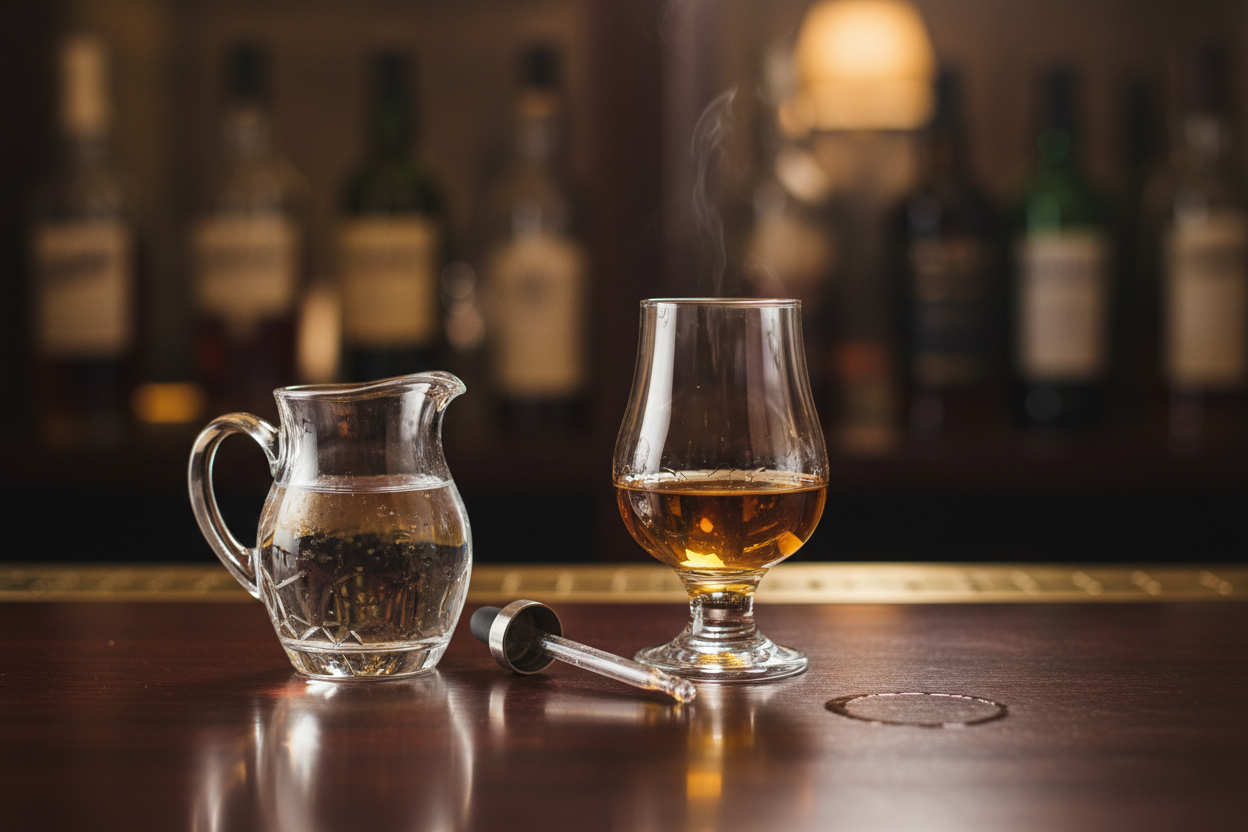
The flask isn't a glass. The narrow neck prevents you from experiencing the aromas like you would with a Glencairn. That's normal. The idea isn't to conduct a technical tasting, but to enjoy a moment—at the top of a mountain pass, by a lake, at halftime of a match.
Hold the sip in your mouth for a few seconds before swallowing. Even without using your nose, you'll perceive the main flavors. And close the cap immediately afterward: oxidation is rapid in a half-empty container, and every opening lets air in.

How to clean and maintain your flask?
Empty it after each use. Rinse with hot water and a little white vinegar, shake, rinse again, and dry upside down with the cap open.
The method that works: mix 90% hot water and 10% white vinegar, pour into the flask, shake for 20 seconds, let it sit for 15 to 30 minutes, then rinse twice with clean water. The vinegar neutralizes alcohol residue and odors without damaging the stainless steel.
The most common mistake: storing the flask while it's still damp, with the cap closed. The trapped moisture will cause a musty smell within a few days. Let it air dry, upside down on a clean cloth, for at least a night.
Do not put it in the dishwasher if it is covered in leather. Bare stainless steel is dishwasher safe, but hand washing will always be gentler on the stopper's seals.
Source : Blog post on filling, storing, and maintaining your flask

How long can you keep alcohol in a flask?
A few days, no more. Ideally, fill it before leaving and empty or rinse it upon returning.
A flask is not designed for long-term storage. Whisky or cognac will easily last 3 to 5 days in a clean stainless steel flask. Vodka, being more neutral, can last up to a week. Beyond that, prolonged contact with the metal can slightly alter the taste—nothing dangerous, but the flavor profile will change.
Sweet liqueurs (if you use them despite my recommendations) should not remain in the refrigerator for more than 24 to 48 hours. Sugars promote bacterial growth and stick to the internal walls.

Why use a flask?
Portability, discretion, and user-friendliness. The flask allows you to carry a small amount of good alcohol where a bottle would be cumbersome.
You wouldn't take a bottle of Laphroaig on a hike. But 180 ml in a flask, slipped into your backpack pocket? Pure bliss at the summit. The same goes for skiing, camping, or by a river. It's also a social gesture—offering a friend a sip of good cognac on a cold night creates a special moment.
The flask is also a beautiful object. Engraved, leather-covered, patinated over time — it is a classic gift for a father, a best man or a colleague who is a spirits enthusiast.

Is it legal to walk around with a flask?
Owning a flask is legal. Consuming it in public may not be: it depends on your municipality.
In France, there is no national ban on drinking alcohol in the street. However, many municipalities have passed local bylaws prohibiting alcohol consumption in all or part of public spaces. Penalties vary depending on the bylaw—check locally.
Stadiums, public transport, and schools prohibit alcohol throughout France. It's the law, not a local ordinance.
Regarding the age of purchase: an empty flask is an unrestricted accessory, like a corkscrew—no restrictions. However, the alcohol used to fill it is illegal to sell to anyone under 18 in France. In the United States, the age is 21.

Can you take a flask on a plane?
Empty in the cabin: yes. Full in the cabin: no, unless it is less than 100 ml and fits in the liquids bag. Full in the hold: yes.
The 100ml rule for liquids in the cabin applies. A standard 180ml flask of alcohol, once filled, will be confiscated at security. If you wish to carry whisky in the cabin, only a 90ml (3oz) mini-flask in a transparent bag will be allowed through security.
In the hold, there's no problem as long as the alcohol content doesn't exceed 70% (IATA regulations for flammable liquids). A whisky with an alcohol content of 40-60% will pass without issue. Pack the flask in a plastic bag as a precaution—leaks in the suitcase have happened to more than one person.

Key takeaways
The 180ml 18/8 stainless steel bottle is a reliable choice for 90% of uses. Fill it with dry spirits at 40% ABV or higher (whiskey, cognac, vodka), empty and rinse it after each use, and it will last for years. Avoid sweet spirits, avoid long-term storage, and check local regulations before drinking in public. The rest is a matter of taste—and good times to share.
Benjamin Fournier
Wine shop in Avignon / Spirits, wines, beers and cocktails


1 comment
Bravo !!
PILLONEL Yvan
Leave a comment
This site is protected by hCaptcha and the hCaptcha Privacy Policy and Terms of Service apply.